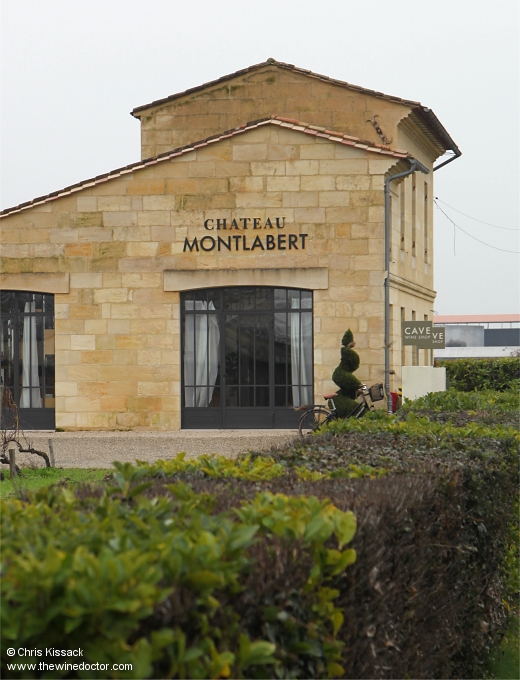
Château Montlabert
Ranking: Grand Cru Classé (St Emilion Classification)
Appellation: St Emilion
Owner: Castel
Ten-second primer: A historic estate, the origins of which can be traced back to the 1750s, Château Montlabert has been revitalised by the Castel group since their acquisition in 2008, leading to promotion to the lower ranks of the St Emilion classification in 2022. Wines made by Ludovic Hérault.
This profile includes: Three pages of history and detail (links above), and tasting notes back to 2012.
The 2022 iteration of the St Emilion Classification thrust a number of new names into the spotlight; perhaps this, rather than anything else, is the true value of such a classification. While some proprietors fret about their exact ranking in the classification, who is ranked alongside them, and whether or not the selection criteria still reflect their own vinous philosophies, perhaps before they decide to depart the classification forever, for other estates stepping up from simple Grand Cru to the rank of Grand Cru Classé can be a very big deal.
Of about half a dozen names to be included in 2022, perhaps one of the best known was Château Montlabert, an elegant property with a prominent roadside position on the main route between St Emilion and Pomerol. It was an estate every visitor to the region knew, but I suspect few such visitors ever called in to taste its wines.
In this profile of Château Montlabert I make amends for this oversight, with a detailed history of the property as presented below, followed by a look at the vineyards and winemaking today on the next page. I conclude on the third page with my thoughts on the property, backed up by all my tasting notes and scores. First, though, let us take a look at the origins and story of Château Montlabert.
Origins
Although there has quite possibly been active viticulture on these lands since the Gallo-Roman era, the history of Château Montlabert begins midway through the 18th century, when it was already known as the Maison Noble de Montlabert, presumably a reference to noble proprietors. It was around 1750 that the property began its journey to its modern-day status, when it was acquired by Jean-Michel de Cazes (died 1781), a junior officer in the Châtillon regiment of the royal French army of the Ancien Régime. Perhaps more significant than his embryonic military career was Jean-Michel’s bloodline; he was the scion of an influential Libourne family.