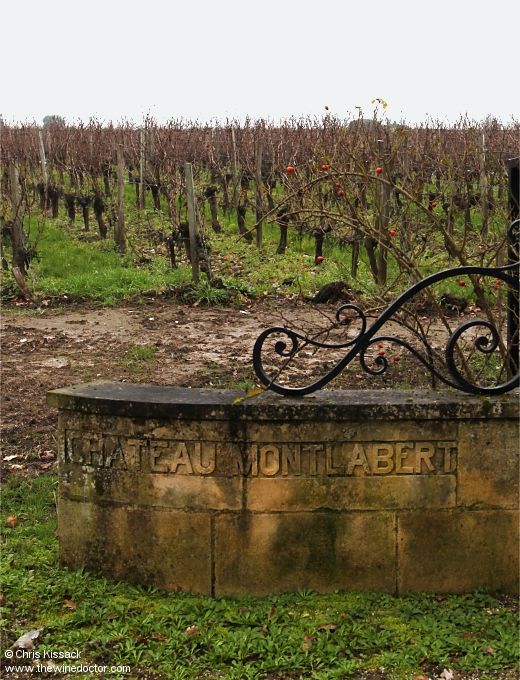
Château Montlabert: Tasting & Drinking
The sandy and lightly gravelly soils that stretch from the slopes of St Emilion across to the clay and gravel plateau of Pomerol are home to some of the St Emilion appellation’s most renowned names, among them Château Figeac and Château Cheval Blanc, but also Château la Tour Figeac, Château Ripeau and the original Château Rol Valentin. There are also a number of estates which fly confidently below the radar, and seemingly show no sign of ever rising above it.
The way I see it, Château Montlabert inhabits the ill-defined space between these two extremes. The wines have clearly impressed the committee working to draw up the 2022 St Emilion Classification, as they judged the estate and its wines worthy of promotion to the rank of Grand Cru Classé. Having acknowledged that, were it not for the estate’s elevation in status, I am not sure I would have ever been drawn to write this profile.
Recent vintages which have passed muster here include 2025, which seemed to lack a little of the excitement seen in so many wines, but which nevertheless possessed and easy-going charm. Similarly, I quite enjoyed the powdery lick of tannin which adds structure to the palate of the 2022 vintage. And the simple density of fruit in 2018, and the charming evolution seen in 2016, also did something to entice.
Other vintages seem rather less keen to reveal the maximal extent of their appeal in the glass. These vintages include 2024, from a rather damp and washed-out season; 2023, with its simple fruit profile of redcurrant and leather; 2021, with its somewhat sandy old-school aromatics; and 2019, full-bodied but with a lightly bitter grip. Encounters with older vintages are rare (does the 2016, revisited at nine years of age, count?), but the 2012 vintage, tasted from magnum at twelve years of age, seemed mature, enticing and filled with powdery grip. Formulaic, but charming, and certainly drinkable. (21/10/26)