Home > Producer Profiles > Bordeaux Profiles > Château Filhot

Château Filhot

Like many other Sauternes châteaux, the exact origins of the Filhot estate remain a little obscure. The property was acquired in 1709 by Romain de Filhot, a wealthy parliamentary advisor in Bordeaux, although the vineyard was almost certainly already established at that time. Exactly when the vines had been planted is not known, but the likely date lies somewhere between 1630 and 1650. It remained with the Filhot family for almost a century, responsibility passing from one generation to the next, making a period of ownership sufficiently notable for the family name to stay with the estate through to modern times. From Romain de Filhot the mantle passed to his son Jean-Jacques, and then to grandson Jean François-Xavier, both successful parliamentary advisors like their forebear, and under their tenure the vineyard flourished. The wine developed a fabulous reputation, selling for the same price as Yquem. Thomas Jefferson, oenophile and American ambassador to France, ranked the wine directly behind its more illustrious premier grand cru classé peer.

Filhot

The fourth generation in this long line of Filhots was Gabriel-Barthélémy-Romain, a man who perhaps eclipsed the achievements of his forebears by assuming the role of parliamentary president. Perhaps signifying his greater wealth he not only maintained Filhot but in 1788 he also purchased the Barsac property Château Coutet, an acquisition which explains the uncanny resemblance between the Filhot and Coutet labels. He had little time to enjoy his new residence and vineyard, however, as he fell to the guillotine in 1794, just six years after making the purchase. Filhot was thus without an owner, other than the orphaned daughter of Gabriel-Barthélémy-Romain, Marie Françoise Joséphine Geneviève de Filhot, who had been no greater than four years old when her father had been condemned to death. At seventeen years of age this wealthy heiress married the Marquis de Lur-Saluces, Antoine Marie Henry Amédée, and thus Yquem (which of course belonged to the Lur-Saluces family) and Filhot came under the same ownership.

From Filhot to Lur-Saluces and de Vaucelles

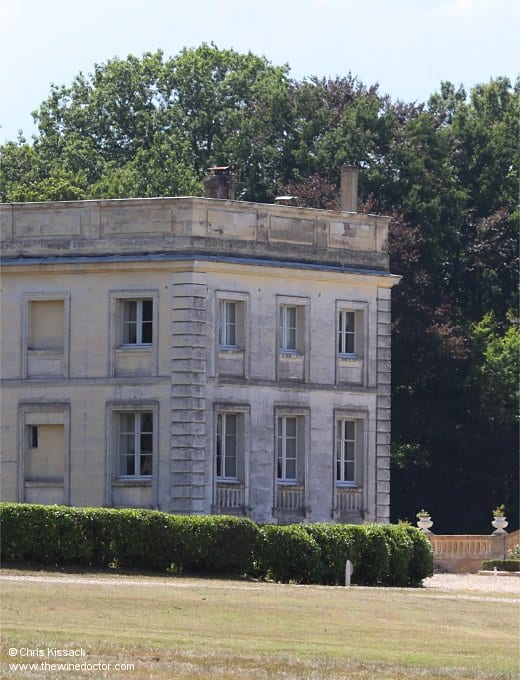
The estate remained with the Lur-Saluces family following Joséphine's premature death in 1815, and under their direction the estate was well maintained and enlarged, and it was subsequently ranked as one of fourteen deuxième cru properties in the 1855 classification of Sauternes and Barsac. At this time the estate was under the aegis of Joséphine's son, Romain-Bertrand de Lur-Saluces, and he and his Parisienne wife Thérèse de Chastellux were largely responsible for the grandeur of the château (shown above), designed by Poitevin, which still graces the estate today, as well as establishing the surrounding parkland and Fischer-designed formal gardens in 1845. Their efforts turned Filhot, set against the pine woods of the Landes just metres behind, into a most prestigious country residence. Romain-Bertrand also expanded the vineyard with the acquisition of Pineau de Rey, the estate just to the west of Filhot. Nevertheless, during the ensuing years the estate went into decline, and the vineyard contracted, a process no doubt compounded by the vineyard diseases of the latter years of the 19th century, as well as war in Europe and global recession. Curiously, during this time the estate also saw a brief period under a new name, that of Château Sauternes, before it subsequently became Filhot once again in 1901. Whatever its name, though, the decline continued and what had once been a grand sweep of 120 hectares of vines was, by the 1930s, reduced to one-sixth of that figure. It was at this point, in 1935 to be precise, that Marquis Bertrand de Lur-Saluces, the grandson of Romain-Bertrand and Thérèse de Chastellux, sold the estate to his sister Thérèse-Marie and brother-in-law Comte Étienne Durieu de Lacarelle.

FilhotComte Étienne had married Thérèse-Marie de Lur-Saluces, and the union bore eight children and many grandchildren. From amongst their children it was Louis Durieu de Lacarelle who assumed responsibility for Filhot, doing so until the 1970s. But thereafter the estate passed to one of the many grandchildren, although not the offspring of Louis. The recipient was Henri de Vaucelles, the son of Comte Pierre de Vaucelles, a French ambassador, and one of Louis Durieu de Vaucelles' sisters. Henri took responsibility for Château Filhot in 1974, and is today assisted by his son, Gabriel (pictured right). The task of replanting and restoration was a formidable and costly undertaking, but he has worked hard and doubtless Filhot has improved, even if it has never returned to the glory days when it was mentioned in the same breath as Coutet and even, it seems, Yquem. The work concerned both vineyard and cellars; the latter saw a renovation in 1995, when the old fibreglass fermentation vessels were stripped out and replaced with temperature-controlled stainless steel. Oak was once a rarely seen component at Filhot, but with the refurbishment the barrel room was relocated and today, after fermentation in steel the wine is blended and matured in French Allier oak, of which one-third is replaced each year. It is a joy to see that Filhot is once again benefiting from solid investment.

Filhot: the Vineyards and Wines Today

Today the vineyard has recovered and now accounts for 62 hectares of the Sauternes appellation, although this is only a fraction of the estate which amounts in its entirety to 350 hectares. The vines are concentrated in several plots to the north-west of the château, the position of which makes this the most southerly of all the classified Sauternes properties. The soil is sand, gravel and clay over a deep limestone bedrock, and the vines are approximately 60% Semillon, 36% Sauvignon Blanc and 4% Muscadelle with an average age of 35 years. As you would expect with any Sauternes estate the harvest is manual, and may be up to a week later than some other estates due to the proximity of the woods which cool the vineyards. The fruit is brought in during several tries through the vineyard, the beginning of the selection process taking only the best botrytis-affected fruit with each pass. As a result the yields are between 15 and 18 hl/ha. Until recently the wines were fermented in fibreglass and saw no or little oak maturation, most or all of the wine spending up to two years in fibreglass. Now, however, the château has temperature controlled stainless steel fermentation equipment and the wine is managed at between 19°C and 21°C, followed by a filtration 10 months later, blending after 14 months and a total of two to three years of élevage in French Allier oak, one third of which is new each year.

FilhotThe grand vin is Château Filhot, typically a blend of 60% Semillon, 36% Sauvignon Blanc and 4% Muscadelle, all fermented in steel without chaptalisation followed by aging in barrels as described above. There is in fact a second wine although it is not well known, this being Château Pineau de Rey, a label which originated during the 1970s and which harks back to the estate acquired by Bertrand-Romain in 1840. There is also a third-level wine which is sold in bulk to local négociants, as well as a dry white named Château Pineau du Rey Sec. Taking 2007 as an example, with a total crop of 819 hectolitres, we might expect about half (405 hectolitres) to go into the grand vin, with a little more than a quarter (230 hectolitres) for Pineau de Rey, which would mostly be Sauvignon Blanc, and then a little less than a quarter (184 hectolitres) to be sold off. This equates to 4500 cases of Filhot and 2550 cases of Pineau de Rey in 2007, although clearly a more fecund vintage will yield more bottles than this (6500 cases of the grand vin would be more typical).

Although Filhot has enjoyed new and invigorating ownership for some decades now, it does maintain - based on my recent tastings - a distinctive Filhot style. As it remains affordable and continues to enjoy wide distribution I still suspect, as I wrote when I first published this profile in 2004, that Filhot frequently serves as an introduction to Sauternes for many. For some, those that find the richer wines of Sauternes simply too much, the lighter, fresher, less challenging Filhot may be the perfect after-dinner wine. Indeed, I have known of some who preferred the freshness of these wines over some grander, rather more lush and certainly more oaky wines tasted alongside. They are the lucky ones, as those richer styles are usually rather more expensive. Those that find the Filhot style unmoving, however, would do well to bite the financial bullet and try a wine from one of Filhot's neighbours, as there are as many styles in Sauternes and Barsac as there are estates, and there should be something there to please. Alternatively, look to more recent successful vintages with Filhot itself; the 2001 was a benchmark wine for the estate, in a great vintage, and it has performed very well on more recent tasting. More-richly styled and warm vintages tend to produce a wine more appealing to my palate, so thereafter I would plump for 2003 or 2005, but the 2007 - a crisper, more vibrant vintage - would do for those who value freshness and acidity above all else. (25/8/04, updated 9/8/07, 30/7/08, 24/3/10)

Contact details:
Address: Château Filhot, 33210 Sauternes
Telephone: +33 (0) 5 56 76 61 09
Fax: +33 (0) 5 56 76 67 91
Internet: www.filhot.com
GPS: 44.523001, -0.341789

Château Filhot - Tasting Notes

Click to locate stockists.

2010

Château Filhot (Sauternes) 2010: Residual sugar 145 g/l. This is an immediately flattering sample, honeyed, and there is a suggestion of oak coming in here to bolster this. The palate has great weight and breadth to it, the impact in the mouth very confident and successful, especially so for Filhot I think. Rather polished, quite grainy at its core, showing an impressive depth of texture which must hark back to the vintage. And there is a lovely spicy element to the sweet, tropical fruits here. A sterling effort from Gabriel de Vaucelles and team here. From my Bordeaux 2010 primeurs assessment. 16.5-17.5/20 (April 2011)

2009

Château Filhot (Sauternes) 2009: Residual sugar 140 g/l. This vintage has a greater intensity of fruit than I am used to with Filhot, the nose quite dense and meaty even. There is also a rather dirty note to it which spoils the character. The palate shows the same style, soft fruits and acids alongside flesh and freshness. But that earthy vein is there again. This is so out of keeping with Filhot and the vintage that I am worried that this is an atypical sample. Unfortunately I haven't had the opportunity to retaste. From my 2009 Bordeaux en primeur assessment. No score. (March 2010)

2007

Château Filhot (Sauternes) 2007: No richness on the nose here, minerally and chalky, and a sweet and fleshy texture. Broad, with a good core of acidity, this has moderate presence and texture on the midpalate. A good honeyed, mineral finish. It lacks the impact of some other wines. A good Filhot, though. From my 2007 Bordeaux en primeur assessment. 15-16+/20 (April 2008)

2005

Château Filhot (Sauternes) 2005: Not so rich on the nose, when compared to some of the other vintages tasted here. It is showing a rather steely Sauvignon Blanc character. On the palate, though, it demonstrates a good presence, with a foundation of gentle sweetness and a nice acid backbone. Rounded, sweet fruits, altogether nicely composed, with a fresh finish. This will develop well. 16.5+/20 (March 2008)

2003

Château Filhot (Sauternes) 2003: A rich and aromatic nose here, in keeping with the vintage. A lovely presence on the palate, rich and fleshy, creamy even. It shows honey and vanilla in a rich and weighty frame, but underneath it is cut through by a surprising and welcome acidity. This is a success for Filhot. 17+/20 (March 2008)

2001

Château Filhot (Sauternes) 2001: Although I did not intend adding any other Sauternes to this tasting, having tasted a fair selection of 2001 Sauternes in the last eighteen months and finding them rather sullen, I decided to at least include Filhot, as an experiment if nothing else. That was a mistake, as this wine shows as anticipated; aromatically it is very closed and ungiving right now, with just a sense of honey-tinged grippy fruit and little else. The texture is very appropriate for the vintage and property, showing a moderate weight, with a nice grip to it. There is good structure, rather pithy in style, with an appealing vein of mineral and a very welcome backbone of acidity too. Overall though, on this outing, withdrawn and unflattering. As with the other wines of this vintage, this one needs time. From my 2001 Vintage Ten Years On tasting. 16-17/20 (December 2011)

Château Filhot (Sauternes) 2001: The first was corked, but a replacement soon materialised. From a half bottle. Clean, slightly sherbetty and talcy-sweet lemon fruit on the nose, with a delicate flower petal edge. Quick fat on the palate, but very well polished, a firm outer shell holding the fruit and sweet texture within. Lots of substance here, creamy but well rounded, and not simply sweet; there is an appealing bitter character here, lemon pith and bitter oranges alongside the sweeter, more exotic fruit elements. A nice style, long but not deep, but there is certainly more here than you find in many vintages of Filhot. From a Sauternes 2001 assessment. 17+/20 (May 2010)

Château Filhot (Sauternes) 2001: An attractive straw-lemon hue, bright and vibrant but perhaps not the depth that I seem to recall in some other wines of this vintage. At present the nose is just delightful, full of rock dust and orange peel, talcum and smoke, flower petals and fragrant rose water. The palate has plenty of density, a creamy and rounded nature despite a rather light texture, and a great purity around that rock dust character again. Quite a complete, elegant, vivacious style through the midpalate with nuances of citrus fruit, bitter lemon, ripe melon and crystalline pineapple. A simply gorgeous wine, although it shows little in the way of botrytis for such a great vintage, and yet it charms in other ways. But when the beautiful aromatics fade, will there be sufficient left behind? Not destined to be great I think, but I think this should still be very good indeed. 17.5+/20 (August 2007)

1999

Château Filhot (Sauternes) 1999: This has good, overtly sweet aromatics, ripe fruits layered in honey. It has a nice impact on the palate, with freshness and sweetness combined. There is depth, botrytis and quince; it has more character than even the 1997. Nicely accessible. Another success for Filhot, and step up in quality for sure. 16.5+/20 (March 2008)

1998

Château Filhot (Sauternes) 1998: The nose here carries attractive aromas of crystalline yellow fruits, and my first impression is that it is a very straightforward, gentle wine without any complexity. The palate is well composed, well balanced, showing weight and acidity, but as the nose suggests there is no real development here. I find it also lacks a little concentration on the endpalate. Nevertheless it has a decent presence, and finishes well. Good. From a tasting of 1998 Bordeaux. 15.5+/20 (August 2008)

Château Filhot (Sauternes) 1998: From a half bottle. A very pale, golden wine. Light botrytis on the nose, with white peach and floral aromas. Medium bodied on the palate, with good texture and some appealing botrytis character. Ample, mouthfilling, but not huge or hedonistic. Juicy white peach flavour, like the nose, with a touch of vanilla and cream. Succulent, balanced finish and some length. 15.5/20 (August 2004)

1997

Château Filhot (Sauternes) 1997: There is a slightly chemical quality on the nose of this wine, rather like drying paint. I would be optimistic that this kind of aroma will disappear with bottle age, but I can not be certain. And it has a good style on the palate, rich but not overly weighty, with good acidity. Nicely textured, with good substance and structure. This may have good potential, provided that strange aroma - also noted on the palate - disappears with time. 16.5+/20 (March 2008)

Château Filhot (Sauternes) 1997: From a half bottle. A very pale wine, showing some botrytis alongside honey and crisp, white fruits. The palate is fresh, with some concentration, and certainly some good flavour. Some botrytis-related texture, thick and almost unctuous through the midpalate. A very rich finish although a short length. A minor success, but shouldn't we expect more from Filhot in this highly regarded vintage? I would have thought so. 16.5/20 (August 2004)

Château Filhot (Sauternes) 1997: From a half bottle. A pale lemon yellow. The nose has apricot and honey sweetness, but with little evidence of botrytis. On the palate, a moderately rich texture sits with a seam of drying, waxy fruit. Balanced acidity provides the antidote to all this sweetness. Not a great example of Sauternes, but pleasant drinking. 16.5/20 (January 2002)

1996

Château Filhot (Sauternes) 1996: From a half bottle. A moderate golden colour. Sweet tropical fruits on the nose. No botrytis. Rich and sweet palate, plenty of tropical fruit like the nose, pineapples particularly. This is a little like passillerage in character more than botrytis. Nice texture, pleasant but lacking in impact. 13.5/20 (August 2004)

Château Filhot (Sauternes) 1996: From a half bottle. On first tasting this wine seemed clumsy and characterless. Once it opened up (after about 48 hours), this wine had a nose of honey, melons and fresh pineapples. A rich but not luscious texture, with fine, balancing acidity. More honey and pineapple fruit. Devoid of any botrytis related character, but a clean and refreshing style. 14/20 (March 2001)