Home > Producer Profiles > Bordeaux Profiles > Château Haut-Bailly

Château Haut-Bailly

I once wrote that the origin of the Haut-Bailly vineyard was uncertain, but new information unearthed and subsequently forwarded to me by Véronique Sanders, who manages the estate, has shown different. Her research has revealed that the vineyard was created during the 16th century by rich merchants from the Pays Basque region, to the south of Bordeaux close to the Pyrenees. These were the Goyanèche and Daitze families, who brought together plots of land, already planted to the vine since at least 1461, to create the nascent Haut-Bailly in 1530. By about 1630 this estate came into the ownership of Firmin Le Bailly, a Parisian banker who gave his name to the property, and by 1845 Wilhelm Franck's classification of the leading Graves châteaux shows that the name Haut-Bailly was in well-established use. Clive Coates, writing in Grands Vins (University of California Press, 1995) has suggested that an estate referred to as Château Branon, which seems to have since disappeared, was the origin of Haut-Bailly, but this rumour appears to have been put to rest by Véronique's work. Indeed, Branon was listed alongside Haut-Bailly by Franck himself, so that explanation always seemed rather unlikely.

Haut-Bailly

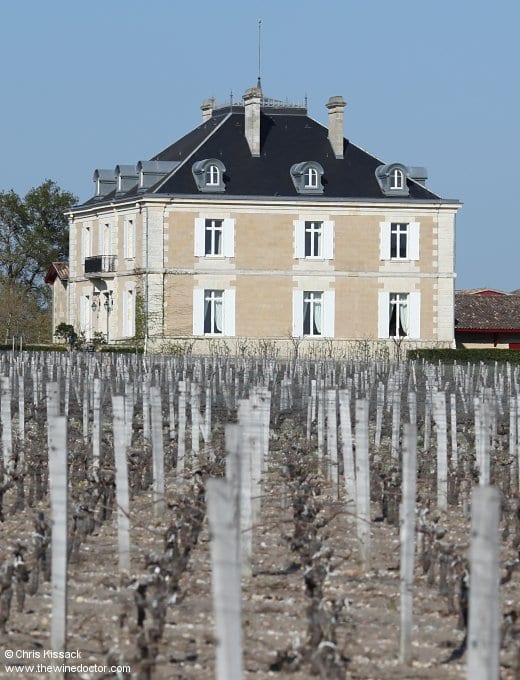
During the ensuing century the Bailly estate, as it was referred to, came into the hands of parliamentarian Christopher de Lafaurie and his son Laurent, the latter eventually taking on the mantle of Mayor of Bordeaux. In 1736 the estate's running fell to Thomas Barton, before then coming to a Monsieur Ricard, who subsequently sold it on to the renowned viticulturist Alcide Bellot des Minières in 1872. This latter character had perhaps the greatest impact of all those discussed so far. Originally an engineer, the reasons for Bellot des Minières turning to viticulture are not clear. It is possible that his brother, personal secretary to Cardinal Bonnet, Archbishop of Bordeaux, who probably first spotted that the estate was for sale, encouraged him in his purchase. Nevertheless, Bellot des Minières grasped the nettle firmly, reorganising and expanding the vineyards first, and then moving on to build the château, which still stands to this day. The wine's reputation soared, and prices easily matched those of a deuxième cru from further north; flushed with success Bellot des Minières described his wine as a Premier Grand Cru Exceptionnel, and the term Cru Exceptionnel can still be found on the Haut-Bailly label as recently as the 1985 vintage, only disappearing in 1986. He himself came to be known as le roi des vignerons; nevertheless, not all of the regal Bellot de Minières' decisions were so royally astute. As phylloxera advanced across Bordeaux and the whole of France, he shunned the new solution of planting grafted vines, rejecting the resulting wines as 'incomplete'. He plodded on, spraying his vineyards with an ineffective copper ammonia solution, and at the beginning of the 20th century Haut-Bailly was still planted wholly with ungrafted vines.

Haut-BaillyBellot des Minières died in 1906, and his estate was inherited by his wife Fanny Oliveri, and upon her death it passed to her daughter, Valentine Heirweg, who was the offspring of Oliveri's marriage to a German merchant prior to her union with Bellot des Minières. She and her cousins ran the estate for little more than two decades before selling onto Franz Malvesin. Malvesin continued with his original-root vines, turning his attention in preference to the cuverie, where he instituted some questionable practices, such as pasteurisation and early bottling. He died in 1923, and practices quickly reverted back to the traditional, but in his absence there was no consistency of leadership. The estate passed to his illegitimate children and thus through the Beaumartin family, who owned the estate in combination with a Parisian banker named Comte Lahens. But then the usual 20th century rot set in, with the combination of war, depression and a string of less than favourable vintages resulting in some poor performances from Haut-Bailly. In 1937, by which time some of the vineyard had at last been pulled up for replanting with grafted vines, the Beaumartin family bought out Lahens; subsequent deals saw the estate change hands again, eventually coming to the joint ownership of George Boutémy and Jean Emile Poitevin. Their tenure was not a notable one, however, and it was not until 1955 that the seeds of new success were sown.

Sanders & Wilmers

It was in this year that the estate was sold to Daniel Sanders, a Belgian born into a family of linen merchants who, after being injured in the Great War, found himself convalescing first in England, but then in Bordeaux. He eventually inherited a merchant's business through his marriage to the merchant's daughter in 1919. He spent some time acquiring a number of minor properties, but having experienced and savoured the 1945 vintage of Haut-Bailly he resolved to purchase the dilapidated estate. Even at this time many of the vines were still ungrafted, testament to Bellot de Minières reticence regarding this practice. With this change of ownership things began to look up at Haut-Bailly, although the turn-around was by no means instantaneous. By the time Daniel handed over the running of the estate to the next generation in 1979, there was still much work to do. His son Jean took the reins, but when his sisters insisted upon selling their share of the estate, it seemed as though the family would lose control of the property for good. Daniel's granddaughter Véronique, who had long harboured a desire to take over the running of the estate, was understandably distressed by these developments, even more so when it transpired that the new owner was to be Robert Wilmers, an American banker. What would happen to her beloved Haut-Bailly now?

Haut-Bailly

As it was, however, there was no cause for concern. Although an American by birth, Wilmers had spent much time in Belgium as a child, was married to a Frenchwoman, and clearly - perhaps thanks to his career in the world of finance - had a global perspective. And what is more he had the good sense, after striking the deal in July 1998, to keep Daniel on as general manager, and to engage Véronique's services in marketing and administration. Within a few years Daniel's retirement opened the way for a new appointment as manager, and Véronique stepped up to the plate. More than a decade on Wilmers remains the proprietor of Haut-Bailly, and perhaps more importantly aforementioned Véronique has retained her role as general manager. She runs a small but crack team, most notably accompanied by Gabriel Vialard, once of Smith-Haut-Lafitte, who has been charge of the cellars since 2002. Wilmers is no silent partner though; his passion and warmth have been well received, and his financial backing has been instrumental in the continued revitalisation of Haut-Bailly. Without him a geological survey of the vineyards, conducted by Denis Dubourdieu but funded by Wilmers, and recent purchases of new equipment for the cuverie, would doubtless have been impossible.

Haut-Bailly - Vines and Viticulture

The Haut-Bailly estate accounts for 33 hectares of the Médoc, of which 30 hectares are vineyard, largely in a single block on a gravel croup. The soils are a mixture of sand and Tertiary gravel over Faluns de Léognan, a subsoil rich in sandstone and ancient fossilised shells. The vines themselves are mainly Cabernet Sauvignon (64%), which are planted on the upper parts of the croup and slopes where the drainage is best, with 30% Merlot, which are planted on those plots where the soils are richer in clay. The remaining 6% is Cabernet Franc, and overall the planting density is an admirable 10000 vines/ha, with grass interplanted with the rows to provide competition with the vines at the surface, as well as controlling the weeds.

Haut-Bailly

Worthy of special note, however, are 4 hectares of the vineyard comprising the very oldest vines, close to the château buildings, that may date from the pre-Phylloxera era; these comprise a mix of the above three varieties, together with tiny quantities of Carmenère, Petit Verdot and Malbec, all planted before 1907, although the exact date is unknown. These were once picked in one trie, which meant that the fruit was always of variable ripeness when brought in, as some varieties ripen earlier than others. But this is no longer the case; high quality demands attention to detail, and these vines are now picked according to variety, a labour intensive process involving a number of passes through the vines, but one which Gabriel Vialard is convinced is worth the effort.

Overall the average vine age across the entire vineyard is 35 years, and the yields tend to be around 45 hl/ha. Harvesting is by hand, with three tiers of sorting first at harvest, then as the fruit is destemmed in the winery, and finally using a sorting table before vinification. The fermentation is in temperature-controlled vats which are mostly concrete, these having been introduced by Peynaud in 1956 to replace the old wooden vats. A refurbishment in 2000 saw more concrete vats installed, but also some steel, so there is a choice of vessel. In addition the vats vary in size, facilitating the individual fermentation and processing of the produce of separate plots. There is a three week cuvaison, and then transfer into oak barrels for malolactic fermentation in a dedicated cellar. The élevage may last for up to eighteen months, the oak typically 50-65% new each vintage.

For many years this process would have been overseen by Emile Peynaud, who consulted here from 1956 to 1990. More recently advice has been taken first from Pascal Ribéreau-Gayon and then since 1998 also from Denis Dubourdieu, before this already formidable team was augmented by the arrival of Jean Delmas, a name associated in recent times with Montrose, although for many years he was much more closely linked to Haut-Brion. Perhaps a consultant of such vinous gravitas is appropriate; I learnt during a visit to Haut-Bailly in early 2010 that over a century ago Haut-Bailly was sold alongside Haut-Brion and other first growth estates, and was held in similar regard. Perhaps the direction taken by Haut-Bailly in recent years - in terms of the increasingly fastidious approach and absolute quality of the wines - is only to be expected?

The Wines of Haut-Bailly

Following assemblage in stainless steel, the wines are then bottled without fining or filtration, the grand vin being the red Château Haut-Bailly; the second wine, which was introduced in 1967 as Domaine de la Parde, has been named La Parde de Haut-Bailly since 1979. Like a number of other leading estates, there is also a third wine, sold off as a generic AC Pessac-Léognan, in order to ameliorate the quality of La Parde. And, unusually (although again there are other estates doing the same thing, including Pichon-Baron there is also a rosé, Rosé de Haut-Bailly. Unlike many Pessac peers, there are no white wines made here, although the Haut-Bailly archive suggests that there was a white produced during the 18th century, and indeed there are a few white vines maintained in the vineyard.

Haut-BaillyAs suggested in my account of recent appointments and investment, the wines of Haut-Bailly are in my opinion currently on a high. I have certainly purchased recent vintages, such as the 1995 and 1996, with confidence, and the 1997 is one of the better wines of the vintage that I have encountered. Even mature examples such as the 1981, 1983 and 1985, that predate recent investments, are very good. But it is the very recent years that have seen the most improvement. Largely they remain fabulous value also, although prices are beginning to reflect the quality more closely, as evidenced by the stunning 2005, although to be fair prices for 2005 Bordeaux were high across the board. Even more so by the 2009, a dark, brooding and monumental wine. The 2003 was also excellent, sampled on several occasions in recent years. I did wonder if this trend were set to end with the 2006 vintage, however, as I did not like the wine when I assessed a barrel sample in April 2007. A reassessment one year later proved my impression to be wrong, however, and indeed all 2006s I encountered at the primeur tastings that year were showing much better. For those on a tighter budget, the 2002 may be worth considering. Tasted at the domaine in early 2008 during the 2007 primeurs (when a number of properties showed other vintages alongside the 2007, although more commonly the 2006 rather than the 2002), in the company of Véronique Sanders and a number of tasting colleagues, this lighter vintage has yielded an elegant, perfumed example. Haut-Bailly, on the whole, produces lovely wines worthy of any cellar or table. (28/10/04, updated 23/4/08, 5/9/08, 22/7/09, 21/10/10)

Contact details:
Address: Château Haut-Bailly, route de Cadaujac, 33850 Léognan
Telephone: +33 (0) 5 56 64 75 11
Fax: +33 (0) 5 56 64 53 60
Internet: www.chateau-haut-bailly.com
GPS: 44.733159, -0.581573

Château Haut-Bailly - Tasting Notes

Click to locate stockists.

2010

Red Wines

Château Haut-Bailly (Pessac-Léognan) 2010: Cabernet Sauvignon 62%, Merlot 36%, Cabernet Franc 2%. Yield 37 hl/ha. The alcohol here is 13.9%. A fine, glossy but not overly dense hue. The nose has a lovely expression, absolutely brimming with tightly packed and defined fruit, with a dark and savoury twist. A supple start to the palate, before relaxing into a very primary character through the middle, with rather juicy-crunchy black fruits countered by a gentle but appropriate texture. Lots of tannin here, with a dark and grainy character. And good acidity too. Rather restrained despite the huge backbone, and with a very charcoaly, toasty length of tannin at the end. Good quality here. From my Bordeaux 2010 primeurs assessment. 17-18/20 (April 2011)

2009

Red Wines

Château Haut-Bailly (Pessac-Léognan) 2009: Dark, slightly earthy on the nose, spicy, with a dense, dark suggestion of concentration. There is a bright and firm substance to it on the palate, the wine showing a very bold, tightly compacted character, tense and rather reticent rather than the softer flesh or grippy weight found in some wines tasted alongside. Highly polished, taut rather than fleshy, with great power behind it, this is savoury, dense and forceful. It manages to combine Graves composition with a weighty, impressive backbone. It could be great, but it will need many years. From a tasting of 2009 Pessac-Léognan at two years of age. 18.5/20 (October 2011)

Château Haut-Bailly (Pessac-Léognan) 2009: Tasted twice, at the UGC tasting and at the château. Cabernet Sauvignon 60%, Merlot 37% an Cabernet Franc 3% fermented at 26°C, cooler than usual, a response to the massive presence of tannins in this vintage. IPT 70, 55% new barrels, alcohol well controlled at 13.4%. A very dark and concentrated hue here. The nose has a warm style of fruit, with a macerated cherry and red-black forest fruit character, although it has perfume too, with some floral elements peeping through the dark exuberance. The palate kicks off in a very ripe and soft style, although richly imbued with tannins, which have a velvety, fur-coat-feel to them. Rich, creamed, honeyed fruit, fresh, the tannins prodigious but very much in harmony with the wine. Fresher on the palate than I expected from the nose though, with quite vigorous acidity balancing out the warm piles of substance. Elegant despite all that texture underneath. Perfumed finish. And it is incredibly long. This is monumental, especially so for Haut-Bailly. Could be a great wine given cellar time. From my 2009 Bordeaux primeur assessment. 18-19+/20 (March 2010)

Rosé Wines

Rosé de Haut-Bailly (Bordeaux) 2009: A pure Cabernet wine here, an undeniable salmon-pink hue, but not over the-top in terms of hue. Fresh and aromatic fruit on the nose. The palate has a dry style, clean lines, freshness and some substance. A saignée wine which sees some oak, overall, this is a very nice effort and probably one of the best Cabernet-derived rosés I have ever tasted. From a tasting at Haut-Bailly. 17/20 (March 2010)

2008

Red Wines

Château Haut-Bailly (Pessac-Léognan) 2008: Rather a vibrant scarlet-blue rim here. This wine has a rather soft character of appealingly perfumed red and black fruit on the nose, with quite an open and evocative style. There is freshness on the palate, which is quite grippy and well-judged, composed, impressive and fresh. Along with it all there is a stack of violet and gravel-tinged fruit and certainly a wealth of substance. Underneath it all it has a dry structure, a restrained style, well composed and with an appealing grip to it. This is very good indeed. From a tasting of 2008 Pessac-Léognan at two years of age. 17.5+/20 (October 2010)

Château Haut-Bailly (Pessac-Léognan) 2008: The blend here is 70% Cabernet Sauvignon and 30% Merlot. This was picked from October 24th - a late harvest in keeping with the vintage which was characterised by a very long growing season which took more than 130 days from flowering to harvest. A deeper character on nose than expected, with crunchy fresh red and dark fruits, along with notes of graphite and gravel. Supple on the palate, quite open and soft, a little loose-knit at present perhaps. Underneath though there is a good substance and a polished grip. Attractive. Lovely fresh fruit, with a little creamy richness to it, and velvety tannins. Overall, very good indeed. This has been fined, and is now ready for bottling. It should drink very nicely in 5-10 years time. From a tasting at Haut-Bailly. 17-17.5/20 (March 2010)

2007

Red Wines

Château Haut-Bailly (Pessac-Léognan) 2007: This is the first wine in this commune that seems to show a fruit layer that can stand up to the oak at this stage. It is dark and withdrawn rather than open or expressive, but it is certainly there, and the oak has a more subtle, golden feel, and comes in after the fruit. It is still not an open or giving wine at this stage though. The palate has a more gentle start despite that, showing some red fruit character with some attractive perfume. The wine remains very supple and restrained into the midpalate, and although the tannins come into play they only really show through on the finish. There is some refinement here, especially comparing to its Pessac peers. Good. From my tasting of 2007 Pessac-Léognan at four years of age. 16/20 (November 2011)

Château Haut-Bailly (Pessac-Léognan) 2007: This is 60% Cabernet Sauvignon and 40% Merlot. There was no Cabernet Franc in the grand vin this year because this variety, grown on gravelly soil, yields insubstantial wines in lesser years. It tends to come in more useful in richer years. The aromas here are quite classic, a restrained and gravelly perfume. On the palate it seems well polished, approachable, with lightly chalky red fruits tinged with violets, but with good substance to it. A good tannic backbone too, fresh. An admirable style for the vintage. Nice wine. From a tasting at Haut-Bailly. 16.5+/20 (March 2010)

Château Haut-Bailly (Pessac-Léognan) 2007: Dark fruits on the nose here, quite expressive, with a light perfume and a hint of sweetness. Rather more structured and serious on the palate than I expected, reserved, more withdrawn fruit, although with a nicely supple weight. Quite some tannin in the back though, showing a very grippy finish. There is the substance to cope though I think. Even has a little length. Good. From a tasting of 2007 Pessac-Léognan at two years of age. 15.5+/20 (October 2009)

Château Haut-Bailly (Pessac-Léognan) 2007: A fine presence of sweet fruit and honeyed oak here, brambly, fine and crunchy. Good substance, and with a nice weight through the midpalate. It has a fine, textured quality, with a slightly gritty fruit. Nice, gentle, but with a good substance. Nicely balanced. From my 2007 Bordeaux primeur assessment. 15.5-16.5+/20 (April 2008)

La Parde de Haut-Bailly (Pessac-Léognan) 2007: This has been the second label since 1967. It has seen 15% new oak, for the same length of time as the grand vin. Nice gravelly fruit on nose. The assemblage is 50% Cabernet Sauvignon, 42% Merlot, 8% Petit Verdot. Appealing substance. Fresh and quite classic, elegant, a well-honed style. Good tannins, soft and appropriate. Fresh and very drinkable, although with a little grip alongside the freshness found in the finish. From a tasting at Haut-Bailly. 15.5/20 (March 2010)

2006

Red Wines

Château Haut-Bailly (Pessac-Léognan) 2006: Beautiful intensity on the nose here, with a sweet, crunchy and perfumed character to the fruit, dark but with high-toned nuances of cherry skin and plum stone. Lovely style on the palate, elegant and directly composed, stylish, a good fleshy substance but with a very direct composition, very linear, tobacco and fruit intertwined at its core, with a lovely seam of cottony tannins giving a robust substance to it I adore. Splendid! From my tasting of 2006 Pessac-Léognan at four years of age. 17.5+/20 (November 2010)

Château Haut-Bailly (Pessac-Léognan) 2006: This wine does not seem so immediately expressive on the nose today, but there are elements of dark and macerated fruit here. The palate is supple, well integrated, a little soft perhaps although it certainly has elegance. It is ripe, with correct acidity, and has a very complete and composed style with a little richness coming in later. This has very good potential. From a tasting of 2006 Pessac-Léognan at two years of age. 16.5+/20 (October 2008)

Château Haut-Bailly (Pessac-Léognan) 2006: The nutty oak sensed in April 2007 has fully integrated, leaving an attractive open, fruit-dominated nose. Plentiful, fresh, brambly-blackcurrant character which has plenty of life. Gentle acidity on the palate, gently covered tannins, but there is good substance and structure to it. It has a fine, harmonious composition and my impression is much more favourable than last time. From a Bordeaux 2006 assessment. 16.5+/20 (April 2008)

Château Haut-Bailly (Pessac-Léognan) 2006: An attractive nose, with deep, nutty fruit. Sweet with a nice depth. On the palate, though, rather soft, with moderate acidity, but with a nice, open, relaxed fruit forward style. Gentle, ripe tannins. Like some other wines it is nicely composed but it has no vigour. I am usually a great fan of Haut-Bailly so it pains me to say that this isn't what I was hoping for. From my 2006 Bordeaux assessment. 14.5-15.5/20 (April 2007)

La Parde de Haut-Bailly (Pessac-Léognan) 2006: Good fruit on the nose here, rather a solid style of wine. The palate has the substance to match, and a nicely poised texture. The fruit here is quite firm, bright red in character, with good concentration. For a second wine in what is not a top vintage, I think this is a very appealing effort. From a tasting at Haut-Bailly. 15.5+/20 (March 2010)

2005

Red Wines

Château Haut-Bailly (Pessac-Léognan) 2005: An intense nose here, superbly expressive, full of wall-to-wall fruit but also with the complexities of pencil lead and liquorice. Put simply, this has a wonderful style. Despite this intensity on the nose the palate has a very welcome fresh and vibrant character, showing a stunning core of very polished tannins. There is a lot of substance here, very elegant held together, with great lift despite the weight of it all. Deliciously supple broad fruit, and underneath it all there is power too. A fabulous wine which needs another decade before it will be at peak, although it is likely to be approachable a little before then. From a tasting at Haut-Bailly. 18.5+/20 (March 2010)

Château Haut-Bailly (Pessac-Léognan) 2005: Very dense, dark-fruited, pure and elegant nose. Very aromatic. Pure and polished bramble fruits. A richer style on the palate than some other wines. Very dark in character, slightly sooty tannins, dark in structure and intent. Great purity too though, linear and defined. A massively polished wine, impressive and stylish, but well framed and deliciously appealing. Structured, but balanced. Great, lively, with very fresh fruit. Long too. From my tasting of 2005 Bordeaux at four years of age. 18.5+/20 (November 2009)

Château Haut-Bailly (Pessac-Léognan) 2005: A very pure nose, with dark summer fruits and some nutty oak, but finely melded together. The palate has a similarly harmonious style, elegant and yet mouth-filling and broad, but not overly rich or creamy. A firm spine of acid and tannin beneath, nicely covered, and plenty of substance. A fine, nicely composed finish. Great potential here. From my tasting of 2005 Bordeaux at two years of age. 18.5+/20 (October 2007)

Château Haut-Bailly (Pessac-Léognan) 2005: CS 56%, M 38%, CF 6%. A good depth of colour on inspection, quite concentrated out to the rim. The nose is simply divine, displaying great refinement, with cashew nut black fruits and a mineral freshness. And the palate doesn't disappoint; gentle texture, perfectly balanced, carrying a seam of as yet unintegrated tannins and firm, youthful acidity. Beautiful purity, rounded, well polished and elegant wine. Wonderful. From my 2005 Bordeaux en primeur tasting. 18-19/20 (April 2006)

2004

Red Wines

Château Haut-Bailly (Pessac-Léognan) 2004: Previously I described the nose here as 'so complete', and today it does not disappoint. It has a beautiful, aromatic, pure, well-defined character with lively, vibrant fruit. The palate has a very well-judged composition, with evident middle-weight elegance just underpinned by a touch of cream to the substance and a vein of ripe tannins. The structure is nicely covered, the acidity lively, and there is an appealing touch of grit and extract to the fruit. This is really excellent. From my assessment of 2004 Bordeaux at four years. 18+/20 (November 2008)

Château Haut-Bailly (Pessac-Léognan) 2004: Why is the nose here always so complete? This really reminds me of the 2005, tasted in April this year. It has refined, perfumed, floral, mineral-edged fruit rather than the less elegant gravel exhibited by so many of the other wines. A lovely style on the palate, mineral-edged fruit, showing lovely structure. Beautifully poised, with a fine presence on the palate. This has fabulous potential. Who couldn't like this? From my 2004 Bordeaux assessment. 18.5+/20 (October 2006)

2003

Red Wines

Château Haut-Bailly (Pessac-Léognan) 2003: A ripe and exotic character on the nose here, but thankfully not a baked character. Ripe in terms of structure, with a firmness to the tannins as has been noted from previous tastings. A nice flesh, a touch chewy perhaps under the fruit. But overall this has good quality and an attractive style for the vintage. 17+/20 (April 2008)

Château Haut-Bailly (Pessac-Léognan) 2003: An exotic nose here in keeping with the vintage, showing bright, vibrant red cherry fruit with, admittedly, and rather confit, cherry pie style in the background. Rather a low acidity on the palate, unsurprisingly, with a panoply of evocative flavours as on the nose, and although there is a big, tannin-dominated finish this has undeniable style. This could progress to a rather elegant maturity, but predicting over what length of time this will proceed is difficult. 16.5-17+/20 (November 2006)

Château Haut-Bailly (Pessac-Léognan) 2003: A good nose here, showing a really attractive style; it offers very ripe fruit with a certain freshness, the profile not quite entering into the prune-like or stewed end of the spectrum. Similar appeal on the palate; although it has a rather brawny presence at the moment, with some firm but ripe tannins quite prominent, there really is classic style hiding in the wings. Good, gravelly, minerally typicity. Showing more style, and better overall, than when tasted at the UGC tasting last year. Well done! 17+/20 (April 2006)

Château Haut-Bailly (Pessac-Léognan) 2003: A rather muted nose. A little perfume, but otherwise not showing much at all. There is a full, nicely textured character on the palate, with ripe and supple, although still rather firm, tannins through the midpalate and finish. There is a creaminess to the style, and the palate is nicely knitted together, and the wine has a presence right through to the finish. This is potentially the best wine here I think, and is merely closed down today. Really nicely composed albeit rather muted, and I hope this may be more expressive with time. From my 2003 Bordeaux assessment. 17+/20 (October 2005)

2002

Red Wines

Château Haut-Bailly (Pessac-Léognan) 2002: A beautifully evolved nose, with fresh notes of iron filings alongside the smoky fruit. It has an open and vibrant style. A fine texture and weight, gently integrated, but with plenty of substance. A lovely, broad presence, not rich but appealing and well balanced. For the vintage, I think, this is impressive. 17+/20 (April 2008)

2000

Red Wines

Château Haut-Bailly (Pessac-Léognan) 2000: This wine is showing beautifully, with aspects suggesting early maturity, including notes of tobacco, pencil lead and gravelly fruit. The palate is just as fine as these aromas suggest, and it has impressive substance. Nevertheless despite this unfolding of its aromatic profile the palate is still very firm and upright, with lots of grip, good fresh acidity and overall an incredible structure. Very long too. This is obviously a little further on than the 2005, but it is certainly nowhere near peak, and I think it will need a further 5-10 years before it really shows its stuff, by which time it will be magnificent. From a tasting at Haut-Bailly. 18.5+/20 (March 2010)

1999

Red Wines

Château Haut-Bailly (Pessac-Léognan) 1999: A beautiful nose, seductive yet classic, stony and perfumed. A very evolved, open style. Gentle, moderately concentrated, rather firm and intense tannins, but still a fine composition. Good acidity, overall a very good style. Attractive, slightly pretty, but excellent for the vintage. From a Bordeaux tasting with Bibendum. 17+/20 (April 2007)

Château Haut-Bailly (Pessac-Léognan) 1999: A rather floral nose, with some meaty elements alongside some attractively perfumed red fruit. A middle-weight palate, underpinned by a good structure of tannins and just moderate acidity. This is very nicely composed, finely poised, with fresh flavour and good potential for the cellar. Very nice. 16.5+/20 (November 2006)

1998

Red Wines

Château Haut-Bailly (Pessac-Léognan) 1998: A dark hue in the glass. The nose is divine, and although I left this one in the decanter it was open and ready to go the moment the cork was pulled. The fruit on the nose was a complex mix of liquorice, iron, rust and beautifully aromatic violets and chalk. The palate has good substance, with lots of bright structure, the tannins softening but the acidity forward, with a slightly high-toned quality. An elegant presence, supple but also quite broad, savoury but perfumed. really the complete package here, very early on in its drinking window, but delicious despite this. It has an attractive length too. From a tasting at Haut-Bailly. 17.5+/20 (March 2010)

1997

Red Wines

Château Haut-Bailly (Pessac-Léognan) 1997: Quite a dark but clearly maturing wine. Classic bouquet on the nose, mature slightly meaty-gravelly fruit with a little perfumed edge. The palate is certainly ready, with a rather middle-of-the-road approach, with mature fruit presented in a nicely rounded, gentle texture. I've found another in only a handful of decent wines from the 1997 vintage, yet I'm afraid it remains overpriced for the quality offered. 16/20 (April 2006)

1996

Red Wines

Château Haut-Bailly (Pessac-Léognan) 1996: Great colour, showing maturity, but still in a dense, richly pigmented character. The nose is an absolute classic, iron-bound earth-tinged fruit, with a little roasted edge, autumnal undergrowth and tea leaves. It doesn't quite have the purity of the bottle I tasted at the château last year, and it has a rather more plump, full feel to it rather than the sweet brightness and pencil lead I noted then, but this is still aromatically very attractive and classically-styled. Bold and full, coolly-styled, with tea leaf and robust, earthy-mature fruit on the palate, rich in substance, but balanced and fresh. Typical maturing Graves, but still with a few robust traces of youth here; approachable now with a decant, but certainly still on the way up. A somewhat peppery finish. The tannins seem very harmoniously composed, the substance of the wine a little soft, nice acidity, just a little bit firm towards the end of the palate. Moderate length at best. Very attractive overall, with plenty of potential. From my 1996 Vintage Fifteen Years On tasting. 18/20 (December 2011)

Château Haut-Bailly (Pessac-Léognan) 1996: A finely mature hue here on inspection, and a gorgeously open and maturing nose too, full of smoke, leather, sweet fruit, pencil lead, liquorice and tea leaves. This is just amazing. Beautifully structured, very direct and defined, fresh with lovely finesse even though it is still underpinned by finely tuned tannins and substance. Without doubt this is a wonderful wine, very impressive in terms of finesse, and I suspect there is yet more pleasure to come here with time. What a delight for me that I have a few bottles in the cellar! From a tasting at Haut-Bailly. 18.5+/20 (March 2010)

1995

Red Wines

Château Haut-Bailly (Pessac-Léognan) 1995: A really impressive colour, as although when decanting I noticed some mature tones in the gently cascading wine, in the decanter and glass it displays a very dark hue, deep oxblood but with an almost black core. The nose is just beautiful; dark, pure, well-defined fruit to the fore, like plum skin or black cherry, firm rather than sweet or soft, with nuances of violet perfume, tea leaves, green peppercorn, leather and tobacco. On the palate its character matches its appearance, with a big and substantial midpalate, rather bold at first, with a broad, mouth-filling shell, within which there is still some peppery alcohol and fat, glycerol-tinged texture, although this soon integrates with a little air. This is a wine only just coming into its true drinking window I suspect, and is still displaying a slightly disjointed, youthful character here. But it is still a lovely wine to experience now, and it is just stuffed with potential for further cellaring, as evinced by the rounded, tannic grip showing at the end, the balanced acid backbone, and the length, which is very good. From a 1995 Bordeaux tasting. 18+/20 (March 2010)

1994

Red Wines

Château Haut-Bailly (Pessac-Léognan) 1994: From a half-bottle. A dark, rather matt, maturing hue. Aromatically this has a lot of instant appeal, although it needs a couple of hours in the decanter to really get going. There is a fresh violet-tinged perfume, with a chalky red-fruit tinge, and it is also showing notes of stone and seashell. This is still exhibiting a youthful, fresh-fruit character on the palate, with a gentle but undeniable seam of softening tannin and fresh acidity. The texture reflects the vintage, stony and firm, but with a restrained flesh, and the perfume is certainly quite delightful. A lovely, slightly sappy style here, with a long, fresh finish. Overall this has real charm and even some delicacy; I really like this wine. From a tasting of 1994 Bordeaux. 17/20 (August 2011)

Château Haut-Bailly (Pessac-Léognan) 1994: From a half-bottle. Fine aromas on the nose here, plenty of mature claret character, with perfume, rust, spiced cedar and violets. The palate is firm, with fresh acidity, but it has some flesh through the start and middle, which brings plenty of pleasure. Rather more gentle than my last note describes, but still with good substance. A little more elegant, less solid, but still with plenty of room for development. Very good. From a tasting at Haut-Bailly. 17+/20 (March 2010)

Château Haut-Bailly (Pessac-Léognan) 1994: From a half-bottle. This wine has a dark, maturing hue, although it still has plenty of pigment. There are notes of classic, maturing, claretty fruit on the nose, with a rather solid, violet-tinged perfume. It is firm rather than delicate, on the nose as well as the palate, where it demonstrates a full, spicy, peppery grip. Ageing nicely, with a nice broad flavour, but overall a little stolid, with little of the delicate perfume that makes Graves so appealing. But I think this wine has plenty to offer yet. From a 1994 Bordeaux tasting. 17+/20 (April 2007)

1986

Red Wines

Château Haut-Bailly (Pessac-Léognan) 1986: Little sign of any age from this very dark purple wine. A delicious nose of sweet, smoky cassis fruit, with layers of liquorice and cream. Quite big and luscious on the forepalate, with less tannins than the other wines in this flight. Good fruit, with spice and creamy oak. Some notes of soot and tar, but otherwise a soft, generous, layered palate. Good length too. From a 1986 Bordeaux tasting. 17.5/20 (February 2001)

1985

Red Wines

Château Haut-Bailly (Pessac-Léognan) 1985: A vibrant, surprisingly youthful, glossy and homogenous colour. A wonderful treacle toffee nose on a background of maturing dark fruits. Splendid! Pure, glossy, deep and rich on the palate. Burnt fruit, smoke and minerals. Great texture. Rounded, firm, still with a tannic backbone, but very approachable now. Fabulous, interesting, expressive and yet elegant wine. From a Graves tasting. 18.5+/20 (October 2004)

1983

Red Wines

Château Haut-Bailly (Pessac-Léognan) 1983: Looking at the 1983 Haut-Bailly today the colour is pretty much as I remember it from my last tasting, a fairly overtly mature mahogany red. The nose, however, is perhaps a touch more impressive, and perhaps my memories err slightly too much towards the conservative or negative. There is initially a blast of maturing, macerated fruit here, but later on more classically-styled complexity, namely bloody beef stock and iron, with perhaps even a hint of rich fruit complexity, by which I mean notes of black olive and dark damson-skin. The palate is quite rich, but balanced (there is none of the overt acidity I commented on last time), fleshy rather than creamy. There is texture and a fine, fresh, slightly gritty substance. There are very mature elements too, tertiary elements reminiscent of axle grease, raisins, sweet tobacco and baked fruits, alongside a charcoaly edge. Overall though, this is a mature and delightful wine, and although it probably reached the summit a few years ago and is now on the way downhill, this is still some way from being totally over-the-hill. I find it to be delicious; sadly, though, this is my last bottle. If only I had bought more. For label images and more see my Wine of the Week write-up. 17.5/20 (June 2009)

Red Wines

Château Haut-Bailly (Pessac-Léognan) 1983: Opened for 1-2 hours. No sediment of note. Good deep mature colour. Brief, fleeting notes of watermelon at first (unusual!), before more usual aromas of meaty fruit, animal fur and earthy tobacco come to dominate. Very clean, medium bodied palate. Still showing a trace of welcome grip, buoying up the meaty, iron-edged fruit. Firm, full finish, with a savoury character. Showing rather prominent acidity throughout, but not sufficient to distract from the experience. In need of drinking up to see it at its best I think. Very good. 17/20 (July 2005)

1981

Red Wines

Château Haut-Bailly (Pessac-Léognan) 1981: Served blind. A lovely, dark yet vibrant, deep red hue with fleeting nuances of orange and gold. On the nose there is quite a bit of beefy character, with a mineral edge. Full, textured, quite softly elegant though, really good style. Lovely weight and really very flavoursome. Just another example of the superb wines this property has been putting out over the last two or three decades. It surpasses the 1983, though, although I think the 1985 is the greater of the trio. 18.5/20 (October 2006)