
Fossé Saint Ange
2 Rue de Chantier, 37120 Richelieu
Tel: +33 (0) 2 47 58 54 97
Internet: fossesaintange.fr
GPS: 47.011624, 0.324068
The Menu:
Gazpacho vert
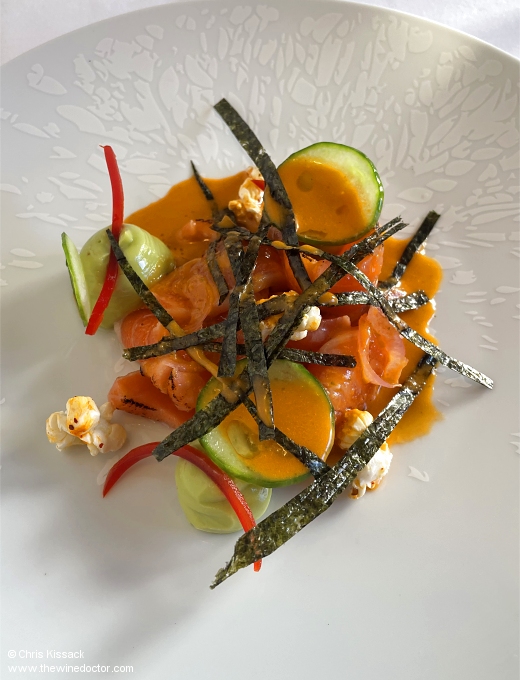
Tataki de truite à la flamme
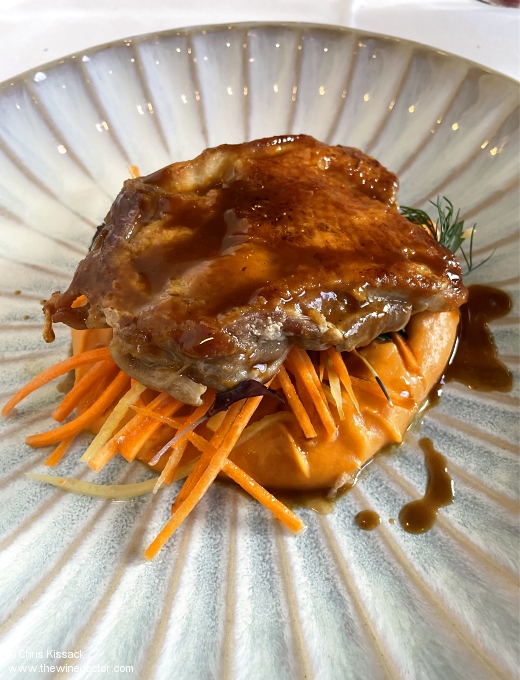
Haut de cuisse rôti
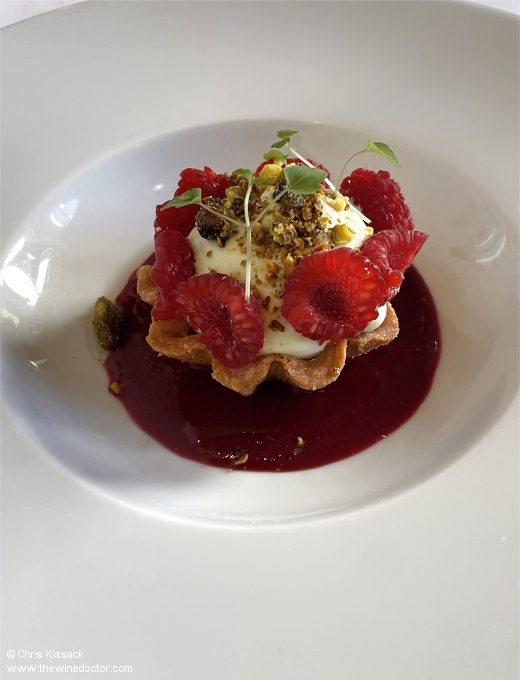
Tartelette framboises et avocat
The Wine:
Domaine du Facteur Vouvray Brut Nature NV
Domaine de la Garrelière Le P’tit Ch’nin (IGP Val de Loire) 2024
Domaine de la Noblaie Chinon Les Temps de Cerises 2024
Richelieu is one of the most remarkable towns in the Loire Valley, indeed in all France.
The seigneurie of Richelieu was the ancestral home of Cardinal Richelieu (1585 – 1642). After the title came to the Cardinal in 1621 he replaced the family’s fortified home with a great château and walled garden. He then went on to build, with permission from Louis XIII (1601 – 1643), a walled town surrounded by murailles et fossés, in other words walls and defensive ditches.
What makes the town remarkable is its rectangular grid-like design. Richelieu gave tax breaks to anybody following his architect’s street plan; naturally, everybody did. Four hundred years later, while Richelieu’s château has long been razed to the ground, the gardens and town remain as testimony to this era.
The defensive ditch on the south side is known, for some unknown reason, as the Fossé Saint Ange. I confess I have never paid the ditch, nor the restaurant which sits here, at the southern entrance to the town, much attention. Especially as, whenever I wandered past, it seemed to be closed.
Until now, that is.
The restaurant was previously run by local Myriam Montagner, more recently in conjunction with a new business partner, Véronique Vanwynsberghe. It opened. It closed. It opened again. It closed again. In 2024, however, it came into the possession of Johann Leclercq and Collis Bastel, and now it is most definitely open.
Leclercq, a former teacher and professional singer, looks after the front of house, while Bastel, a professional ballet dancer who retrained as a chef, mans the hobs. Their partnership has, based on my recent visit, elevated the restaurant to an interesting level.
First to cross the threshold as the noon peal rang out from Richelieu’s church bells, I had the pick of the tables within. Behind the unusual facade of wooden panels I found a very traditional bistro setting, of sparsely placed tables for two and an intriguing selection of mismatched chairs. Spotting a diminutive cast-iron staircase in the corner I was immediately tempted to explore upstairs, but my rumbling stomach persuaded me otherwise, and I eventually took a seat close to the door. Not because I intended to make a quick getaway, but having tried most of the available options this table had the most comfortable chairs.
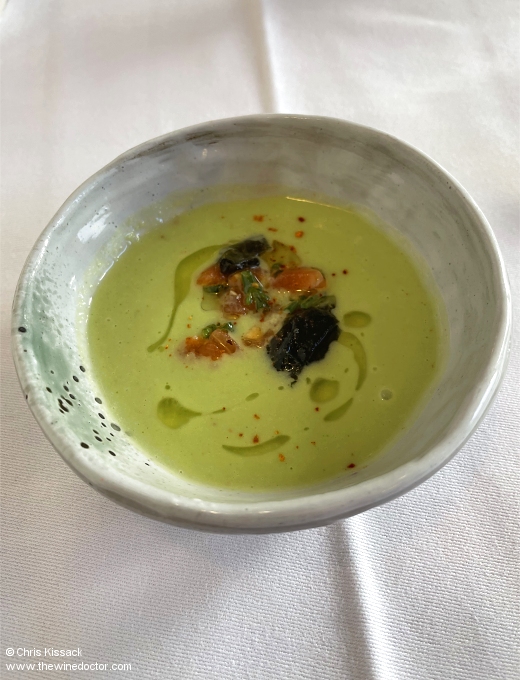
Having made my selections from the menu (offering a choice of two entrêes, three plats, a cheese selection and two desserts, with set-menu pricing for three or four courses) I was first presented with an amuse bouche, essentially a cool green gazpacho which blended cucumber, avocado, seaweed and fennel, with a little diced trout for sex appeal. On a sweltering late-summer’s day (by the way, living most of the year in Scotland, anything above 15°C is “sweltering”), this dish provided a welcome and refreshing lift. And I hurried it along with a glass of the non-vintage Vouvray Le Facteur Brut Nature from Fabian Brutout, a wine I used to have delivered to me in Scotland before Brexit ruined that convenience.
From the two starters offered I plumped for the tataki de truite à la flamme, the trout simply gorgeously melting and sweet – Bastel clearly has a very good poissonnier – and the tataki-style searing, seemingly too light to make any perceptible impact, didn’t detract from its quality. Served with slivers of seaweed, little crudités and puréed vegetables, the whole dish came together with the spice of the jalapeño coulis. And it worked well with my glass of acid-rich 2024 Le P’tit Ch’nin from François Plouzeau of Domaine de la Garrelière, the last vestige of a great vineyard planted on the orders of Richelieu himself.
After this rather swish beginning I went for a more classic bistro-style dish with the haut de cuisse rôti, the thigh of some farmyard bird, the meat dark and tightly layered, the skin fairly crisp, which was served atop a bed of seasonal vegetables – mostly carrots – in julienne and puréed form. This was another hit for me, giving good savoury flavours and nicely dense meat. Even the rather light-footed 2024 Chinon Le Temps de Cerises, from Jérôme Billard at Domaine de la Noblaie, seemed to agree with my choice.
Skipping the cheese I opted for the pudding, which was a sensation, an intensely flavoured raspberry coulis upon which there floated a crunchy pastry case filled with avocado cream – it tastes much better than it sounds, more like a rich crème anglaise, with just a tinge of Blackadder’s purest green to the hue – and dressed with raspberries and shards of toasted and pralined pistachio. This was a treat, both for the eyes, the presentation undeniably a delight, and for the palate.
Leaving the restaurant I walked through Richelieu’s central square, pausing to watch the arrival of some newlyweds at the mairie, which gave me a moment to reflect on my lunch. I live quite close to Chinon, so dine there most often, but have on occasion rued the absence of a really good restaurant in Richelieu. It seems, however, that I need lament no more, as the offerings from Fossé Saint Ange are tip-top, and I will be certain to return here. My only disappointment is that Johann, a trained singer, did not feel moved to entertain us with an aria or two. I hear he has been known, on occasion, to serenade diners with a little Tosca and Turandot between courses. Perhaps he saves his vocal cords for the evening service.
All the more reason for me to head back here in the future, then.
Please log in to read the tasting notes associated with this dining report: