Home > Vintages and Regions > Bordeaux > Bordeaux 1989

Bordeaux 1989

Bordeaux 1989

Vintage Review

Towards Maturity

Tasting, May 2000

Tasting, January 2002

The 1989 vintage is generally regarded as an excellent if not outstanding vintage for Bordeaux, it being one of the triumvirate of successful vintages that this region enjoyed over the years from 1988 to 1990. Bordeaux is a vast and heterogeneous viticultural region, however, and it is therefore important to remember that although a successful vintage for Bordeaux as a whole, some appellations will always fair better than others.

Vintage Review

Bordeaux 1989The 1988 harvest followed a damp and dreary summer, but was characterised by fine October weather. In 1989, however, the conditions were supreme, one long year of sun to surpass anything seen the previous vintage, in fact it surpassed the weather conditions of many vintages of the 20th Century. April was the one exception, but otherwise every month was warmer, drier and sunnier than the average for the last 30 years.

Looking specifically at the summer months, from june through to the harvest in September, this was a record-breaking vintage. There were more hours of sunshine, higher daily maximum temperatures, and less rainfall than every year on record back to 1952. The only exception was 1961, which had seen even less precipitation than 1989. With such favourable conditions, it is no surprise to learn that this was an early harvest. Flowering was more than two weeks early, and as the fruit then developed without a hitch the veraison, the point where the fruit changes from green to purple, was also two weeks earlier than usual.
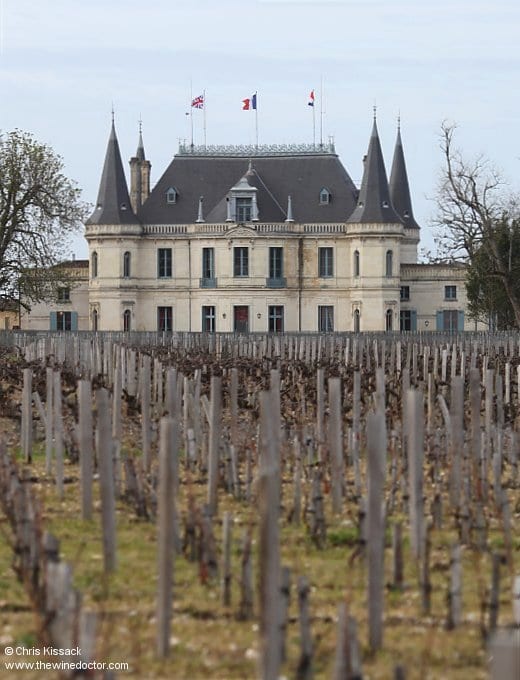
The major problem with the vintage was achieving a good balance of ripeness; early assessments of the ripening fruit demonstrated that sugar levels were advancing rapidly, but physiological ripeness - noted by the firmness of the berries, whether they pull away from the vine easily, the maturity of the pips - lagged behind. A physiologically unripe grape, with its green rather than brown pips stuffed with unripe tannins gives these flavours and characteristics to the wine, but in waiting for the fruit to ripen further the sugars will also continue to rise, and equally importantly the acids will continue to fall. As a result some anxious growers picked too early, but those who waited brought fruit of exceedingly high quality, sugar-rich, tannin-rich and full of promise. The alcoholic potential of these supremely ripe grapes was also very high. All of the red varieties were ideally ripe and mature, although not for the first time conditions favoured St Julien, Pauillac, Pomerol and other regions, but not Margaux (the same can be said for the outstanding 1982 vintage).

Surprisingly, despite the generally dry weather, this was also a very good vintage for Sauternes. In October, prompted by just a little rain, the botrytis appeared and it swept through the vineyards and the fruit, already rich and sweet to begin with, quickly dessicated. The potential was huge, and it was perhaps more than some estates could cope with, the wines achieving a rather fat, top-heavy style rather than one more energetic. The top estates, however, produced very elegant wines, with concentrated fruit and botrytis flavours balanced with good acidity and freshness. (21/5/00, updated 14/8/08)