
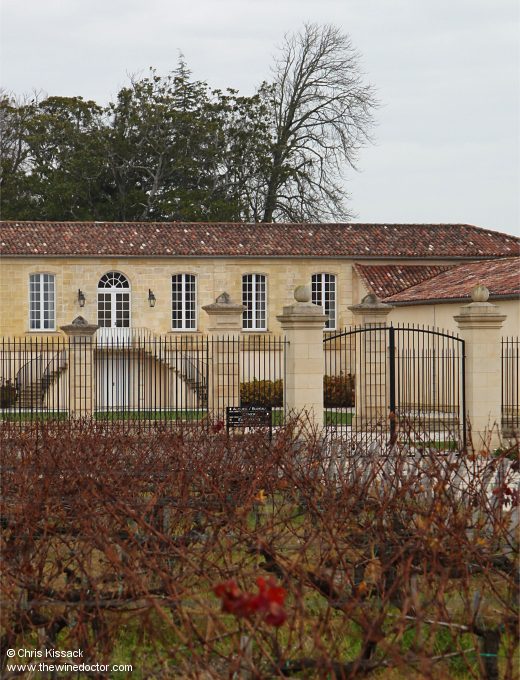
Château Laffitte Carcasset
Ranking: Cru Bourgeois Exceptionnel (Cru Bourgeois Classification)
Appellation: St Estèphe
Owner: Pierre Rousseau
Ten-second primer: An under-the-radar St Estèphe Cru Bourgeois estate which quietly ascended to Exceptionnel status. Under Rousseau, the range of wines has been expanded greatly to include a fistful of reds and a white, and there is a new emphasis on wine tourism.
This profile includes: Three pages of history and detail (links above), and tasting notes back to 2010.
For him they raise not the recording stone –
His death yet dubious, deeds too widely known;
He left a Corsair’s name to other times,
Link’d with one virtue, and a thousand crimes.
– The Corsair (1814), Lord Byron
Byron’s long-form poem The Corsair tells the tale of Conrad, a corsair and leader of a band of pirates who is guided by personal honour, an unusually deep sense of duty and a solid moral code. Within its many pages Byron deals with themes of love and loss, moral ambiguity, freedom and bravery, all up to the point at which Conrad – distraught at the death of his true love Medora – disappears from the world leaving his band of followers leaderless.
Despite the hero’s name, it has been suggested that Conrad’s honourable character was inspired by the story of Jean Laffitte (c.1780 – c.1823), a gentleman pirate and folk hero who operated out of Louisiana in the early years of the 19th century. Laffitte (the spelling varies – in truth Lafitte dominated in his adopted homeland) was known to be French, although details regarding his place of birth vary, with Bayonne, St Malo, Brest, Bordeaux and Pauillac all suggested as possibilities.
Thus there is no certainty that the famed corsair was in any way related to the noble Laffitte clan who established a vineyard not far from St Estèphe. Nevertheless, this has not stopped the current proprietor and his team creating a new cuvée in his honour.
Before we come to this triumph of marketing, however, I will turn back to the Laffitte clan of Bordeaux, and the very origins of Château Laffitte Carcasset.
Origins
The estate’s history can be traced back at least to the mid-18th century. The earliest reference to the vineyard itself date to 1759, while the vines are reputedly identifiable on 18th-century maps of the Guyenne produced by Pierre de Belleyme (1747 – 1819), and Carcasset is marked on maps of the Médoc made by César-François Cassini de Thury (1714 – 1784).
Please log in to continue reading: