Home > Producer Profiles > Bordeaux Profiles > Château Labégorce-Zédé

Château Labégorce-Zédé

The wine drinker new to Bordeaux is unlikely to encounter many bottles of Labégorce-Zédé. Although once a popular cru bourgeois estate with a reputation for turning out wines that offered both quality and value, no doubt down to the hard work of Luc Thienpont, the proprietor during the latter years of the 20th century, Labégorce-Zédé was sold by Thienpont to Hubert Perrodo, who owned neighbouring Labégorce, in 2005. The acquisition was no accident; the origins of Labégorce-Zédé and Labégorce are one and the same, and for some reason Perrodo was set upon reuniting these properties into a unified whole. This was eventually achieved (although it was Hubert's daughter Nathalie that saw it through), and thus Labégorce-Zédé essentially ceased to exist. It now lives on only though old vintages (and old profiles); my cellar is now long devoid of the former, but my profile will remain here, as a historical reference to the existence of this estate, if nothing else.

A Brief History of Labégorce-Zédé

Labégorce-ZédéAs indicated above the origins of Labégorce-Zédé and Labégorce are one and the same, and thus much of the detail here is repeated in my Labégorce profile. They were born of a large estate which existed in the northern parts of the commune of Margaux perhaps as long ago as the 14th century, and which belonged to the Gorce (or Gorsse) family. The family were originally merchants, gradually climbing the social ladder in Bordeaux, assuming a more aristocratic standing in the community as they did so. They were still the proprietors here in the 18th century, and documents from that time indicate that there was viticulture on the estate, the vines coexisting with wheatfields and pasture where a herd of cattle grazed. This was the situation at the time of the French Revolution, when like so many other estates in Bordeaux, Labégorce was divided up as a bien national, and sold off, giving rise to three individual estates. The first, that which concerns us here, was Château Labégorce-Zédé, the other two being the aforementioned Labégorce and the curiously named L'Abbé Gorsse de Gorsse, an estate long defunct as far as viticulture is concerned (the original château burnt down, and the vineyards were acquired by Château Margaux), but which was still clearly visible on recently available maps of the commune.
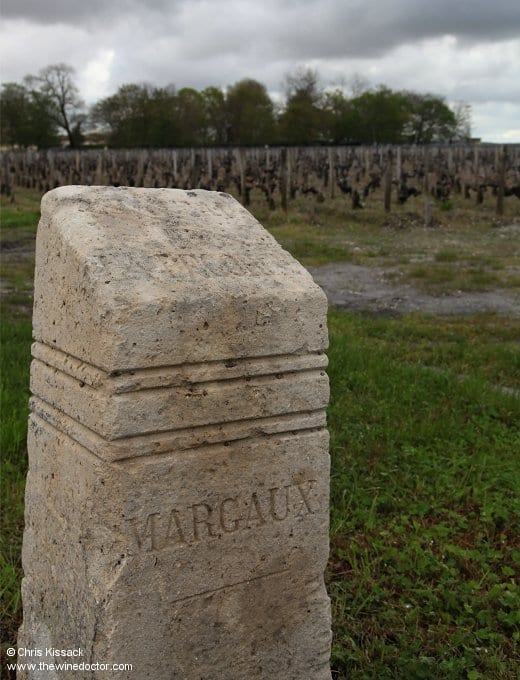
The estate that was destined to be the Labégorce-Zédé of today was purchased by Barthélémy Benoist in 1795. It was subsequent to this sale that the estate acquired its new name, as the estate passed to Benoist's daughter who married a merchant called Jean-Emile Zédé. The estate then passed to their son Pierre Zédé, who is generally credited with renaming the estate. Of his three sons, it was the eldest, Emile Zédé, who inherited the domaine and vineyards, buying out other interested family members as required. He passed it to his children, who subsequently sold it to Pierre Hubert Eyrin, the régisseur at the estate, in 1931. The property subsequently changed hands five times before eventually coming into the ownership of Jean Battesti in 1961.

Battesti was returning to France after many years living in Algeria, then under French rule, and he was looking for a change of direction. He renovated the château and moved in, and he began to invest in the vineyard and cellars too. Things were looking up at Labégorce-Zédé, and when in 1979 Battista sold to Luc Thienpont, a name perhps more readily associated with famed right-bank properties such as Le Pin (Jacques Thienpont, Luc's brother) or Vieux Château Certan (Alexandre Thienpont, Luc's cousin) than any Margaux Cru Bourgeois, it seemed as though this upward trend would continue. There was renewed investment and new planting, and under Thienpont's direction the reputation of the wine climbed dramatically. It came as some surprise, then, to hear of the sale of the estate in 2005. The new owner was to be Hubert Perrodo, a petrochemical magnate, whose plan, as I have indicated above, was to reunite all three of the original Labégorce estates. Following his tragically premature death in a skiing accident in late 2006, however, this responsibility fell to his daughter, Nathalie Perrodo.

In the years that followed her father's death Nathalie remained true to his aims, and with the 2009 vintage Labégorce-Zédé ceased to exist as an independent wine estate. For full details on how the Labégorce-Zédé vines contributed to the newly reunified Labégorce vineyard, please see my Labégorce profile. In the meantime, should you be fortunate enought to encounter a mature bottle of this wine from before the amalgamation, there are presented here some details on the Labégorce-Zédé vineyard which remain pertinent for vintages up to 2009.

The Labégorce-Zédé Vineyards

The vineyards accounted for 27 hectares of the Margaux appellation, with a typically deep, coarse, gravelly terroir. The vines were 60% Cabernet Sauvignon, 33% Merlot, 5% Cabernet Franc and 2% Petit Verdot. Of these, one third were of a good age, having been planted during the 1950s, one third were planted under the direction of Jean Battesti between 1965 and 1973, and the remaining third were young vines, having been established during the tenure of Luc Thienpont. The fruit was harvested by hand, with a yield in the order of 50 hl/ha, then rigorously sorted before arriving in the cellar, which had been renovated by Battesti. The must was fermented according to parcel of origin, with thermoregulation holding the temperature down to 30ºC. The wine was macerated for up to three weeks, before going into oak barrels, 50% new each vintage, for up to 18 months. The total output was 15000 cases, which principally included the grand vin, Château Labégorce-Zédé, and a second wine named Domaine Zédé (sometimes referred to as Zédé de Labégorce-Zédé), introduced in 1984, and which accounted for up to half of the production of the estate. There was also, since 1988, a third wine called Z de Zédé, which was made from a 9-hectare plot entitled to the appellation of Bordeaux Supérieur. All this came to an end with the 2009 vintage though, as the vines were subsumed into the new Labégorce estate.

Without a doubt, of the two portions of the original Labégorce estate that survived, it was Labégorce-Zédé which possessed the more exalted reputation. Nevertheless, when rechristening the reunified estate it was only naturally that it would return to its original name, Labégorce. Not only this, but Labégorce also possessed an attractive three-storey château, dating from the early years of the 19th century, and it was thus a natural focus for the new estate. And so it was that the name of Labégorce-Zédé disappeared forever, our only memory of it now in the second wine (which is to be named Zéde de Labégorce), as well as all those cellared bottles of course. And, although mine are long gone, I know (or at least I hope) that there are still plenty out there. (16/5/07, updated 31/8/11)

Contact details (as for Château Labégorce):
Address: Château Labégorce, 33460 Margaux
Telephone: +33 (0) 5 57 88 71 32
Fax: +33 (0) 5 57 88 35 01
Internet: www.chateau-labegorce.fr
GPS: 45.049628, -0.687729

Château Labégorce-Zédé - Tasting Notes

Click to locate stockists.

2004

Domaine Zédé (Margaux) 2004: The second wine. A deep, fresh red hue on inspection, still obviously a young wine. An appealing perfume of classic gravelly fruit and perfume. There is good substance here, a subtly fleshy texture with a nice acidic backbone, with good extract, tannins and grip. It is perhaps rather dry and a touch stalky, but overall I think this is good and it certainly has potential for the cellar. From the 2007 CIVB tasting. 16+/20 (October 2007)

1989

Château Labégorce-Zédé (Margaux) 1989: Lovely colour. A rose-petal and tobacco leaf nose. This wine also has good balance, although there are more prominent tannins. Well-built, fruit laden palate. Low acidity. Finishes well, but short. Great for drinking now, but doesn't have the substance of the other wines. From a Bordeaux 1989 tasting. 17/20 (May 2000)

1982

Château Labégorce-Zédé (Margaux) 1982: A cru bourgeois property. A dark, brown/tawny edge to a deep red hue. Good mature fruit on the nose. The palate is full and rich, with a firm, spicy edge. Good strong acidity. A bit tarry. Tannins well integrated. Good finish with some length. Certainly ready now. From a Bordeaux 1982 tasting. 16.5/20 (May 2004)