Home > Producer Profiles > Bordeaux Profiles > Château Montrose
Château Montrose
"The key to success with Château Montrose", opined my knowledgeable friend, "is to tuck away a bottle, preferably a wine from an off vintage, in the cellar and then simply forget about it. On returning in fifty years time you will find a vinous pleasure beyond the comprehension of us mere mortals." Sadly my own tasting experience does not include examples of Château Montrose as they enter their sixth decade, but my friend was quite adamant that the 1952 (actually I forget the vintage, but it was certainly about this sort of age) was one of the best wines he had drunk in many years. Clearly there is something very special about certain bottles of Montrose.
Not-So-Ancient History
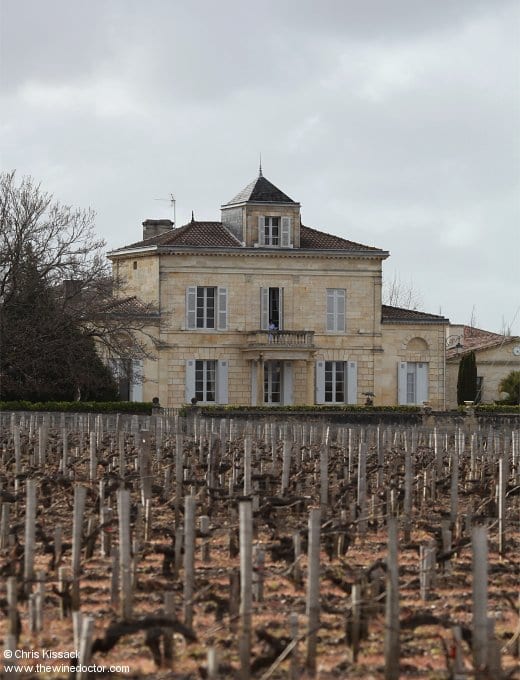
In researching the history of the vineyards of Bordeaux, it is not uncommonly that I find myself delving into medieval history, stories of 12th-century fortresses, ancient seigneuries and the Hundred Years' War. Not so with Château Montrose, which is one of the youngest of all the classed growths of the Médoc. At the end of the 18th century the land which today is the Montrose vineyard was nothing more than heather-encrusted moorland, owned by the Ségur family. In 1778 it was acquired, as part of the Calon-Ségur estate, by Etienne Théodore Dumoulin, who seems to have done little with it other than bequeath it to his children upon his death in 1806. Of his three children it was one of his sons, also Etienne Théodore, who took control. His attention was drawn to part of the estate, a plot of land to the south of the Calon vineyard and adjacent to the Gironde, entitled La Lande de l'Escargeon, the situation of which was such that it clearly had potential as a vineyard. Having cleared the heather and scrub the soil beneath was gravelly, and indeed was eminently suitable for the vine, and planting was underway by 1815, with good results. By 1820 Dumoulin had expanded the vineyard and erected a small château (below). Fast work indeed!

The vineyard remained part of this larger entity, the Calon estate, for four years until Dumoulin sold off much of his property, with the Calon vineyard passing into the ownership of Firmin de Lestapis. He retained the Escargeon vineyard though, and he continued to pour his energy into its development. Within a year the estate had been renamed Montrose and the wines were sold as Montrose-Ségur, the derivation of this new name uncertain, although writing in Grands Vins (University of California Press, 1995), Clive Coates postulates that it originates from mont-rose, referring to the pink heather that covered the gravel croupe before it was cleared in the establishment of the vineyard. Within eight years of the sale of Calon Dumoulin had a 30-hectare vineyard on his hands, and a chai and other buildings had sprung up to accompany the rather bijou château. Dumoulin's passion was unrelenting though, and through the purchase and exchange of vineyards with neighbours the Montrose estate continued to expand, the vineyard accounting for 50 hectares by the time of the 1855 classification, when it was ranked as a deuxième cru. The Dumoulin era, that which essentially saw the creation of Montrose, effectively came to an end in 1861 with his death in Paris, and his two adopted children inherited the estate. But it seems they had little interest in it, and five years on it was sold to the next great figure in the history of Montrose, Mathieu Dollfus.
Mathieu Dollfus & the Charmolüe Family
Dollfus was, in contrast to the vendors, very interested in the estate, and there was further investment and expansion under his tenure. He not only extended the chai and constructed new accommodation for the workers, he also built a well to provide fresh water. No doubt attracted by the employment benefits offered by the enlightened Dollfus, which included profit sharing and health care, both quite radical practices for the 19th century, it wasn't long before there was a small but thriving community living at Montrose. The estate essentially hosted a small village, the winery buildings now complemented by stables, farm buildings and avenues of plane trees, like those that still grace the little maze of paths (shown below) that lie behind the château to this day.

Dollfus even went as far as to construct a small railway to transport the wines from the cellars down to the river, where they rested on the newly-built landing stage before being shipped upstream to Bordeaux. And in 1887, shortly before his death, he continued his forward-thinking approach with the founding of a limited company for the purposes of managing the estate, the Société Viticole de Château Montrose, assuming the role of Managing Director. And so it was that with his passing the company passed to his heir, Charles Dollfus-Galline, who within two years had sold Château Montrose, the new owners being two brothers, Jean-Justin and Jean-Jules Hostein, who also owned Cos d'Estournel. Sole ownership quickly came to Jean-Jules, who sold it in 1896 to his son-in-law, Louis Victor Charmolüe, for a knockdown price. It remained in the Charmolüe family until very recently.
The end of the 19th century saw Phylloxera ravage the vineyards of France, but whereas Dollfus had struggled on with many of the novel techniques employed in the vain hope of eradicating the pest, it was Charmolüe that undertook the replanting of the vineyards on American rootstock. The quality of Montrose was maintained throughout his efforts, in the face of disease in the vineyard, war and economic depression. Montrose was still enjoying a good reputation when Louis Victor Charmolüe died in 1925, bequeathing the estate to his son Albe. Albe was forced to sell some plots of Montrose in the struggle to stay solvent, and to make matters worse a fire in the cellars in 1932 destroyed a considerable amount of stock. During World War II the estate was utilised by the occupying German forces as an artillery base, and the vineyards made a handsome firing range. It is perhaps not surprising that the estate and vineyards suffered some bomb damage. They were in a sorry state of affairs when Albe died in 1944, control passing to his widow Yvonne Charmolüe, and then to his son Jean-Louis in 1960. Supported by his wife Anne-Marie, Jean-Louis provided the much needed enthusiasm and investment to lift Montrose from this miasma, and indeed his efforts seem to have paid off. New equipment in the chai in 1975, and again in 1985, a new barrel cellar and the introduction of a second wine in 1983 were just part of the program of renovation and refurbishment. He sowed the seeds for Montrose's renaissance, which reached a crescendo at the turn of the century with some highly lauded wines, not least the almost mythical and certainly most expensive Montrose ever, the 2003. The estate and the wines were enjoying a grand reputation when, in 2006, it looked set to change hands once more.
Montrose Today
Montrose went on the market in early 2006, the buyers this time being the Bouygues brothers, Martin and Olivier, construction and telecommunications magnates. The sale went through, although the dust stirred up by this transaction took some time to settle. An immediate challenge to the sale was made by Caroline Charmolüe, a daughter from Anne-Marie Charmolüe's first marriage, her reason for doing so reputedly an opinion that the agreed price was too low, although it may also be - as reported by French news service 20 Minutes - because the new administration put an end to the wages Caroline was drawing from the estate. This was despite the fact that Caroline, a divorcee who lived in St Emilion with her two children had, according to reported comments from her stepfather Jean-Louis, very little role in the running of the property.
But this is now old news, and many years on nothing seems to have come out of
this little storm in a wine glass. The reporting of the court case died out, and
the Bouygues brothers today retain full control, stamping their authority on the
estate, developing and shaping it to their will. Much of their work has focused
on the environmental impact of Montrose, reducing their energy consumption by
installing a geothermal pump which can be used to heat or cool the buildings as
required, solar power to generate their own electricity, and commencing a
programme of water conservation. On the wine side of things, perhaps the most
notable of developments under their aegis is the installation of Jean Delmas
(left), onetime winemaker at Haut-Brion,
in charge of the chai. He presides over the primeur tastings at
Montrose in a regal fashion, showing not only the wines of the Montrose estate
but also those of the Bouygues brothers' other vinous acquisition,
Tronquoy-Lalande. Meanwhile Jean-Louis and Anne-Marie Charmolüe have left to
take on the running of a small domaine in Provence; perhaps for them this is a
welcome escape from the rumour-mill which turns so efficiently in Bordeaux.
Vineyards and Vinification
The vineyard grew to reach a size of 65 hectares under the tenure of Dollfus, and very little changed with subsequent owners, until the Bouygues administration at least. They acquired a vineyard that accounted for 67 hectares, but under their tenure it has seen considerable expansion, so that today it accounts for 95 hectares. Much of this increase in surface area has been accounted for by the purchase in 2010 of 22 hectares (of which 21.5 hectares were planted with vines) from Thierry Gardinier of Phélan-Ségur, which lies just to the north of Montrose. This catapulted the Bouygues brothers to the top of the St Estèphe league table as far as vineyard ownership goes, as with their other estate Tronquoy Lalande they now have well in excess of 100 hectares within this appellation. It also puts Montrose at the top of any land valuation table; at a price of €900,000 per hectare this was the most paid per hectare for any St Estèphe transaction, although such figures are much closer to the norm in Pauillac or St Julien.
The vineyards
(a parcel is shown here on the right, complete with swallow overhead), are beautifully positioned on a slope running right down to the
Gironde in the south-eastern corner of the
St Estèphe commune, in a single block surrounding the château. This block
includes the vines purchased from Phélan-Ségur, which are in a lieu-dit
named Fontpetite. That the Phélan vines should slot so neatly into the Montrose
block should perhaps not come as a surprise; it seems that these vines were once
part of the Montrose vineyard, so this recent acquisition could perhaps be
viewed as bringing this lost vines back into the fold. The terroir underfoot is largely gravelly,
this being the most northerly of the great gravel croupes which run alongside the
Gironde and which have proved to be such perfect soils for the red grapes of
Bordeaux. Nevertheless there is some variation across the vineyard, with some
areas of clay and more sandy, alluvial influences closer to the water. But it
is the deep swathe of gravel that dominates.
The vines themselves are 60% Cabernet Sauvignon, 32% Merlot, 6% Cabernet Franc and 2% Petit Verdot, planted at a density of 9000 vines per hectare. The mesoclimate is favourable, mainly because of the proximity of the Gironde, and also the slope of the vineyard, generally allowing slightly earlier harvest here than elsewhere in the Médoc. This is done manually, and each year the pickers travel to Montrose for the harvest from the same village in Andalusia, a tradition that goes back more than 40 years. Picking commences according to tasting of the fruit as well as technical analysis, and then proceeds in a plot-by-plot fashion. There is a basic triage of fruit in the vineyard, followed by a sorting table in the chai, before fermentation in stainless steel accompanied by pumping over to submerge the cap, undertaken several times per day. There is a degree of pre-assemblage, blending new-born wines from the same variety and same quality level, prior to malolactic fermentation. The true assemblage process begins with tastings during November, followed by blending of the wine based upon the tasting results in December, and the wine finally goes into barrel in January the following year.
The Wines of Château Montrose
The oak utilised is 60% new for the grand vin, Château Montrose (typically 19000 cases per annum), the remaining 40% one-year old, and the duration of the élevage may be 16-18 months. For the second wine, La Dame de Montrose (typically 9000 cases per annum), the oak will be 15-20% new, and the duration of élevage will be shorter, typically 12 months. Incidentally, this cuvée is named in honour of Yvonne Charmolüe, who ran the estate from 1944 to 1960. Racking occurs in the traditional fashion, every three months, and the eventual fining is achieved using egg whites before bottling.
Thinking back to my friend's comments, which referred to a specific
experience with one bottle, the thought that Montrose might overperform in
weaker vintages is perhaps a rather simple assessment. It is more widely
accepted that Montrose is a property that offers great consistency through many
vintages, poor and strong, and also has a propensity to age very well, with
bottles from the first few decades of the 20th century reported to be holding up
very well. A slightly more recent vintage than my friend's, the 1964, shows how
Montrose may benefit from the aforementioned favourable climate, as earlier
picking meant Montrose was one of the few estates that excelled in this very wet
vintage, most others bringing in swollen, diluted grapes following extensive
rain. The 1997 vintage was another difficult year in which Montrose certainly faired much better
than many of its peers.
Other vintages display the success of the 1980s, with even the 1983, often reported to be a weaker vintage for Montrose, encountered in a blind horizontal tasting, showing very well indeed. More recent vintages, largely tasted during the primeur tastings, have perhaps not been so enthralling especially when compared to those from neighbouring Cos d'Estournel, although how much this reflects the reserved nature of Delmas in assembling the barrel samples for journalists, compared to the showmanship found at some other estates, is perhaps open to question. Having said that, the 2010 appeared to dispel my once-held belief that Montrose is always and unassailable during the primeurs; in this vintage it was one of the most succulent and convincing examples of this wine that I have encountered. Clearly, this is an estate still on the up and, while I can still afford it (something that certainly doesn't apply to the 2003 vintage - hence the absence of any tasting note below) I am very content to add a bottle or two, from years such as 2004 and 2005, to my cellar. In the most recent vintages, however, this is another example of classed growth Bordeaux now too expensive for all but the fortunate few. (31/1/07, updated 30/7/09, 7/9/11)
Contact details:
Address: Château Montrose, 33180 St-Estèphe
Telephone: +33 (0) 5 56 59 30 12
Fax: +33 (0) 5 56 59 38 48
Internet:
www.chateau-montrose.com
GPS: 45.246371, -0.761501
Château Montrose - Tasting Notes
Château Montrose (St Estèphe) 2010: This
is 64% of production, and the assemblage is 53% Cabernet Sauvignon, 37%
Merlot, 9% Cabernet Franc and 1% Petit Verdot. The alcohol is 13.8%. This
particular barrel sample has a very dark, crimson-black hue with a thin crimson
rim. The first point of impact is on the nose, which is just delightful, the
very dark fruit taking on a perfumed and very floral character, with a little
pencil lead too, laced with little notes of soot suggesting an undercurrent of
tannin. A great purity here, despite the fine concentration so evident.
Following on in the same vein the palate is beautifully harmonious, the polished
and sweet layer of fruit filling the mouth, the tannins beautifully covered by
this uppermost of many layers, only appearing very slowly from beneath the fruit
of the sample with a defined, grainy, subtly soot-stained character. This is,
remarkably for Montrose, almost seductive in its composition. In fact it is very
seductive! Yet beneath it all, perfectly integrated within the substance of the
wine, there is structure, provided by some intense, firm, cokey but very finely
grained tannins. This could be, given time, superb. A great success! From my
Bordeaux 2010
primeurs assessment. 18-19/20
(April 2011)
![]()
La Dame de Montrose (St Estèphe) 2010: The second wine
of Montrose.
Cabernet Sauvignon 64%, Merlot 36%. The alcohol is 13.7%. Like the grand vin,
La Dame has a lovely expressive style, full of smoky black plum character, with
little hints of star anise and black tea. This is dense and very impressive.
These are just beautiful aromatics. The palate is less flashy than I was
expecting from this rather expressive nose, but there is still a lovely presence
of fruit here, which seems very well matched with the supple, grainy tannic
structure coming in from underneath. It has lovely fresh acidity too. The finish
is polished and fine, the dark fruits sitting in a frame of perhaps - trying to
find some criticism - rather velvety-chewy but nevertheless very ripe tannins.
This is deliciously integrated. I hesitate to suggest it, but is this a wine
that could actually give some value for money? From my
Bordeaux 2010 primeurs
assessment. 16.5-17.5/20 (April 2011)
![]()
Château Montrose (St Estèphe) 2008:
This is 65% Cabernet Sauvignon, 30% Merlot, 4% Cabernet Franc and 1% Petit Verdot,
and comprises 60% of the estate's production. Harvest ran from September 29th to
October 15th, average yield 44 hl/ha. The
character here is very reticent, with withdrawn berry fruit on the nose. The
palate doesn't have a great impact, but it has freshness, and a lot of
structure. big, grippy tannins, a lot of extract, but no sweetness. If you need
fruit, generosity or texture look elsewhere. From my
2008 Bordeaux
primeur assessment. 16-17+/20 (April 2009)
![]()
La Dame de Montrose (St Estèphe) 2008: The second wine
of Montrose is 44% Cabernet Sauvignon and 56% Merlot, and comprises 28% of the estate's
production. Harvest ran from September 29th to October 15th, average yield 44
hl/ha. Reticent fruit here, like the grand vin.
It is ripe, with red fruits. The palate is soft, open and rather loose knit,
with a diffuse midpalate. Good grip underneath though, although with quiet
fruit, and quite a hard grip on the finish. A little short on vigour. From my
2008 Bordeaux
primeur assessment. 14.5-15.5+/20 (April 2009)
![]()
Château Montrose (St Estèphe) 2007: If you like green (and
personally I'm definitely not allergic to it) then this is the wine for you. This has a firm
green streak running though the aromatic profile, quite dominant in fact, with
immediate suggestions of green peppercorn and smoked mint. The palate has a
supple and quite nicely formed structure, with a fine seam of quite grainy
tannins which are impressive for the vintage, perhaps becoming rather more
coarse towards the middle, with much less prominent acidity than I was
expecting after that impression on the nose. There is a perfumed red-fruit edge
to it as well. Quite well integrated and elegant on the palate. There is
some astringency here though. But overall I would take it rather than leave it. From a
2007 Bordeaux
tasting at four years of age. 16/20 (November 2011)
![]()
Château Montrose (St Estèphe) 2007: This
is 64% Cabernet Sauvignon, 30% Merlot, 5% Cabernet Franc and 1% Petit Verdot,
with 60% new barrels. A dense hue, and on the nose little more than some smoky, brooding fruit. Very
complete style on the palate, easy and approachable with some substance. The
tannins are well covered, and there is some texture which is impressive for the
vintage. It seems ripe, and impressive in terms of its dry structure. Fresh
acids too. There is some potential here. From my
2007 Bordeaux
en primeur assessment. 16-17+/20 (April 2008)
![]()
La Dame de Montrose (St Estèphe) 2007: The second wine
of Montrose is 68% Cabernet Sauvignon
and 32% Merlot, and 15% new barrels. An appealing crimson rim.
Sweet vanilla and blackcurrant on the nose, but also an overt green character.
Nicely balanced on the palate, the tannins seem ripe despite the unripe aromas.
Not very well defined or vigorous on the palate, but it is softly approachable
despite the structure underneath. From my
2007 Bordeaux
en primeur assessment. 13-14+/20 (April 2008)
![]()
Château Montrose (St Estèphe)
2005: A fine opportunity here to taste this, as I have
some in the cellar. The aromatic profile consists of a very rich but well-honed presence of
fruit, clearly very youthful, but pleasingly still open to assessment even
though we are now at five years of age. On the palate the fruit has an intense but
still very primary character, well polished despite its youth. Having had such
attractive aromatics lull me into a false sense of security, the palate is more
as I would expect at this moment, showing all substance and structure and no pleasure at the moment. The texture has a great, polished
style, very firm and composed, bitter almost, with firm and ripe tannins which are actually very
well hidden, together with an appropriate seam of acidity. Very savoury, restrained,
masculine and in need of time. Perhaps a couple of decades, or
maybe more, will do it? From a
not the 1989 vintage
tasting with Handford Wines. 18.5+/20 (October 2010)
![]()
Château Montrose (St Estèphe) 2004:
Dark, black, perfumed fruits here, beautifully exotic and yet composed, with
elegant, bright, minerally, stony character. Broad, with a touch of elegant
cream, good vinosity, harmonious and yet firm. It has a well covered dense
tannic structure at its core, giving a good grip behind all the fruit, rounded
off in a firm, savoury finish. Good length too. This is a really excellent wine.
From a 2004 Bordeaux
tasting at four years of age. 18+/20 (November 2008)
![]()
Château Montrose
(St Estèphe) 1997: A dark, mature colour. On the nose this wine is
inky, dull, fairly closed. On the palate it has a rounded texture, with
somewhat sweet fruit, and good balance. Fresh, cleansing acidity. Some
tannins and a little length. After tasting the remaining wines it
becomes apparent that this is one of the better wines of the tasting. From a 1997 Bordeaux
tasting. 15.5/20 (February 2003)
![]()
Château Montrose (St Estèphe) 1995: This darkly coloured but clearly
maturing wine really needs at least three hours before it really starts to open
out, revealing with this sort of time in the decanter classically burly St
Estèphe aromas, with notes of gravel with a subtle, white flower perfume. Behind
it there are little nuances of iron filings and tea leaves, and later on more
exotic aromas of black olives, black beans and dry soy sauce. On the palate
there is a little generosity that develops with air, providing a good texture
and substantial body, but this is certainly still a wine trading on structure
and potential at the moment. Dry, composed, with a svelte tannin core and fresh
acids, this is a wine full of promise, Right now it starts off with the
mouthfeel of a polished billiard ball, initially unyielding but there is
substance within. With time in the glass it shows more generosity and ultimately
this is fine to drink now with the right food but it is really crying out for
more time, another 3-5 years at least. From a
1995 Bordeaux tasting. 18+/20 (March 2010)
![]()
Château Montrose (St Estèphe) 1989: Not a vintage of Montrose that I have tasted
before. Although this doesn't seem very expressive at first
it does soon open up to reveal some very typical but still remarkably tight and
youthful, claretty fruit. Incredibly this just doesn't come across as anywhere
near ready yet. Nice substance on the palate, quite old school, dry and upright
but without any sense of austerity. Well judged fruit here, neither austere nor
too sweet. Fine acids here too. This will give a lot of pleasure but for my
palate it will benefit from a lot more time in the cellar yet. The longevity of Montrose shouldn't come as a surprise but this
impressive showing is still rather unexpected. From a tasting of the
1989 vintage at Handford
Wines. 18+/20 (October 2010)
![]()
Château Montrose (St-Estèphe) 1986: A good mahogany red colour. Rich
yet gravelly red fruit gives the game away - this has to
be the Montrose. Firm but elegant tannins on the palate,
with finely balanced acidity. Lovely stuff. From a
Bordeaux 1986 tasting.
17.5+/20 (February 2001)
![]()
Château Montrose
(St-Estèphe) 1983: A darker, treacle coloured wine. Black
fruit on the nose, with a touch of rubber and marked,
gravelly undertones. This wine is very different -
probably the St-Estèphe. A slim, elegant, black fruit
palate. Peppery notes, good balance, altogether a lovely
wine. From a Bordeaux
1983 tasting. 17/20 (November 2000)
![]()
Château Montrose (St-Estèphe) 1981: Also a
dense, caramel-purple wine. Toffee, ripe fruit and even a
touch of coffee on the nose. Ripe and fleshy on the
palate, loaded with mineral fruit. Good tannins and a
chewy structure, leading into a soft but powerful
finish. Very good. From a
Bordeaux 1981 blind tasting.
17.5+/20 (September 2001)
![]()
Château Montrose (St Estèphe) 1964: A
beautiful fading red hue, with hardly a touch of
tawniness to it. The nose is dominated by a beautiful
combination of rich, fruit gum raspberry fruit with
attractive, sweet oak, a truly enticing and elegant
bouquet. The palate has lovely texture, with more sweet,
clean fruit. Absolutely correct acidity, and gentle
tannins, mean this wine is drinking beautifully right
now. The finish retains that silky texture, and there is
a pleasant length. The September rains in Bordeaux in
1964 ruined many wines, but Château Montrose, who
finished picking just before the rains began, have
crafted a superb wine here. From a Bordeaux
1964 tasting. 17.5/20 (October 2000)
![]()