Château d’Armailhac
Ranking: Fifth growth (1855 Classification)
Appellation: Pauillac
Owner: Baron Philippe de Rothschild SA
Ten-second primer: One of a trio of properties owned by this branch of the family (along with Clerc-Milon and Mouton-Rothschild), with vineyards sandwiched between the latter estate and Pontet-Canet. Winemaking overseen by Lucie Lauilhé & Jean-Emmanuel Danjoy.
This profile includes: Four pages of history and detail (links above), and tasting notes back to 1989.
Around the corner from Château Mouton-Rothschild lies another property which, since 1933, has been in the hands of this same branch of the Rothschild family. This is Château d’Armailhac, and in the time I have known the estate it has undergone a total and yet quietly executed transformation, one more dramatic than any undertaken along the length and breadth of the Médoc.
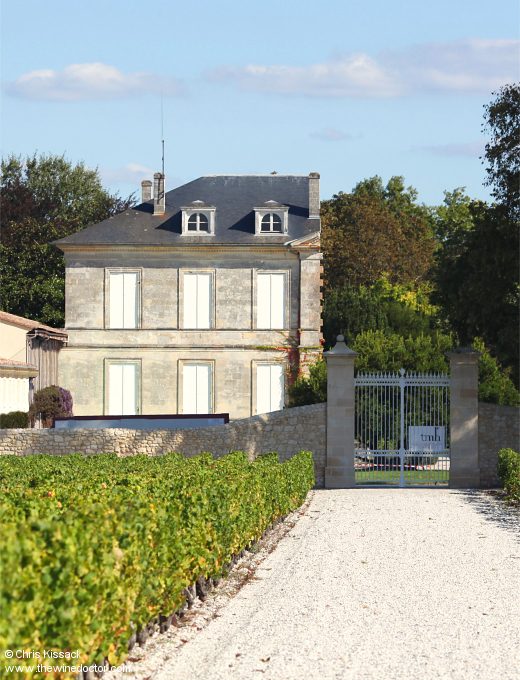
Looking back more than twenty years, to when I first visited Bordeaux, Château d’Armailhac was an estate worth a detour, as the château here was unlike any other that you would see along the length and breadth of the Médoc. Construction started in 1820, and came to a halt in 1830, with half the château – the left-hand half, as viewed it from the road – completed (as pictured below). I am sure that, once their finances recovered, the d’Armailhacq family thought they would be able to complete the building of their grand residence, adding a right-hand half to match. Sadly, this time never came, and what stood for the next two centuries was a unique half-château.
Perhaps sadly was not quite the most appropriate word to describe this stalled building project. I personally found great delight in the presence of this architectural curiosity nestled in among some of the grandest addresses of the Médoc. And as the estate has long been under the direction of the Rothschild family, now for more than a century, the investment and commitment here were significant, and that meant the wines more than held my interest as well.
For this reason I was saddened when I learnt that the days were numbered for this château (pictured below, for posterity). Having completed extensive works at their other property Château Clerc-Milon (also located close by), which saw new winemaking facilities built from scratch, which was then staffed by a newly installed and dedicated winemaking team, the Rothschilds turned their attention to Château d’Armailhac. I have to report that the half-château is no more, having been demolished and replaced by a suite of new buildings. I asked why it could not be saved. “It was rotten within,” was the reply. The response did not surprise me, the property having been uninhabited for decades. Every time I drove past it was shuttered-up, as in my photograph, which dates to October 2012.