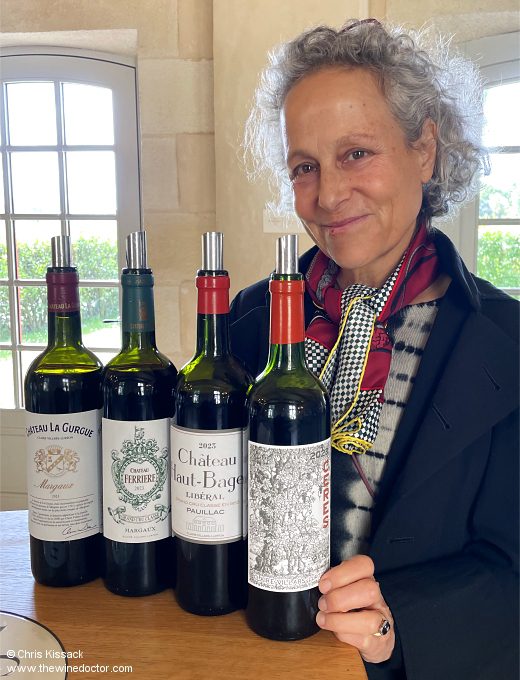
Château Haut-Bages-Libéral
Ranking: Fifth growth (1855 Classification)
Appellation: Pauillac
Owner: Claire Lurton
Ten-second primer: One of a huge array of properties passed down through the Lurton family, this is the flagship estate for Claire Lurton, a Bordeaux pioneer in the sphere of organic and biodynamic viticulture. Now leading the way in agroforestry. Wines made by Claire Lurton and Thomas Bontemps.
This profile includes: Four pages of history and detail (links above), and tasting notes back to 1982.
It is remarkable what a difference a few metres can make when it comes to vineyards and their wines. At the southern edge of the Pauillac appellation sits Château Latour, an estate which many – including myself – would regard as the appellation’s grandest. The château, dovecot and extensive winery buildings are surrounded by a gently undulating ocean of vines, old but strong, the waves of this vinous ocean carrying a spray of creamy white and pale-grey pebbles. The wines that come from these soils, these vines, is one of the most sought after in all Bordeaux.
And then, at the northern limit of the Latour vineyard lies the Route de la Rivière, a small road which runs down to the palus, the uncultivated pasture that borders the Gironde, before turning northwards and heading directly into Pauillac itself. On the other side of this lane is another vineyard with very similar soils, and the sign on the building on the other side of the vineyard, and the name on some nearby gateposts, identify the vineyard as that of Château Haut-Bages-Libéral. We have gone, in just a few paces, from celebrated first growth, to fifth growth underling. It hardly seems logical. But at the same time it is perhaps a promising situation; after all, what could be more appealing than an under-appreciated château nestled in the shadow of such a grand estate as Latour. Château Haut-Bages-Libéral and her wines clearly merit some exploration.
History
The early years of the property are rather unclear. What is certain is that the estate dates back to at least the 18th century, when it was in the possession of the Libéral family. Whether it was already a well defined estate when they acquired it, or whether they built it up in more piecemeal fashion, simply isn’t known. The Libérals were courtiers; these men oiled the wheels of Bordeaux business at this time (and still do today), their original role being to act as liaison between the négociants, who were holed up in their warehouses on the Quai des Chartrons overlooking the Gironde, and the proprietors, who resided some distance north in the ‘wilderness’ of the Médoc.