Château Lynch-Moussas: Vineyards
The vineyards of Château Lynch-Moussas certainly feel, as I suggested in my introduction, as if they are in something of a Bordeaux backwater. I have had similarly serendipitous discoveries of other châteaux in the past; one moment I am whizzing through the trees, the waspish buzz of my hire car’s engine my only companion, and the next I realise I have just sped past a really grand château. The same thing happened with Château Citran once, as well as Château Peyrabon (which, coincidentally, has subsequently come into the possession of the Castéja family) and the gigantic Château Rousseau de Sipian (a huge château in the Médoc that would probably look down on even Chateau Margaux such is its scale). All of them hide in the forests or the peripheral wildernesses of Bordeaux. Having said that, none of them are classed growth properties.
Today the Lynch-Moussas vineyards amount to 60 hectares; most lie at the western-most edge of the commune of Pauillac, west of the Château Batailley and Château Grand-Puy-Lacoste vineyards, while some lie over the boundary in Saint-Sauveur, just south of the château. The Saint-Sauveur parcels are included within the Pauillac appellation, one of a number in the Madrac and Peyrabon lieux-dits which have long been included in the Pauillac appellation by virtue of historical precedence; they were part of the Pauillac vineyard long before the appellation was created. Those in the Peyrabon lieu-dit came to the Castéja family when they purchased Château Peyrabon in 2022. Although in the Haut-Médoc appellation, the Peyrabon estate included a few vines in Saint-Sauveur which fed into the Fleur Peyrabon cuvée. Nowadays, however, they feed into the Lynch-Moussas third wine.
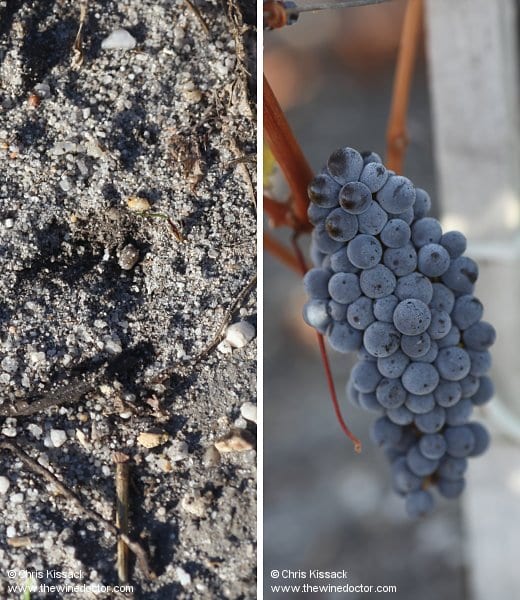
Other plots are more distant, lying closer to the town of Pauillac itself. These more central vineyards are more likely to have a more favourable, gravelly terroir. Out in Saint-Sauveur, where the château is situated, the soil is dark and sandy (as pictured below, left). Here at the western edge of the Médoc’s viticultural expanse the gravel is eventually subsumed by the sands of Les Landes which, a few million years ago, drifted lazily in from the west.