Château Batailley: Tasting & Drinking
But what of the wines? Until recent years Château Batailley had something of a reputation as a drinker’s claret, a no-fuss bottle, the purchase of which would not break the bank. Cousin (or should that be sibling) Château Haut-Batailley has much the same reputation, yet perhaps, in my experience at least, has in the past offered better value for the money spent. The wines of Batailley were enjoyable, but the style tended towards a rather solid, full and blustery tweed-jacket of a wine; it did not impress with its huge depth and complexity, or with its seductive spice, or with its silky, elegant texture, as some other wines of the commune did from time to time.
The 1995 vintage was a good example of this, a decent wine with some Pauillac typicity, but really not quite as expressive of the appellation as I might have hoped for. If I were to sum up what the wines of this era were lacking in a single word, it would be vigour. For wines from a classified growth they didn’t seem to display the definition and shape that many of their peers do.
But that was then. The Château Batailley of today is very different, perhaps reflecting a new sense of drive following the arrival of Philippe and then Frédéric Castéja. The 2003 was an interesting example of how much a wine can evolve over a year or two; initially brawny, muted, perhaps even sullen, when tasted in early 2007 it was much more open and welcoming, and clearly a strong effort.
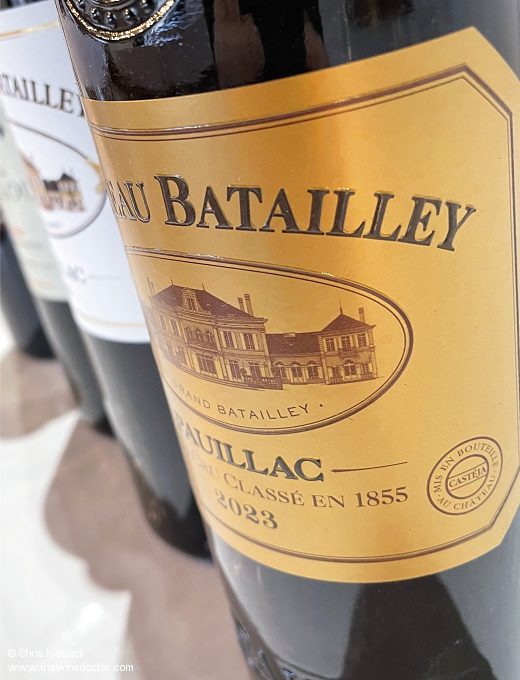
In subsequent vintages the wines have certainly demonstrated greater definition, concentration and appeal. The 2005 and 2009 vintages showed well, although both were usurped by a very attractive 2010. While intermediate vintages such as 2004, 2006 and 2008 were good enough, those were shown up by later efforts such as 2011 and 2012. The quality in 2014 was very good, perhaps reflecting a move to carve up the crop a little more, with second and third wines introduced in 2014 and 2018. The wines made in 2015, 2016, 2018, 2019, 2020 and 2022 all have something going for them, with good efforts in lesser vintages such as the frosted 2017. I liked the 2023 vintage, and even the 2024 seems worthwhile, testament to good selection I am sure.
Today Château Batailley has certainly left its fusty tweed-jacket image behind, and is now performing at a level comparable to many other fifth growth estates in Pauillac. And while prices remain favourable it is a good-value purchase for the appellation, if perhaps not the hot ticket that some believe it is. That is not to say, however, that this time won’t come; Château Batailley, under the direction of Frédéric Castéja, is an estate still on the up, and one which I will continue to follow with interest. (22/3/07, updated 23/2/11, 22/12/13, 27/1/126)