Home > Producer Profiles > Loire Profiles > Couly-Dutheil

Couly-Dutheil

One of the stalwarts of Loire winemaking, the Chinon firm of Couly-Dutheil was founded in the early 20th Century by Baptiste Dutheil. The year was 1921, and Baptiste had settled in Chinon following the recent war, and had subsequently married his cousin, Marie Couly. Baptiste set up as a wine merchant, and in 1925 he purchased part of the Clos de l'Echo. This was a significant acquisition, even though it required completely replanting, having been left barren since the phylloxera epidemic fifty years before.

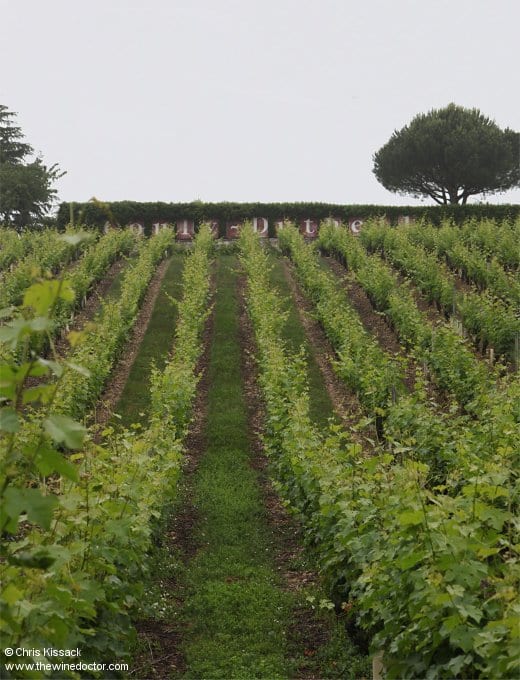
Couly Dutheil's Clos de l'EchoIn 1928 another family member, although only distantly related, moved to Chinon on a sabbatical from his usual position in the Bordeaux wine trade. This was René Couly, who during his time in Chinon met, and subsequently married, Madelaine Dutheil, daughter to Baptiste and Marie. For much of the 20th Century René was the face of Couly-Dutheil. It was he who purchased the remaining portion of the Clos de l'Echo, and who oversaw its planting, it too having been laid to waste following phylloxera. With the arrival of new generations, however, control was handed down, first to children Pierre and Jacques, and then grandchildren Bertrand and Arnaud. It is these third and fourth generations that steered Couly-Dutheil into the 21st Century, but they are possibly also responsible for the break up of Couly-Dutheil as we know it today. It seems likely, although at the time of writing nothing to my knowledge has been decided for certain, that the estate will be divided between the two branches of the family. The Couly-Dutheil domaine per se will remain with Jacques Couly and his son Arnaud, but Pierre and his son Bertrand are set to strike out in their own direction, creating the domaine Couly-Farou, also incorporating the vineyards of Pierre’s brother-in-law Louis Farou. Only time will allow us to see the effects of this partitioning up of the estate.

The Couly-Dutheil portfolio is, no doubt, headed up by Clos de l'Echo. This ancient site was allegedly owned by Antoine Rabelais, father to the famed 15th Century writer François Rabelais, whose humorous writings were banned by the Catholic Church. The south-facing vineyard sits directly behind Chinon's grand but rather crumbling chateau, parts of which date back to the 10th Century; this age explains its resemblance to a Medieval fortress rather than the grand hunting lodges, of which the most famous date from the Renaissance, that can be found elsewhere along the Loire. It has a history unrivalled by the vines next door, having been a residence of Plantagenets Henry II and Richard the Lion Heart, who died here, and was visited by Joan of Arc several hundred years later. Today the 14th Century Tour de l'Horloge towers above the vines and the town, and the echoes produced by the fortress walls give the vineyard its name.

Underfoot in the Clos de l'Echo are soils of clay and quartz, and beneath those is tuffeau, the limestone that characterises the best quality sites in Chinon. This particular terroir produces more structured wines of greater depth than those from the sand and gravel vineyards nearer the Vienne. The vines have a favoured position, facing south on the highest point in the town, affording them an excellent exposure to the sun's rays. Between some rows the soil is grassed, to increase competition for nutrients, between others ploughed, to encourage the vines to root deep.

Come harvest time there is great attention to detail, necessary in the northerly Loire if one wishes to make a truly great red wine. Selected plots in the clos are harvested separately, as demanded by the differing maturation of the vines. There is selection both in the vineyard and at the winery, where the bunches are destemmed before being vinified in separate parcels. The must may be warmed a little to encourage the yeasts, and the temperature may be kept up during fermentation to improve extraction. There is light mechanical pigeage rather than pumping over. The wine goes into oak for eighteen months, up to 20% of which is new, where the malolactic occurs. Since 1995, however, the Clos de l'Echo has also given rise to Couly-Dutheil's prestige cuvée, Crescendo. Whereas the 17 hectare clos is generally harvested at yields of about 40 hl/ha, 2 ha of vines destined for Crescendo are pruned down to just 20 hl/ha. Understandably this concentrated cuvée sees more new oak, and is produced in small quantities; just 400 cases is typical.

Couly Dutheil's Clos de l'Echo 2003

The remainder of the portfolio contains a number of cuvées of Chinon, mainly red, of which Clos de l'Olive is probably the best. There is also a white Chinon, not a common sight, named Chantereaux, and a domaine rosé. The Cuvée René Couly is a blend of the best Chinon crus, often wine bought in by the family firm; although they own 90 hectares, Couly-Dutheil vinify the fruit of 130 hectares in total. And outside the appellation, they can be found producing Bourgueil, St Nicolas de Bourgueil and even Saumur-Champigny. But without doubt Clos de l'Echo eclipses all of these wines. Having tasted extensively at the cellars, a very short walk across the road at the rear of the chateau, in 1993, I came away impressed most by this venerable cuvée, and despite my feeble finances at the time was sufficiently moved to purchase a number of bottles. Today there is a brand new tasting room adjacent to the Clos de l'Echo, just up the road from the rooms that were in use when I first visited, which appear to have been sold (or leased out). Today they house a gallery of attractive ornamental glass pieces, for viewing and for sale.

More recent tastings of Clos de l’Echo have reaffirmed my thoughts that, in the best vintages at least, this particular vineyard is one that Chinon savants should not overlook. The marvellous 2002 and 2003 vintages are prime examples, and the purchasing behaviour I exhibited in 1993 has been repeated; these wines are to be found in my cellar, and I look forward to watching these wines mature over the coming years. But I also have doubts about Couly-Dutheil as a whole, and even about Clos de l’Echo. Although the wines can be great in favourable vintages, in lesser years I often find the wines less convincing, whereas other vignerons of the appellation, such as Baudry and Alliet, seem able to make more charming wines under these conditions. A tasting of the 2004 vintage at the estate when I visited in 2007 brought this thought to the fore once again; it was not in the least bit compelling. There is a mitigating factor though; perhaps the difficulties over succession, and the pending division of the estate, is having some effect. Secondly, the range of wines is wide and we can not expect that they are all prime examples of their type. Again, in good vintages some may be charming, but at other times less so. Although this is a must-taste estate for those who wish to know the wines of the Loire, an estate which has provided me with my most vivid Chinon tasting experience in the shape of the 1989 Clos de l’Echo, which I drank in a state of exhilaration through the 1990s, it is also one where it is wise to consider current purchases carefully, and preferably to taste first. (8/11/05, updated 31/8/07)

Contact details:
Address: 12 rue Diderot, 37500 Chinon
Telephone: +33 (0) 2 47 97 20 20
Fax: +33 (0) 2 47 97 20 25
Internet: www.coulydutheil-chinon.com

Couly-Dutheil - Tasting Notes

Click to locate stockists:

2006

Couly-Dutheil Chinon Blanc Les Chantereaux 2006: An appealing nose, fresh white fruits here, rather forceful, deep and rounded in character. Full of flavour on the palate. Lots of depth, quite stony, all packaged very nicely. Good style here. 16/20 (August 2007)

2004

Couly-Dutheil Chinon Clos de l'Echo 2004: Again, this wine isn't showing too favourably today. It has a fairly light colour and plenty of freshness and lift, but unlike the 2002 which is so nicely composed, this comes across as a little coarse on the palate. A little hard, ungiving, tannic, without the texture or fruit to compensate or clothe these criticisms. Again, I will have to reserve judgement, although I would certainly place it as inferior to the 2002. 15-16.5+?/20 (August 2007)

2003

Couly-Dutheil Chinon 'Les Chateliére' 2003: This is dark red, with still a little purple at the rim. The nose has notes of butter, with smoke, gravel, green mint, berry fruit and capers. On the palate it is very structured, reserved, less fat and rounded than when previously tasted, showing a more austere structure, with some attractively bitter tannins and very firm acidity. There is quite a hard finish and a rather appealing reserved nature. Plenty of character here; this should continue to do well in the cellar. 16+/20 (March 2007)

Couly-Dutheil Chinon 'Les Chateliére' 2003: Still a deep, purple hue. A buttery nose, with ripe berry and forest fruits, backed up by a smoky edge. Full palate, packed with flavour, and still showing obvious, awkward youth. Soft, ripe, supple tannins lend structure but do not distract. Almost chewy, tarry, tobacco-laden nuance to the finish. My first impressions were, I think, correct; this cuvée has piles of potential. Today it shows even more texture. Very good. Leave another 3-4 years at least. 16+/20 (August 2005)

Couly-Dutheil Chinon 'Les Chateliére' 2003: Two bottles tasted within a week or two. Fruit from the gravel slopes, areas which usually produce lighter wines than those from the tuffeau. A vibrant, deep, youthful hue. Ripe and smoky berry fruit on the nose, with not a hint of green in sight. Fresh and vibrant acidity on entry, followed up by sweet, peppery, tobacco-edged fruit. A real juicy, mouth-filling texture. That acidity remains taut throughout the palate although there is more than enough texture and fruit to cope. Very youthful. Just a lick of tannin at the finish. Should improve over 2-3 years. This may be a great vintage for Loire reds. 15.5+/20 (August 2004)

Couly-Dutheil Chinon Clos de l'Echo 2003: Rich, deeply coloured wine. Typical youthful Loire Cabernet Franc on the nose, with very primary aromas of sun-dried tomatoes and green peppercorns backed up by some black bramble-jelly fruits. Fine palate, balanced and elegant, showing more bramble-jelly character with a smoky, mineral, tobacco presence. Great, almost seamless palate. Plenty of fine, structured tannin and acidity here, and a little bite of extract too. This is fine, and should perform well in the cellar, as suggested by the coating of tannin on the finish, fresh balance and welcome fruit. And it has lovely persistence. Very good indeed, excellent potential. 18+/20 (November 2005) Label

Couly-Dutheil Chinon Clos de l'Echo Crescendo 2003: This vintage has a more dark and glossy hue than the 2002. And wow! The first aromas that rise from the glass also indicate that this is a special wine, with stylish and yet vibrant mineral, smoky, tobacco leaf character. You can sense a tense nervousness in the wine. Having said that the palate has a lovely freshness, and although quite precisely structured isn't as edgy as the nose might suggest. It is warm, ripe, not voluptuous but full and creamy, backed up by a fine acidity. Ripe, slightly grippy tannins, cigar and tobacco-edged fruit, overall finely structured. A great example of Cabernet Franc from a great vintage. Excellent. 19+/20 (November 2005) Label

Couly-Dutheil Interdit (Vin de Table) 2003: The result of harvesting Chenin Blanc in two tries, the second of which was as late as December, producing a sweet wine with 100 g/l of residual sugar. The local appellations don't allow for this, of course, hence it is bottled as a vin de table and labelled Interdit ("forbidden"). Not a particularly exuberant nose, but there are some notes of botrytis present. It has a rather light, lifted character. It does not have a great deal of concentration in truth. It has some appeal, is certainly clean and of some character, but in all honesty I find it an interesting curiosity rather than a wine of high merit. 15/20 (August 2007)

2002

Couly-Dutheil Chinon Clos de l'Echo 2002: An appealing, lifted nose here, with red fruits and a floral, mineral element. The palate has an elegant composition, quite well defined, without too much weight. In truth I am not sure this is showing too well today, it has all the lifted elegance that I might expect from Clos de l'Echo, definition, freshness and acidity, but none of the substance. It finishes a little short but it is all nicely integrated and subtle. I think this has the potential to do well in the cellar, but would like to retaste to be sure. Thus my score is very non-committal. 16-17.5+?/20 (August 2007)

Couly-Dutheil Chinon Clos de l'Echo Crescendo 2002: This 20 hl/ha super-cuvée is a much deeper, darker, more glossy hue than the usual Clos de l'Echo colour. A little smoky on the nose, with conserved damson fruit, with floral, tarry tones, with notes of red fruits too. A very masculine presence, full and weighty, although rather closed at present, showing only nuances of dark fruits spliced with more complex redcurrant and cranberry character, and even a little tomato leaf. Wonderfully ripe style, surrounded a fine acid structure at the core. This is impressive and would do well with the cellar time it so obviously needs; probably five years minimum, although it will drink well for some time after. 17.5+/20 (November 2005) Label

2001

Couly-Dutheil Chinon Clos de l'Echo 2001: A decent colour, although not showing a lot of depth. Quite delicate and floral on the nose, showing some lovely black cherry blossom with a tarry edge and a note of tobacco. Medium weight, attractive, with an elegant presence developing through the midpalate A very fine, firm structure of chalky-dusty tannins and nice acidity, with some more black cherry and bramble fruit. A little flourish of tannins on the finish suggests this will improve in the cellar over the next two to three years. Right now it needs four hours in the decanter before it begins to really open up. Not a great vintage for Cabernet Franc, but this is very good. 16.5+/20 (November 2005) Label

1999

Couly-Dutheil Chinon Clos de l'Echo Crescendo 1999: This has fruit. After the preceding two wines it is a pleasure. There is also quite noticeable oak apparent on the nose, and to be critical the wine does seem a touch attenuated. On the palate, the fruit and substance just isn't there, and I don't think it has the depth or structure to cope with the oak here. Other vintages have certainly been more successful than this. 15.5/20 (August 2007)

Home - Site index - Site updated May 15, 2008 - © The Winedoctor 2000 - 2008 - Wine Scores - RSS