
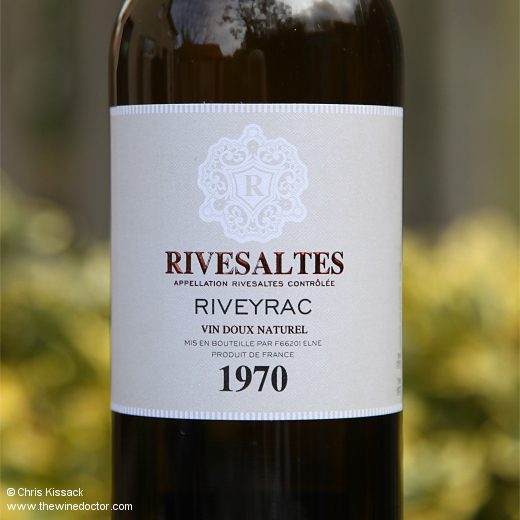
Riveyrac Rivesaltes 1970
On the outskirts of Perpignan in Roussillon, just 40 kilometres from the border with Spain, there sits an imposing moated fortress, the Château de Salses. Built between 1497 and 1503, it was erected on the orders of Ferdinand II (1452 – 1516) and Isabella (1451 – 1504), joint rulers over Aragon and Castile. Known collectively as the Catholic Monarchs, the marriage of Ferdinand and Isabella united two powerful kingdoms, their territory extending as far north as Perpignan. It was essential that these lands be defended against invasion from the north, by the French, to which end the fortress was built.
Five hundred years later the kingdoms of Aragon and Castile have long since ceased to be. The Catholic Monarchs are today regarded as the first rulers of what would become modern-day Spain, their two kingdoms having formed the nidus of this new nation. The land which lay north of the Pyrenees, however, was lost to them; the fortress endured a number of sieges before it eventually fell into French hands.
Despite this, the fortress still stands. Its thick walls, built using blocks of limestone of white and red ochre hues, supplemented by locally-fired bricks, were intended to be resistant to a new 15th-century invention, the metal cannonball. Perhaps this is why they have also proved resistant to the ravages of time, as the walls are intact, and the interior buildings in excellent condition. And today the great citadel hides a secret; extensive cellars, home to the winemakers of Domaine de Riveyrac, one of the region’s oldest co-operatives.
Domaine de Riveyrac was founded in January 1909 by an association of eight local vignerons. Although they made a range of wines, during the decades which followed the Riveyrac co-operative group began to specialise in the production of Rivesaltes, the local vin doux naturel.
Vins doux naturels are fortified wines made by arresting the fermentation before all the sugar has been consumed by the yeast, the end result a combination of sweetness and high alcohol. Throughout history the wines of Rivesaltes have enjoyed great popularity; they were referenced by Voltaire (1694 – 1778) in his letters; they crop up in the journals of the Napoleonic gastronome Alexandre Grimod de la Reynière (1758 – 1837); and they seduce the drunken poet Lignière in Cyrano de Bergerac, penned by Edmond Rostand (1868 – 1918) in 1897.
For the vignerons working in the cellars below Château de Salses it made sense to get in on the act, as the golden era for Rivesaltes rolled on through the first half of the 20th century. Their sweet and fortified wines sold well, and this continued to be the case through to the 1950s. It was only then that the tide began to turn, fashion-conscious drinkers seeking out more modern, drier styles; sales of fortified wines went into decline, and the Riveyrac stocks began to pile up. Fortunately the Salses cellars are capacious, and the co-operative’s vignerons filled these chambers with foudres and barrels, some of which rested here undisturbed for decades. Which for this sweetly fortified wine, robustly resistant to oxidation, was fortunately not a great problem.
There are many domaines dotted around Rivesaltes and Maury with cellars filled with vinous vin doux naturel treasures such as these. These days it seems that most make their way to market through the efforts of Philippe Gayral, who has persuaded them – Riveyrac included – to bottle much (if not all) of their older stock for release. Despite this worthwhile mission the wines remain eternally under the radar, and compared to the top fortified wines of Portugal they sell for a song. I should know, I have bought a few bottles over the last few years.
The 1970 Rivesaltes from Riveyrac is a case in point; having rested in barrel in the Riveyrac cellars since fermentation completed, it was bottled as recently as 2022, without any filtration, the wine have naturally clarified during this lengthy élevage. In the glass it displays a gloriously toasted and amber hue, and this is matched by a multifaceted nose of baked earth, dried figs, raisins, dried cherries, charred oak, liquorice and caramelised nuts, with spicy suggestions which call to mind dark chocolate, green olive and green tea, all wrapped up in a rich suggestion of sweetness. The palate is undeniably textured yet fresh and driven, its core filled out with roasted fruits and dried nuts, wrapped within a taut frame and polished sweetness, nuanced with notes of liquorice and black pepper. Importantly, a vibrant acidity maintains its freshness into the finish, the length sweet yet shimmering and clean rather than cloying. This is a very good examples of an entirely under-rated style of wine which is resistant to decline once opened, so I enjoyed drinking this over the course of several days. And I expect my other bottles will hold on in bottle for another 40 or 50 years. The alcohol on the label is 18%. 95/100 (27/10/25)
Read more in:
- My report on the 1973 L’Archiviste Rivesaltes
Find Riveyrac Rivesaltes 1970 on Wine Searcher: 
Find all Riveyrac wines on Wine Searcher: