
Wine and Song: The Upper Loire, 2026
L’aïo dè rotso té foro mourir, filhoto, L’aïo dè rotso té foro mourir!
Nè té cal pas bèir oquèl aïo, quèl’ aïo, mès cal prèndr’un couot d’oquèl aïo dè bi!
S’uno filhoto sè bouol morida, pitchouno, s’uno filhoto sè bouol morida,
Il cal pas douna d’oquèl’ aïo dè rotso, aimaro miliour oquèl aio dè bi!
The water from the spring will kill you, my little one, the water will kill you!
Don’t drink pure water, my little one; a swig of wine will do you good!
When a girl wants to marry, my little one, when a girl wants to marry,
She should not be given pure water, she’d rather have a swig of good wine!
– L’aïo dè rotso, Chants d’Auvergne (Vol. 1, 1923), Joseph Canteloube
A little over a century has past since the composer Joseph Canteloube (1879 – 1957) published the first volume of his Chants d’Auvergne (Songs of the Auvergne). Born into an Auvergnat family, Canteloube regarded this region of France as his spiritual home, and as a young man he walked the ancient mountain passes which connected the otherwise isolated rural villages. As he travelled he became fascinated by the local folk songs, and he began collecting them from the region’s shepherds and farmers.
Rather than simply reproducing these melodies, Canteloube then set them to orchestral music; in doing so he created some of the best-known melodies of the modern classical vocal repertoire. Pieces such as Baïlèro and Brezairola are particularly evocative, although above I feature the song L’aïo dè rotso, for one simple reason – it is the only song Canteloube jotted down which mentions wine.
Wine which seems to be superior to the local spring water, and good for local brides. My money’s on it being Pinot Noir. Either that, or the local speciality, Gamay Saint-Romain.
Grape variety aside, were it not for Canteloube (pictured below) these songs would now surely be forgotten, a loss for Auvergnat culture as well as the endangered Occitan tongue (if you read the lyrics above and thought “that’s not French!” you were right – all these works are sung in Occitan).
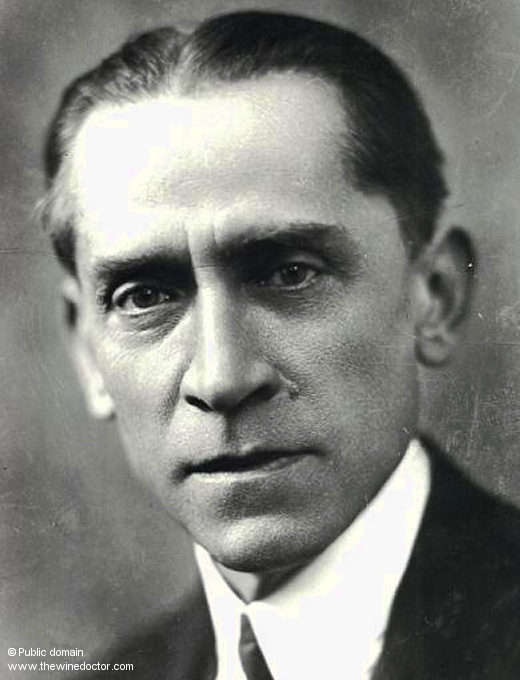
Some of the songs are lullabies; some are lilting ballads evoking the landscape, flora and fauna of the region; and some are sung by shepherds as they serenade the local shepherdesses, their words floating across the region’s broad volcanic valleys. And then there is L’aïo dè rotso, which advises new brides to drink wine rather than the local spring water. I am sure there is some logic to this (I’m just not sure what it is).
Joseph Canteloube had great success with his Auvergnat project, Chants d’Auvergne becoming his most recognised and most influential work. But he is not alone in preserving the culture of the Massif Central.
Please log in to continue reading: