Back to the Future: The Central Vineyards, 2026
Marty, the future isn’t written. It can be changed.
– Doc Brown, Back to the Future Part III (1990)
For decades, the Central Vineyards of the Loire Valley were among the easiest French wine regions to understand. And to pigeonhole.
Sancerre and Pouilly-Fumé were the appellations that drove the region’s fame and prestige. These were the names that people knew and recognised, the names that kept punters coming back for more. We could even pronounce the first one. We laughed as we tried to pronounce the second one.
Sauvignon Blanc supplied the identity, or at least the majority of it. These were wines which were easy for neophytes and novices to understand because their style largely depended on the variety, and this was not a region of complicated nuances à la Burgundy. Alright, so Sancerre was more about freshness and flowers, while Pouilly-Fumé’s seemingly sole defining feature was gunflint, but even newcomers to wine could cope with this very basic distinction. There was no need to whip out the books and maps to figure out which vineyard, climat, clos or lieu-dit was in the frame.
And then, conveniently, for the price-sensitive, the region was also home to a half-dozen appellations the sole purpose of which was, if you believed the newspaper wine columns and wine guides, to serve as a source of ‘cheaper alternatives’.
Indeed, the raison d’être of entire appellations was seemingly to stock the shelves with Sauvignon Blanc at a lower price point than Sancerre. And yet when Charles VI (1368 – 1422) savoured the wines from the Giennois vineyards, regularly poured in his court in Paris during his time on France’s throne, somehow I have to believe he enjoyed the wines for the qualities they offered, rather than simply giving thanks he had found one a few livres cheaper than a flagon from Sancerre.
Which begs the question, where did we go wrong?
How have we come to the point where only two appellations in the Central Vineyards seem to have any value, while others are interminably overlooked?
Why are there entire magazine articles and reports dedicated to Sancerre, without ever mentioning neighbouring appellations which boast the same soils, varieties and – on some occasions – the same vignerons?
This view of the region is outdated and blinkered. I posit that the important change in the Central Vineyards in recent years is not that Sancerre has discovered terroir. That is a given. It is that terroir is beginning to dismantle the hierarchy of the region itself, and open the doors for all the wines and appellations of the region to come to the fore.
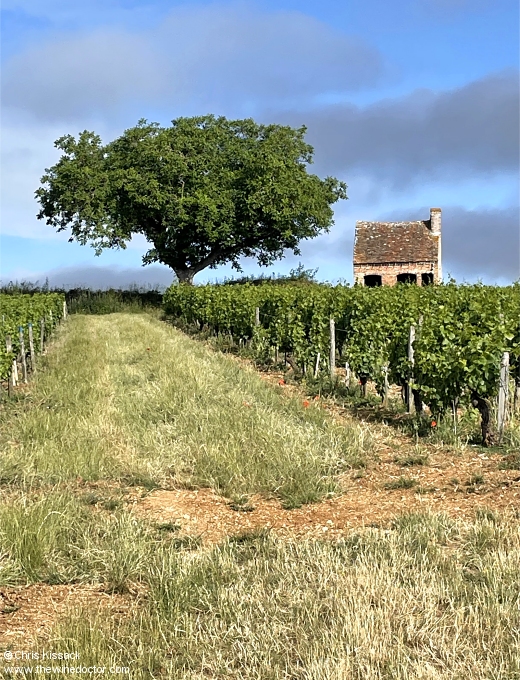
In this report on the wines of the Central Vineyards I rip off those Sancerre blinkers to report on the latest developments (and the latest vintages and wines) from this region. I examine exactly how the Central Vineyards – not just Sancerre and Pouilly-Fumé – have changed since Winedoctor was launched close to three decades ago. I will then go on in subsequent instalments to present more than 220 new tasting notes on its wines. Not just Sancerre and Pouilly-Fumé, for the reasons I have more than hinted at above and which I will explore in more detail below, but also Menetou-Salon, Coteaux du Giennois – so beloved of Charles VI – Quincy, Reuilly and beyond.