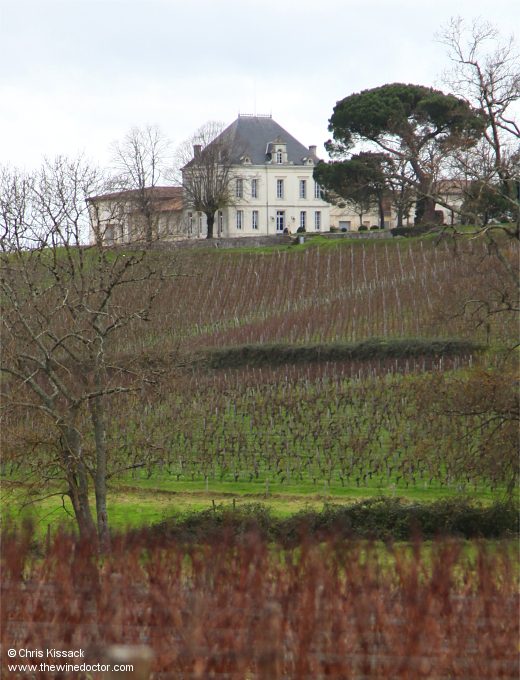
Château Tournefeuille
It is the Barbanne which separates the vineyards of Pomerol, to the south, from those of Lalande-de-Pomerol, to the north. This little river has some history as a boundary, as many centuries ago it served as the border between the French lands to the north, and Aquitaine, a possession of the English crown, to the south.
There are less than a handful of points where the river can be crossed (that is, assuming you do not want wet feet). In each case the road meanders gently down from the Pomerol vineyards, the soils changing from the clay and gravel that characterises the better parts of this appellation to much lighter, sandy and silty soils as you near the water. Correspondingly, the vines disappear some distance before you reach the bubbling brook.
You cross the river, and then suddenly a surprise. The road climbs, ascending several dozen metres to a broad plateau. This is quite different to Pomerol; indeed, it feels more like a back road somewhere in the St Emilion appellation. Atop this slope there sit a handful of châteaux which are worthy of investigation; they benefit from a fresh and windswept location and interesting soils, and the potential for good-quality, under-the-radar and affordable – more affordable than Pomerol, anyway – wines is very real.
One among their number is Château Tournefeuille.
Origins
The origins of Château Tournefeuille seem rather vague, reflecting an ancient heritage. The earliest documents detailing the region’s landscape include the maps made by the cartographer Pierre de Belleyme (1747 – 1819) during the latter years of the 18th century; the map of Pomerol and Lalande-de-Pomerol he drew up in 1783 clearly shows the slopes around Château Tournefeuille planted to vines.