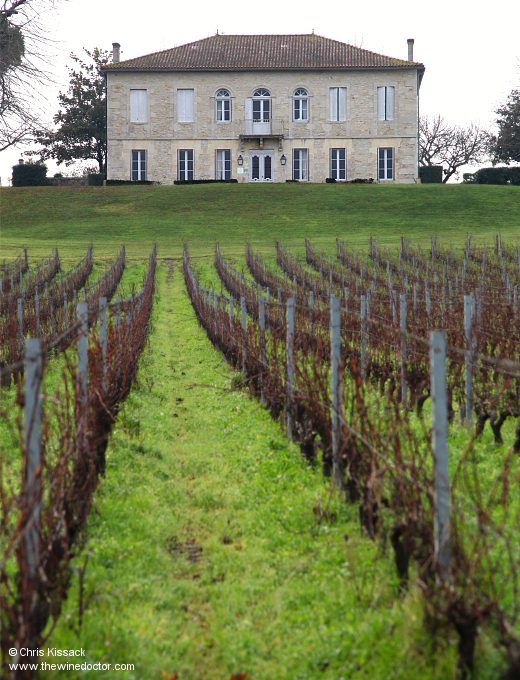
Château Reysson
Château Reysson stands on the edge of the Marais de Reysson, the low-lying land separating St Estèphe from the Haut-Médoc vineyards to the north. These marshes are criss-crossed by drainage channels excavated by a team of Dutch engineers, led by Jan Leegwater (1575 – 1650), during the 17th century. For centuries prior to this work, and of course prior to the construction of Château Reysson, this was a marshy and inhospitable place.
Despite this people were living here many centuries ago; this is an ancient landscape.
Archaeological excavations have uncovered Gallo-Roman ruins and an even older Iron Age settlement on the edge of these marshes, along with numerous contemporary artefacts. These ruins are purported to be Noviomagus Medulorum, said to be the second largest Gallo-Roman town in the region after Burdigala (better known today as Bordeaux), complete with tumbledown amphitheatre, public baths, temple and numerous roads and residential buildings.
Meanwhile, of somewhat more recent construction (and yet still ancient), there stands in nearby Vertheuil the Romanesque Abbaye de Saint Vertheuil, founded in the 11th century by Guillaume VIII d’Aquitaine (c.1024 – 1086).
Situated neatly between these two historical highlights, Château Reysson does not quite boast such ancient origins, but its history does stretch back rather further than many other châteaux in the Haut-Médoc appellation.
Origins
The exact origins of Château Reysson seem lost to the mists of time; the property was already marked on the earliest maps of the region, including those by the renowned cartographer César-François Cassini de Thury (1714 – 1784) which date to the mid-1700s. At this time its presence was recorded as Le Bâtiment, presumably some reference to the imposing nature or hilltop position of the building.