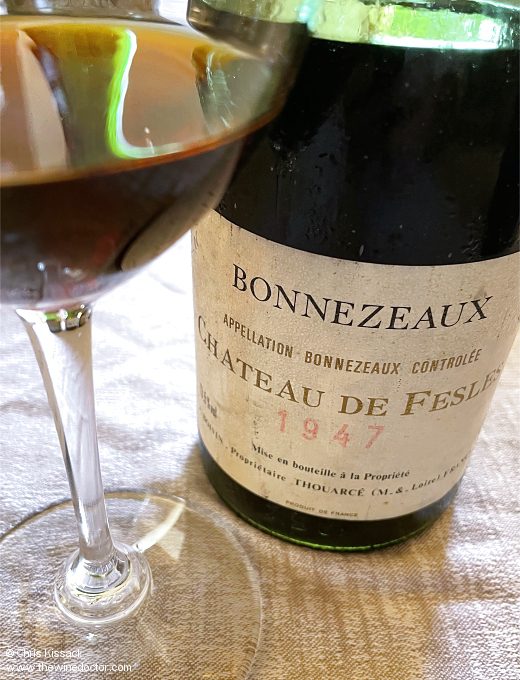
Keeping the Fire Alight: Château de Fesles, 1947 – 2022
Quarts de Chaume and Bonnezeaux have long sat at the top of the Coteaux du Layon hierarchy, both recognised as the leading crus of the appellation, even though of the two only Quarts de Chaume has been formally signed off as a grand cru. But grand cru or not, with both Quarts de Chaume and Bonnezeaux focused exclusively on sweet wine, at a time when consumer demand for this style seems to be in interminable decline, these appellations are facing hard times.
In this report I visit the leading estate in Bonnezeaux, Château de Fesles, to find out how the team here have responded to this shift in consumer tastes, but also to look back over many decades of a wonderful sweet wine heritage.
Before we come to the challenges faced by producers of Bonnezeaux and indeed all sweet wines today, I first present a condensed history of Château de Fesles, as told by the estate’s current manager, Pierre-Jean Sauvion. For my own comprehensive and detailed account of the history of the property, recently updated, please see my profile of this estate.
The Fesles Eras
The history of Château de Fesles can, says Pierre-Jean, be divided into four eras. As with geological eras, some are short, some are long, but at least they are neatly defined.
First came the Boivin era. Admittedly this glosses over the existence of documents which allude to viticulture on the slopes of Fesles as long ago as the 11th century, but in truth next-to-nothing is known about these vines or the wines produced, neither at this moment nor at any point during the course of the next 800 years. The modern story therefore begins with the Boivin family, who acquired the estate during the 19th century and held on to it through to the end of the 20th, overseeing its development alongside that of the Bonnezeaux appellation itself, which was signed off in 1954.