Château Larcis Ducasse: The 20th Century
Henry married Émilie Gabrielle Fould (1855 – 1955), the daughter of a négociant named Abraham Fould (1774 – 1842), a branch of the Fould banking dynasty. They had been blessed with five children, including a son named André, who served as a medical auxiliary during World War I. Henri Raba died in 1925, his widow Gabrielle taking over the running of the estate until, eleven years later, in 1936, his son André Raba took hold of the reins. In a subsequent tragedy André died, in 1941, after he was arrested by German troops. According to the words of Bernard Ginestet, writing in St Emilion (Jacques Legrand SA, 1988), “André Raba was imprisoned in Libourne, accused of listening to the English radio. He died soon after, the result of brutal treatment.”
André had no heir, and so after his passing ownership of the estate passed to his niece, Hélène Gratiot-Alphandéry (1909 – 2011) and her husband Gilles Gratiot. Again according to Ginestet, Hélène also suffered some persecution and she and her husband fled France’s occupied territory. The domaine was managed in their absence by their régisseur, Pharaon Roche, and it was not until France was liberated in 1944 that they returned.
Jacques Olivier Gratiot
From this point onwards, the story of Château Larcis Ducasse has been one of variable success, with some high points along the way but there was also – as per the words of Parker reproduced on the first page of this profile – possibly some room for improvement. In 1955 the domaine was ranked as grand cru classé in the new St Emilion classification, indicating that the wines must have been of decent quality, but this position was perhaps also testament to the potential of the south-facing Côte de Pavie just to the south of the town of St Emilion.
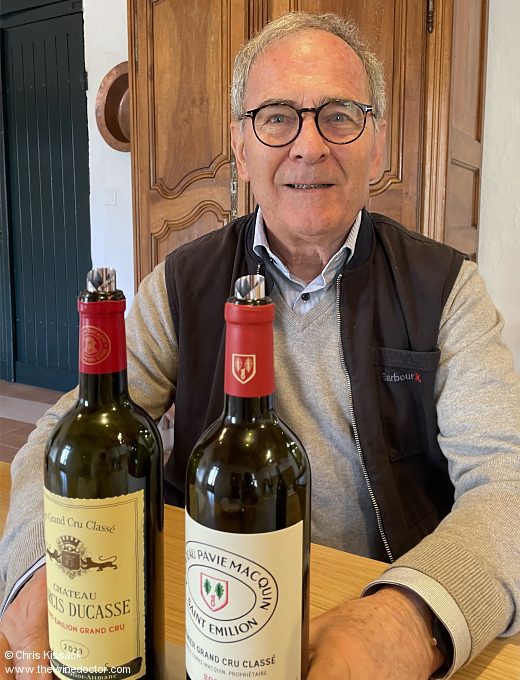
By the way, this is not Pharaon Roche pictured below, nor is it a member of the Gratiot family. This is Nicolas Thienpont, the next significant figure in the story of Larcis Ducasse to enter the frame.