Clos Manou
To the untrained eye, one vineyard looks pretty much the same as the next, with their regimented rows of vines, marching up slope and down. But learn to read the signs, and the vineyard has much to say. A look at the soil and what grows there will, for example, tell you if the vigneron favours herbicides, or if they are embracing more organic methods. It might even tell you if they have traded in their tractor for a horse. A look at the vines can be rewarding too, giving clues to their age, and maybe you will spot a little marcottage (perhaps more likely in the Loire Valley than in Bordeaux). And if you’ve been studying your ampelography textbooks (and I’m sure you have) you might even have a stab at identifying the varieties planted.
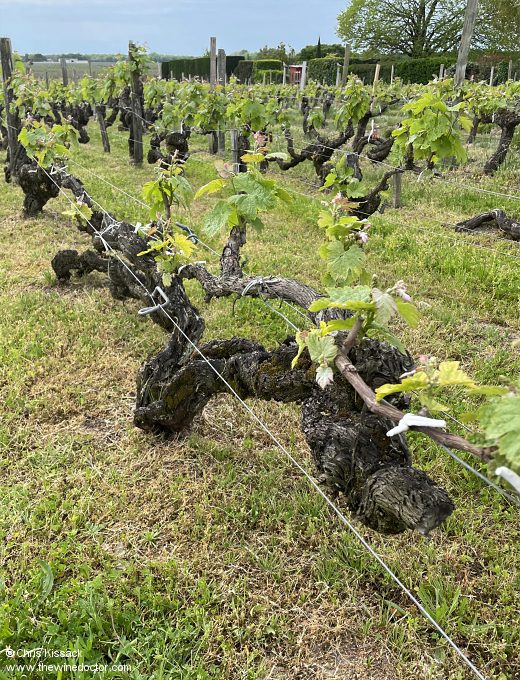
Even the untrained eye might spot something unusual about the one parcel of vines belonging to Stéphane Dief though. He is the don of Clos Manou, and touring the vines together earlier this year we came to a stop at the side of the Route du Sablonat, on the outskirts of St-Christoly-Médoc, high up on the Médoc peninsula. It was April, and while the first leaves were out, the vines were still quite bare, displaying their dark and contorted silhouettes for passing travellers to see.
And what silhouettes they were.
These are Stéphane’s oldest vines, their date of planting – estimated, naturally, as there are no records to tell us with certainty – to have been around 1850, and at the very least before the arrival of phylloxera in this corner of France’s vineyard, which was two decades later. They are ungrafted vines, and are without doubt one of Bordeaux’s most precious viticultural asset. When the vintage conditions are right, the fruit from these vines – which number just a few hundred – feed into a dedicated cuvée, the 1850 Vignes Pre-Phylloxérique.