Home > Wine Guides > Bordeaux Wine Guide > St Emilion

St Emilion

If there is one Bordeaux appellation where terroir truly matters, it is here.

I suppose, reflecting on this statement, that I should not make it so boldly. After all, it is terroir that defines the best sites in all the appellations of the left bank that have so far come under the inspection of this guide to Bordeaux. It is the gravel croupes, close to the Gironde, which host all the most reputable Grand Cru Classé estates, and it is notable that estates in possession of a lower ranking, but a gravelly terroir, are often properties that punch well above their weight when the wines come up for tasting. And further north past St Estèphe, where the gravel gives way to denser clay in the Médoc appellation, the wines can be very good - but not up to the quality of those from the Haut-Médoc.

St Emilion Soils

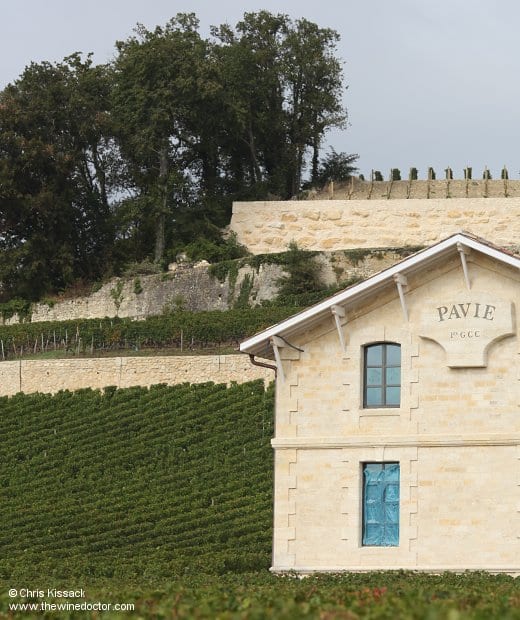
So terroir matters everywhere, so perhaps it is just that here in St Emilion it is so much more apparent to the eye. Whereas the Médoc is a land of gently rolling hills where an incline that climbs a mere 20 metres affords you a vantage point over much of the surrounding countryside, in the east of the St Emilion appellation, where the town lies, there is a more imposing escarpment, with vineyards on the slopes and plateau where the soils are rich in limestone, with some areas of clay on the slopes. This plateau, and the slopes or côtes as they are sometimes named, are two of the most important terroirs of the appellation. Then, at the very western end of the appellation, there is Graves-St-Emilion, the smallest of the four principal terroirs; here the vineyards are contiguous with those of Pomerol, and gravel soils predominate. The Gunzian graves de feu, the gravel after which this region of St Emilion is named, was borne to this place by the Isle and Dronne rivers and originates from the Quaternary period. It is gathered in five mounds, of which two bear the vines of Cheval-Blanc, the remaining three being entirely Figeac. They have an altitude typically of 36 to 38 metres above sea level, and the gravelly soils are generally 7 to 8 metres deep; beneath this there is the clay that can be found throughout the region.

St Emilion wine guideAfter limestone, clay and gravel comes sand, the fourth terroir that is typical of St Emilion. There are two main areas of sand; the first is stretched out across the plain to the west of the town of St Emilion and the limestone côtes. Here there are 1200 hectares of vineyards on aeolian (meaning eroded, transported and deposited by winds) sand, and it hosts a number of estates worthy of our attention, but none that yet - as far as the classification committee are concerned - challenge the upper echelons of the St Emilion ranking. Nevertheless, these are certainly not estates that can be ignored; there are many properties here on the up, turning out wines of either excellent quality, excellent value, or indeed both. The second main area of sand is to the south of the town; here there are about 2000 hectares available to the vine, again the terroir is sandy, but this time alluvial, having been deposited here over the years by the Dordogne, which runs just to the south.

Naturally even this subdivision into four terroirs is, in fact, a simplification; for example, the côtes are often thought of as a blending of limestone and clay, but in fact there are silty loam topsoils in places, sometimes sand, with a subsoil that may be more sandstone than limestone in places. Nevertheless, it is the terroirs where limestone, clay and gravel dominate that are of most interest. These regions play host to a collection of estates of superb repute, and indeed these soils might be regarded as sharing equal position at the very top of the St Emilion classification. There are two Class A Premier Grand Cru Classé estates that preside over the St Emilion listing; Cheval-Blanc on the gravel, and Ausone on the limestone and clay, although predominately the former. The classification, unlike that of the properties of the Médoc which was set in stone (almost) in 1855, is open to regular review every ten years or so. Unfortunately this process does not run as smoothly as might be imagined, and the 2006 revision was subject to a legal challenge which seemingly put an end to the existence of any classification at all; only a court ruling in late 2007 saved it. More details, including the reclassification debacle, are provided in my guide to the St Emilion classification.

St Emilion - Appellation, Classification and Wines

As with all the most significant appellations in France, the regulations for St Emilion were laid down very soon after Baron Le Roy's initial work in Châteauneuf du Pape, work which paved the way for the creation of the Appellation Contrôlée system. The St Emilion appellation dates from 1938, when the committee met to draw up the boundaries for the eligible vineyards, which were defined as Libourne to the west, route nationale 10 to the north, the Ruisseau la Capelle and the Dordogne to the south, and to the east the adjoining communes of St Emilion and Pomerol, such as St-Georges-St-Emilion and Lalande-de-Pomerol.

St Emilion

The permitted varieties match those allowed elsewhere in Bordeaux, namely the Cabernets Franc & Sauvignon, Merlot, Carmenère and Malbec. Naturally it is the first three that dominate, but the lead role goes to Merlot, which copes much better with the limestone and clay soils, as opposed to Cabernet Sauvignon which is better suited to gravel. One or two estates, with Cheval Blanc being perhaps the prime example, feature Cabernet Franc ahead of all the other varieties.

Notable Chateaux

Limestone Plateau

Ch. Ausone
Ch. Balestard-La-Tonnelle
Ch. Beau-Séjour Bécot
Ch. Belair
Ch. Bellevue
Ch. Cadet-Piola
Ch. Canon
Ch. La Couspaude
Clos Fourtet
Ch. Magdelaine
Ch. Pavie
Ch. Pavie-Decesse
Ch. Pavie-Macquin
Ch. Soutard
Ch. Troplong-Mondot
Ch. Trottevieille

Côtes & Pieds de Côtes

Ch. Angélus
Ch. L'Arrosée
Ch. Beauséjour
Ch. Berliquet
Ch. Fonplégade
Ch. Fonroque
Ch. Franc-Mayne
Ch. La Gaffelière
Ch. Grand-Mayne
Clos des Jacobins
Ch. Larcis-Ducasse
Clos de l'Oratoire

Gravel

Ch. Cheval-Blanc
Ch. Figeac

Sand

Ch. Corbin
Ch. Corbin-Michotte
Ch. La Dominique
Ch. Grand-Corbin-Despagne
Ch. Haut-Corbin
Ch. Larmande
Ch. Monbousquet
Ch. La Tour-Figeac

For a full listing by ranking, not terroir, see my page on the 2006 St Emilion classification

The appellation regulations also allow for a Grand Cru designation, although the term is misleading. In Burgundy it is the highest honour for any plot of land, a designation intrinsically intertwined with the terroir of the region; here in St Emilion, where terroir is also so vital, a wine qualifies for Grand Cru status based on little more than a few details of the harvest - a maximum of 40 hl/ha rather than 45 hl/ha for basic St Emilion - and a minimum alcoholic strength of 11%, hardly a pressing requirement considering what I have already written of the New Bordeaux in my piece on climate change and new technologies. Thus the distinctions between St Emilion and St Emilion Grand Cru are very minor, rather akin to the difference between basic Bordeaux and Bordeaux Supérieur. As such, the Grand Cru designation is effectively meaningless to the consumer. The appellation regulations make mention of the more interesting tiers of the St Emilion classification, Grand Cru Classé and Premier Grand Cru Classé, but is clear that these designations are awarded by - or at least on behalf of - the Minister for Agriculture and the Secretary of State. Both rankings are determined by committee, who make their judgements based on visits to the domaines in question and on tasting ten vintages. For the 2006 classification, the decision was made on the strength of the 1993-2002 vintages.

A listing of the most notable estates is given here on the right, but rather than using the regional classification as a framework for the list, as I have done with other communes and appellations, here I have summarised the top properties according to the predominant terroir. It is not an unquestionable or hugely robust method (but then neither are any of the Bordeaux classifications in my opinion), especially as many properties possess vineyards that encompass several (or indeed all) of the St Emilion terroirs. It is not uncommon for properties on the plateau to have some vineyards on the côtes, and for some at the pieds de côtes where the limestone gives way to clay to also have some vineyards on the sandy plains to the west and south of the town. Where one terroir seems more significant for a particular property I have listed it appropriately; hence Cheval-Blanc and Figeac are both listed under gravel, although there is a component of sand in the vineyards. Likewise La Tour-Figeac is listed under sand, although there is a gravel component here. Naturally not all estates are listed, merely those that seem most significant for the St Emilion appellation.

Of these estates, which you favour most will naturally depend on personal preferences. There are some wines which tend towards a dark colour, rich texture, plentiful extract, low acidity and high points. It is easy to be swayed by such a style, especially when tasted among a line up of comparable wines. But taken to an extreme, as seems to be the case in St Emilion more than any other Bordeaux appellation, it is not a style I favour. Without sufficient acidity there is no freshness, and when extraction goes too far the wines must carry a heavy burden of tannin for the rest of their lives, and will never possess a balanced composition on the palate. Over-extraction, something I have already discussed in my osmosis and extraction chapter of this guide, is very much a right bank disease, with St Emilion being the more afflicted of the Libournais communes.

Despite my preferences for fresher, more balanced wines, however, I have no problem with the more opulent style per se; I do not think of it as inherently 'wrong'. Also I have nothing against the garariste movement - a trend for opulent, low yield, microvinifications - which was born in St Emilion and which is typified by estates such as La Mondotte, Le Dôme and of course, the archetype, Valandraud - as some of these wines can be delicious. Interestingly, however, it seems to me that many of those who do enjoy this style of wine - or at least a vocal minority - do not hold a corresponding view. They view the less opulent, less extracted wines - read fresh and balanced - as underperforming, underachieving, insults to their palate, which they must regard, I suppose, as being the universal palate. They send the wines packing with 'could do better' scrawled on their reports, as if they were teachers judging miscreant pupils. Fortunately for me, the influence of these self-appointed teachers has not spread across the whole commune, and there are many wines produced in St Emilion which still suit my palate. To enjoy the wines of this region - which yields more bottles of wine than all four of the Médoc's most famous communes combined - all that is necessary is a little exploration, and perhaps an open mind, open to the thought that high-scoring, hedonistic, low acid, over-extracted wines might not be the best - to your palate - that the commune has to offer.

Home - Site index - Site updated May 09, 2008 - © The Winedoctor 2000 - 2008 - Wine Scores - RSS