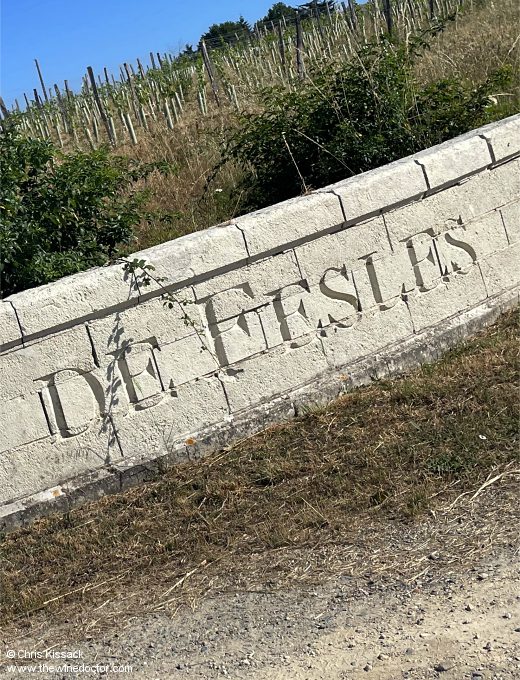
Château de Fesles: Le Pape de la Viticulture
Despite his apparent foibles Jean Boivin was still a highly regarded figure in the region. Even today, almost a century later, acolytes of Chenin Blanc still quote from his thesis on noble rot in Sauternes and Anjou, entitled Des Facteurs qui Influent sur la Production des Vins de Pourriture Noble à Sauternes et en Anjou (published 1924). Speaking to Jean Bellard, author of Paroles de Vignerons et Vigneronnes d’Anjou et de Saumur (Cheminements Éditions, 1998), Claude Papin described Jean as “le pape de la viticulture”, and listed this viticultural pope among the most influential figures in the history of wine in Anjou, alongside Dominique Jaudeau of Château de la Roulerie, Jean Baumard (1931 – 2023) of Domaine des Baumard and René Renou (1952 – 2006)
Jean and his wife Blanche Renou had several children, although the relationships between the father and his sons were perhaps not always easy. Finding it impossible to work with Jean, one son left Bonnezeaux to seek his fortune elsewhere. Having initially toyed with the idea of emigrating to the USA he was ultimately unable to do so, having been refused a visa, and instead he took up work at Château Pavie in St Emilion.
With time he left the world of wine and became a successful brewer of beers instead. Nevertheless he did not stray too far from Château Pavie, and thus today there is a branch of the Boivin family residing in the suburbs of Bordeaux, and a number of the older vintages of Château de Fesles I have tasted – as far back as 1924 – have come from their cellar. Meanwhile, back at Château de Fesles near Bonnezeaux, Jean’s son Jacques soldiered on alongside his father, although it was only upon Jean’s death that Jacques really took the reins.