Home > Vintages and Regions > Ten & Twenty Years On > Ten Years On: 1999 (part 2)
Ten Years On: The 1999 Vintage
My 1999 vintage tasting at ten years of age took in more than thirty wines, so I have split my tasting notes into white and red. My notes on the dozen-or-so white wines are written up in part one. Here, in part two, I turn my attention to the red wines. With such success in the Northern Rhône it makes sense to start there, followed by the Southern wines, Burgundy, Provence and beyond.

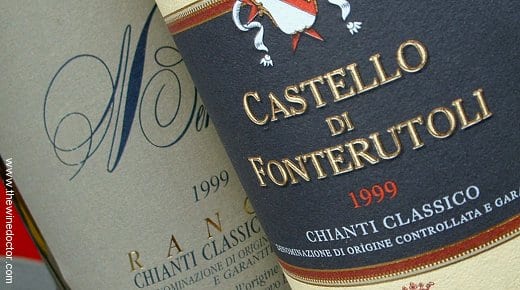
There were many great wines here, including a couple from Côte-Rôtie that are not only delicious now but also have great potential for the future, and it was this appellation that provided what can only be described as wine of the tasting, in the shape of the delicious Bernard Burgaud Côte-Rôtie. The nearest challenger (either within or outside of this appellation) was the divinely rich and characterful Castello di Fonterutoli Chianti Classico from Tuscany. (23/12/09)
1999 Red Wines - Tasting Notes
Tasted in December 2009. Click
to locate stockists.
Jaboulet Crozes-Hermitage Domaine de Thalabert 1999: Initially quite
tight on the nose, always rather reserved, quite organic, with aromas of warm
sun-baked stones, smoky and savoury, with meat-stocky character. Fire-singed
herbs, with a little time some darker fruit aromas too, and a subtle floral
element. Fresh on the palate, with a little sweetness, nicely filled out with
decent grip underneath. A good acid backbone, rather firm in this respect, and
with regard to the tannins too. Towards the finish it shows a sour fruit
character. This is certainly drinkable, although its composition does seem
rather confused and out of focus at times. Less convincing than it was a couple
of years ago. 16/20
![]()
Ogier Côte-Rôtie 1999: Loads of colour
here, and a hugely expressive nose too, very apparent as I decanted this off a
minimal amount of sediment. We have here smoked bacon and crispy crackling
smothered in a delicious, wild, savage style of cherry fruit, with an open and
effusive aroma. The palate is cool and slick on entry, not as rich or fleshy as
I expected from the delightful bouquet. Nevertheless it soon relaxes into a
gently polished style, with harmonious integration of fruit and punchy acidity,
and a well coated seam of tannin. It fleshes out more with time in the glass
too. Towards the finish there is a little note of power, a little rawness to it,
suggesting to me that this wine needs yet more time. Through the middle though
it shows great composition with a fine, seamless style. Excellent wine - I'm
looking forward to future bottles already. 18+/20
![]()
Bernard Burgaud Côte-Rôtie 1999: A very dark and intense colour here,
somewhat glossy, opaque, rich and opulent in appearance, and these early
impressions are not lost through the nose and palate. The former shows an
intensely savage, animally character at first, with notes of singed hair, but
there are also beautifully aromatic, perfumed elements; notes of face cream,
lilacs, black cherries, black olives, calamine lotion and more, backed up with a firm, grainy,
charcoaly
character. The palate shows a rich and creamy style, but well defined, with a
good grippy style, tightly linear fruit with a vibrant style, combined with a
glossy seam of firm tannins. This has a polished, very accomplished mouthfeel,
more velvet than silk, but underneath there is the backbone of a great wine
which although strong and unobtrusive clearly asks that this wine be left alone
in the cellar for some years to come. A beautiful wine, with fatness and
freshness, structure and definition. There is harmony on the finish, despite a
few youthful corners, and it is very long too. Overall this is an ecstatically
good wine which will be a delight to drink as it matures - and that will take
some considerable time. Les couilles du chien, for sure. 18.5-19+/20
![]()
Marc Sorrel Hermitage 1999: A fairly dark hue, not at all opaque, with
a little oxblood maturity. The nose does not seem very well defined, with hot
fruit, alongside a firm, slightly savage, animalistic character. Later though it
comes together a little, showing more well defined dark fruits, with a
high-toned edge. It has that maturing Syrah character, but also a volatile
element that I find more reminiscent of maturing Rioja than Hermitage. The texture on
the palate is quite appealing, fresh and supple, but with a slightly macerated,
cooked fruit feel to it. With time this too comes good, showing a more
substantial, cleaner, fresher style. There is good texture and weight, and ripe, slightly
chewy tannins which provide background structure. Good style, and I think given
time this will really develop. 16.5-17+?/20
![]()
Bernard Faurie Hermitage 1999: A lovely deep colour here, not showing
much maturity either; a thin coating of sediment thrown inside the
bottle, although there are plenty of purple-stained tartrate crystals to be
decanted off. The nose is quite fine, starting off with plenty of sweet Syrah fruit,
cut with just a little rubber, all presented in a well-defined, linear rather
than fat or flabby fashion. Then it evolves a little, opening out in the glass,
giving out the aromas of perfumed flower petals and smoky roasted meats. The
fruit character takes on a tense, plum-skin, cherry-stone kind of character too,
and overall it is hugely appealing. Fresh, weighty but well defined on entry,
softening and broadening out a little in the midpalate, but still showing a lot
of solid extract, substance and a well-polished ripe tannin backbone. With
lovely fruit too; this is delicious stuff. The acidity is very fine, and there is
plenty of classic Syrah black pepper wrapped up in the fruit too. Good length. Overall, excellent
wine. I would not be surprised if I score future bottles higher than this. 18+/20
![]()
Guigal Côtes du Rhône 1999: It has become something of a tradition for
me to hold back a minor wine, or one that wouldn't generally be considered as
suitable for cellaring, for my ten year on tastings. And in my experience these
wines have a track record of yielding surprising and sometimes very enjoyable
results. This wine is a case in point. The colour is fading to a rosy, very
slightly tawny hue at the edge, but there is still a good density of colour at
the core, and plenty of red pigment here too. The nose provides plenty of
interest, starting off quite gamey and leathery, but surprisingly with air it
reveals more fruit aromas, with a warm, spicy, garrigue-scented edge. It has
good flesh at the start, and although initially it seems a little lean thereafter this displays a good, sweet, rounded texture of gritty, Grenache-cherry
fruit. Having said that, at times it seems to have texture but little in the way
of flavour, and the finish is somewhat spiky, coarse and angular, with a short
but spicy character. Fair's fair though - I never expected it to perform as well
as it has. It may not be the perfect wine, but it is certainly one worth admiration. 16/20
![]()
Coudoulet de
Beaucastel Côtes du Rhône 1999: Where does the time go? It is
already two years since I last opened a bottle of this, and even then
I reined in my opinion as to its potential for further cellaring. Today this
still has a good colour, but the nose is less open and expressive than
previously. It starts off with a blast of acetic volatility, then for a few
fleeting seconds after it is poured there is a delightful, aromatic, meaty
quality, but this withdraws once in the glass, leaving only dry and dusty
fruit. There is a little texture on the palate, with a meaty, cherry
cough-candy, cooked strawberry and liquorice element, but it is leaner in the midpalate, and
disjointed thereafter, with a burnt element, The fruit is stretched out and
stewed, lean, bitter and hard. It's remarkable to think that Guigal's Côtes
du Rhône is still holding up, whereas this is clearly falling apart, but
that is the case. And yet the 2000 at just nine years old was so wonderful.
Perhaps this just wasn't a vintage where we should expect Coudoulet to do
ten years. 15/20
![]()
Domaine Santa Duc Gigondas Prestige des
Hautes Garrigues 1999: A darkly coloured wine with an opaque, deep,
matt hue, with some very fine and cloudy sediment apparent. The nose has a
slightly high-toned character, meaty beef stock, with gently baked fruit and
dried leather. It all suggests, rather like the 1998, that this is big, hot,
ripely-styled wine, and indeed a glance at the label reveals that this carries
15% alcohol. Lots of creamy substance and texture on the palate, built up on top
of some ripe but firm, powerhouse tannins. But there is an unusual
undercurrent too, with notes of dried-out toffee, axle grease, pistachio and brazil
nuts, and a bitter edge to it all. Some of these elements may well reflect a
trace of oxidation, nevertheless the style of the wine shines through
sufficiently clear for me to judge. I find this cuvée too far over-the-top for
me, but I have allowed myself a score range as perhaps this is not a 100%-representative bottle. 14-15?/20
![]()
Chateau de Beaucastel Châteauneuf du Pape 1999: More than two years
now since I last tasted this wine, and this is still a very good and youthful
hue, cherry red with a fading rim, testament I would think to the large
proportion of Mourvèdre the Perrins use in their blend. A lovely, savage, meaty,
bright but chewy cherry character. There is meat stock and roast beef, with a
touch of balsamic and liquorice, slight high-toned but nothing remotely acetic
or volatile. Nice cool entry, but with immediately apparent creamy texture and
lots of tangible substance. Very broad, good acid at the core, lots of density,
some good grip provided by ripe and substantial tannins at the end. This vintage
of Beaucastel has surprised me before; a 'fresher' vintage, this is remarkable
meaty and dense, with great length. This has decades ahead of it, I just hope I
have enough bottles left in the cellar. 18+/20
![]()
Domaine Tempier Bandol Cuvée Speciale 1999: It is four years since I
last tasted this, and those were half bottles; this is from 75cl. An admirably rich colour
here, plenty of pigment, but that's Mourvèdre for you. Some tints of maturity
too of course, just a lovely light bricking to it, with a tinge of rust at the
rim. The nose starts off with deep, macerated fruits, with a meaty edge, before
it then reveals a more savage animal and farmyard funk, with nuances of cloves.
Very nicely textured on the palate, certainly well filled out and quite creamy,
albeit in a rather burly style, with a seam of ripe, meaty, extracted tannins hiding
beneath all the fruit. The palate lifts somewhat at the finish, showing a
slightly brighter style, with hints of orange peel, black olive and a smoky
minerality. Good length. On the whole though a rather clumsy impression, but I
think this just needs time to come together; ten years is nothing for any of
Tempier's cuvées above the generic Bandol. Fine potential here. 17+/20
![]()
Fernand & Laurent Pillot Pommard 1er Cru Rugiens 1999: A fairly dense but matt
colour here, a rich mahogany core with a paler rim. The nose is not hugely
expressive, but there are little notes of mushroom, of roasted meat, with a
slightly sweet, baked fruit element. On the palate the wine shows a broad,
polished oak character, with dry and distant extract, and a slightly bitter
grip. Restrained, with a hint of volatility, this is dense, firm, but overall
rather charmless and featureless at present. There is grip and structure
underneath though; perhaps this will be better - with a more aromatic character
and more interest - with further time in bottle? 15+?/20
![]()
Domaine Aleth Le Royer-Girardin Pommard 1er Cru Les Épenots 1999: A
fairly deep colour here, quite rich, vibrant but packed with pigment. The nose
is powerful rather than delicate, first showing some unresolved oak, then more
earthy, undergrowthy character, but there is also a slightly troubling note
behind this, a feral-caramelly character which doesn't seem entirely fresh,
although this does become less prominent with time, the wine showing a more
evolved secondary undergrowth character. The
fruit also has a slightly baked, stewed edge. Despite
this, a nice weight on entry to the palate
though, showing plenty of texture and substance here, with good grip through to
the finish. That animally note comes through on the palate too, although it is
not prominent. Plenty of grip in the finish. Right now this doesn't hold much
appeal for me, showing a rather heavy, ponderous style, but perhaps it will do
more in the cellar. There is certainly plenty of fat for it to shed. 15.5+/20
![]()
Felsina Berardenga Rancia Chianti Classico Riserva 1999: The
first bottle was completely dead - perhaps low-level cork taint? The second was
fortunately much better. The colour is quite dark, but showing some mature
tones. The nose has a subtle and harmonious elegance, with cherries rubbed over
quiet notes of spiced sandalwood. A gentle start on the palate, showing pretty
firm acidity through the middle, with a seam of smoky meat. The structure is
rather extreme, that acidity I have already mentioned plus a rather soft,
slightly unfocused texture. It lacks precision, definition - there is, however,
something very fine about it, a supple, seamless style which is extremely
appealing. There's some grip at the finish though, and it has considerable
length. Although I'm not quite so enamoured or confident as I was at my last
tasting this wine still has more to offer I think, and if it firms up it could
be superb. 17-17.5?/20
![]()
Castello di Fonterutoli Chianti Classico 1999: Four years on
from last tasting and there has been plenty of wonderful development here. The colour
is deep, but showing maturity now, with its dusty purple-oxblood rim around a
more glossy, richly coloured core. After that there is a panoply of delights,
starting on the nose which gives fleeting elements of smoked meats, paprika,
dusty sandalwood, black cherry and a little dark chocolate. Beautifully
harmonious on entry, rich but perfectly poised, rounded and glossy, and showing
plenty of texture and extract underneath too. A lot of substance here, some good
grip especially in the finish, with more cherry and cranberry elements, along
with a balsamic richness - thankfully without the acetic character. This is just
brilliant; it gives so much more than I expected from my last tasting, and I
have to admit it puts Felsina's Rancia to shame. 18.5+/20
![]()
Mascarello Barbera d'Alba Codana 1999: A dark colour in the glass, with a
surprisingly dense, glossy, red-black hue. There is youth here; I had expected
something showing a little more overt maturity. The nose is very good, at first
gamey, with roasted meats, also some slightly high-toned, rubbery elements, but at the
level where they provide complexity and interest rather than distraction. There
is good fruit too, with a rich and ripe yet also sour crystalline suggestion
to it. The palate is well polished on entry, showing more prominent but welcome
acidity through the midpalate, with creamy, rather solidly presented fruit
throughout. That core of acids, with a slight green apple-skin character, is
marked on the finish too. All the same, a good substance here, nice flavour and
supple tannin behind it all. A very pleasant surprise. 16.5/20
![]()
La Spinetta Monferrato Rosso 'Pin' 1999: My first taste of
this vintage, although I have tasted the 1998 a few times now. Even though this
has ten years under its belt now, this still has a remarkably dense, red purple
hue, cut through with mature mahogany tones, although they are well hidden.
A very dark wine, out to a thin raspberry-oxblood rim. Rich and sweet on the
nose, meaty and savoury, dusty but not dry. Traces of chalky minerals, with plum
and damson fruit laced with thyme. Poised but creamy on the palate, substantial
but not over the top. Fine, dry, savoury and nicely textured, with a fine
background of ripe, tightly defined, velvety tannins. Not an incredibly long
finish, but very clean and bright all the same. I like the definition and style
here a touch more than the 1998 I think. 18+/20
![]()
Poderi Colla Barolo Dardi Le Rose Bussia 1999: Decanted for a couple of
hours, and showing a beautiful colour, vibrant and red at the core, but with
maturing tones out towards the rim. The nose has some enticing elements, at
first some slightly chalky, lifted, perfumed red fruits. There are notes of
lilac and bay leaves rubbed on old oak. This beautifully feminine nose belies the
very masculine palate though, with its hard outer shell pierced by a huge,
penetrating core of acidity. Alongside this slightly brutal immaturity though,
there is an elegant texture and some good, primary flavours. A promising wine, one that needs a lot of time before it becomes approachable I think.
Maybe 5-10 years should do? 17+/20
![]()
Chateau Musar (Lebanon) 1999: Very typical Musar hue, rich and red but
with a little bricking. The nose starts off very volatile, with plenty of
animally farmyard, then more appealing character, notes of leather, baked black
fruits and cinnamon. The palate is soft at first, then there is more substance
and grip, with plenty of spice, tannin and texture. This is rich, mouthfilling
and structured, and although delicious now - after a couple of hours in a
decanter - this will be fine drinking over the next 10-20 years. Classic Musar
for Musar fans. 17+/20
![]()
Part 1: 