Home > Vintages and Regions > 10, 15 & 20 Years On > Fifteen Years On: 1996

Fifteen Years On: The 1996 Vintage

Fifteen Years On: 1996

Notes from a 1996 tasting at 15 years.

Part 1: White Wines

Part 2: Red Wines

Other relevant tastings:

1996 Bordeaux

1996 Champagne

1996 Northern Rhône

1996 Southern Rhône

1996 Ten Years On

There are few years that totally pass us by; nearly every one will hold some events of significance for us as individuals whether it be a new job, a new house or perhaps even a new relationship. For those of us that are old enough, the birth of a child - or a grandchild - will really make the year special. And 1996 was no different, having had its fair share of 'new arrivals'.

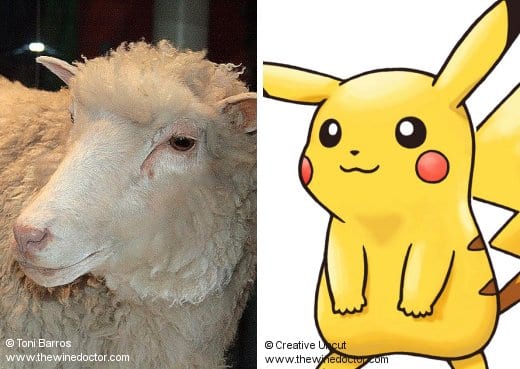
The most famous is surely Dolly the Sheep, a creature made special because she was the first mammal ever to have been cloned from an adult cell. Her origins lay in an ovine mammary gland, and once born the team at the Roslin Institute in Scotland could think of no more appropriate name than Dolly. The reason for this choice of name might not immediately be obvious, as sometimes we forget scientists might have a sense of humour, so I will make it plain. The original cell was extracted from adult mammary tissue. And she was named Dolly, in honour of Dolly Parton. Geddit?

Like some of the most iconic superstars in the history of mankind - Marilyn Monroe, James Dean, Jimi Hendrix, to name just three examples - Dolly's brilliant light shone for only a short while. She lived a life of carefree luxury (I am reliably informed that is how sheep view the indoor life) before a tragic death that came all too soon. Although here the cause was not a drug overdose, or a high-speed car crash, but the rather more mundane arthritis and lung disease which resulted in her eventual euthanasia. Sadly, those that created her, also despatched her. In dying before her time Dolly the Sheep will remain unique, holding an unassailable 'she was the first' position in the history of human achievement. Sadly for the team that created her, however, none of their names reverberate in the same manner as Dolly's. There is only Dolly. I challenge you to name a single employee of the Roslin Institute, safe in the knowledge that - unless you work there of course - you will be unable to. Despite this being one of mankind's most remarkable achievements, there is no famous name that will live forever down mankind's generations. There is no Wright brother here. There is no Neil Armstrong, no Yuri Gagarin. There is no Edmund Hillary behind the scenes. There is no Pikachu.
1996 Vintage

Yes, Pikachu. Not only are there sheep that are more famous than the pioneering scientists of the Roslin Institute, there are cartoon characters who may also lay claim to that accolade. For some, the iconic, year-defining moment of 1996 will be the birth not of Dolly, but of Pokémon, the Japanese manga-inspired Nintendo game created by Satoshi Tajiri. Tajiri's imaginary world of battling cartoon creatures went on to achieve global domination, the cumulative sales of the various video games associated with the brand ultimately reaching more than 200 million copies, most of which are probably now stuffed underneath my eldest son's bed. Like many children of a certain age he and his peers and siblings were suitably addicted to the game and its characters, and displayed that uncanny ability children have to absorb and regurgitate a vast array of facts concerning trash culture which would be so useful if only it could be similarly applied, now they are a little older, to their homework and exam revision.

Don't Worry, This is Wine Related

Of course, each year the little world of wine also sees a fresh slew of new arrivals. The appearance of the latest vintage was once an exciting once-yearly event, viticulture having once been limited to the northern hemisphere vineyards of the Old World. Even during much of the 20th century, when vines were widely planted in Australia and elsewhere, so few of these New World wines were exported that the first taste of the new wine - perhaps most evocatively embodied in the Beaujolais Nouveau race - was still a pivotal moment in the year. These days, with new vintages from South America, South Africa, New Zealand and beyond arriving on the shelves as early as spring, the whole new-vintage Nouveau-affair seems to have lost its cachet somewhat. It's something of a damp squib. The latest vintage does still excite me, to some extent though, although I have spent the last few months tracking down the latest releases (from the 2009 vintage rather than 2011, as it happens) from Philippe Foreau and Richard Leroy, rather than the flower-encrusted bottles of banana juice that you might find on the shelves once the third Thursday of November comes around.

And then, ten, fifteen and twenty years later, these bottles are lined up in my annual tasting programme so that I can take a look back to see what was hot, and what was not. Now it is the turn of 1996, at fifteen years of age. Regular readers will no doubt be expecting more of the Old World than the New, and 1996 is no exception to the rule. The year offers much potential for us wine drinkers, as it was an excellent vintage for Champagne, the left bank communes of Bordeaux as well as Pessac-Léognan, and looking further afield it was also a very good vintage for the Loire. Coming back to Bordeaux, the right bank communes of St Emilion and Pomerol did not produce such desirable wines, and it is one of the lesser vintages for Sauternes this decade (both 1997 and 1999 are superior) but nowhere within my usual sphere of exploration was this vintage a disaster. I suppose the vineyards of the Douro in Portugal have seen better years, but as the one wine tasted here displays, there are always good wines to be found.

My tasting report begins today with the white and sparkling wines, which take us only to two regions, Champagne and the Loire. From the former the wines showed well, from the latter there were one or two problems, including a 1996 Bonnezeaux from Château de Fesles, which sadly did not show the grace that many of the wines from this estate did when recently tasted, as reported in Ancient Vintages from Château de Fesles. The first was oxidised, the second corked, and the third oxidised again. All three went down the sink; not a very good hit rate from a four-bottle purchase; the fourth bottle, reported on in my Fesles profile, was happily as it should have been, full of sweet fruit, praline richness and quartzy minerality. In this tasting, however, the wine was a complete flop, and it was joined by a corked 1996 Coteaux du Layon Chaume Les Aunis from Château de Roulerie.

I continue in part two with the red wines, a somewhat more extensive set of tasting notes than that presented here, with heavy representation from Bordeaux, but also wines - although usually just one or two bottles -  from many other regions of France, including the Languedoc, as well as Italy, Portugal, Lebanon and Australia. (13/12/11)

The 1996 Vintage - Tasting Notes

Tasted in December 2011. Click to locate stockists.

Champagne

Perrier-Jouët Grand Brut 1996: This wine still has a fresh colour, although there is a little tinge of onion skin here too. There is certainly some development here, the fruit showing more of a dried character, and there are secondary elements coming in, hints of dried water biscuits and rather more subtle tinges of papery Brazil nuts and mushrooms. It has a broad, full and softly toned character on the palate, the texture of the wine more prominent than on previous tastings, an effect of the softening of the mousse I think. The acid keeps it fresh, the flavour profile though remains very dry and bold, perhaps even a little challenging. There is slow evolution here. For my palate, this needs more time. 17.5/20

Pol Roger Brut 1996: A good intensity to the colour here, but still a restrained rather than an evolved hue, and a moderately fine bead. Very well honed on the nose, with nicely defined aromas, ground almonds among fresh apple and pear fruit with a lemony edge, with just the barest hint of mushroom. But this still seems very youthful and linear on the nose, and it comes across the same on the palate, although it does broaden and soften in the middle, revealing lightly nutty fruit and baked lemon with a tangy citrus character. It is very lightly autolytic, lightly honeyed, maturing and it shows this more with a slightly higher temperature in the glass. This is deliciously approachable now, although it still has a long way to go yet before it reaches real maturity. Great acidity and a very fine, crisp mousse too, giving this savoury, meaty wine a great lift. Very fine. 18/20

Ruinart R de Ruinart Brut 1996: A mid-golden hue here, and a plentiful central bead. The nose is beautiful, carrying the pure 'grey' aromas of non-oxidative winemaking, with elements of smoke and stone, over a pure fruit presence reminiscent of lemon zest with a delicate seam of richness conveying a suggestion of honeycomb and cinder toffee. The palate follows on in much the same pattern, showing a wonderfully broad and mouth-filling character despite not carrying a great weight or unctuous texture. It has a savoury style, clean and smoky like the nose, with bright fruit and a fresh acid backbone. The mousse gives the wine a well-defined central purpose, and overall this is a wine of great harmony which gives more than enough pleasure. And it has some length too, coming in after a sappy, gritty finish. Really very nice, my only criticism perhaps being a lack of midpalate substance. But on the whole, lovely wine. 17.5/20

Roederer Brut 1996: A fine lemon golden hue, a fine bead too, quite plentiful; in terms of appearance this still looks like a young wine, save perhaps for the finesse of the bubbles. And there is youth on the nose too, kicking off with a pure and fresh apple compote, shifting down a gear with a little time to a more polished, pebbly, white stone-fruit character, although still with a rich, toothsome suggestion alongside. The palate has a little more breadth than the nose suggests, with a dry, baked-toasted nut character at the start, and a taut, chalky minerality running through the middle to a slightly bitter grip at the very end. Clean, fresh, not showing a great deal of development, stylish though, and quite long too. It has a cracking acid backbone, behind which hides the mousse. Despite my thoughts on tasting this five years ago this is holding up very nicely, and has a few years ahead of it yet. 17.5/20

Lanson Gold Label Brut 1996: Fresh and bright in the glass, with a fine bead, and a tinge of onion skin to the colour. Some lovely evolution on the nose too, now giving not only some notes of Melba toast but also a seam of toasted nuts and some warm, lightly spiced dried fruits. Fine and broad on the palate, rich and expansive but with a really fine and incisive cut of prickling bead, as well as some fresh acidity. It has a lovely weight and yet it is light-footed through the middle, with a lemony freshness set against notes of coffee and star fruit. Bright, just showing some sour fruit character as we move towards the finish which still detracts just a little, but it doesn't really bother me, especially as it is more than offset by a delicious, creamy-sherbetty midpalate. Overall really attractive and approaching broad drinkability...almost, just wait for that finish to mellow a little. Lovely wine. 18/20

Bollinger La Grande Année 1996: Wow - if you need a good example of the Bollinger style, or of what an oxidative style of winemaking produces in Champagne, then track some of this down. In the glass it doesn't have anything too remarkable to show, a fairly pale golden hue, quite clean and fresh, although the bead is perhaps more notable, being incredibly fine and very persistent. But on the nose this wine shows its true colours, all papery nut and dried-out driftwood, a strong oxidative seam bringing to mind the salty sea breezes that wash over Manzanilla and its environs. Later on it becomes a little broader with balancing aromas, with notes of orange zest, fresher cashew nut and mushroom. The palate has a very fine juxtaposition of bright and correct texture with crisp acidity and a very fine, tingling mousse alongside the rather expansive flavours that match the nose, although they are very firmly packaged in by the beautiful, laser-precision structure of the wine. This is gorgeous, fresh, very typical of the Bollinger style and also very long. Wonderful stuff. 18.5/20

Moët et Chandon Cuvée Dom Pérignon 1996: There is a good pressure behind the cork, nevertheless it holds quite a rigid shape once removed from the bottle. In the glass, this still has a pale straw-gold hue, and a swirling torrent of bubbles soon settles down to a fine but still plentiful bead. The nose is divine; don't get me wrong, I know this cuvée can hardly be described as a micro-vinification, with (probably) millions of bottles produced each vintage that it is released, but I still find the aromatic character here divine. There are little reductive elements here, and long with that notes of almonds and cashews, both tightly reined in and very defined, with lemon and stone fruit freshness, and a structural sense suggestive of polished stone. The palate is just as lovely, with the lift from a quite seductive but still lively mousse, and bright and precise acidity. There is fruit, but with a gently crystalline element. A good sense of finesse here, but there is no denying the slightly bitter, pithy grip that lies underneath it all. Long and grippy. I think this is quite fabulous. Most importantly, if not already clear, although good to go now this is still bright and beautifully composed, and well set up a few more decades in the cellar yet. 19/20

Loire Valley

Domaine des Forges Coteaux du Layon St-Aubin de Luigné Cuvée des Forges 1996: This wine has a rich lemony-gold hue, and the nose has a fresh style, with scents of tropical fruits such as mango and peach, with a gently honeyed character and a light, chalky sense behind it all. It seems pretty and fresh rather than anything too rich. having said that, on the palate it is very textured, sweet and broad, with a gently bitter grip to it and in fact there is rather a heady, seductive style to it here. There is a good freshness from the fruit but it is rather gentle in terms of acidity, and there is none of the really intense minerality I would like either, but on the positive side of things there is an attractive pithy style of fruit and a good overall poise. Overall this is a pretty good wine if not a stunning creation, and there is still development potential here. 16.5/20

Château de la Genaiserie Coteaux du Layon St-Aubin La Roche 1996: Looking back at my notes I am amazed to see it has been nine years since I last opened one of these bottles. The colour certainly seems to have developed, with the wine now showing a rich, honeyed, orange hue. The nose follows on in the same vein; it now shows a little note of baked fruit, with rather a dry-woody edge to the sweetness. There is surely a little oxidation here, and although I think I prefer my Coteaux du Layon without this character it can work extremely well at times (as with Juchepie, for instance). It gives a really good grip on the palate, showing here a dense, quite intense, polished but very firm character, moving into a sweet marmalade intensity at the end. There is freshness underpinning it, but the solid and honeyed grip is the name of the game here. Very long. Overall this is a good wine, but I can't help thinking it may have been better three or four years ago. Drink up if you have any. 16/20

Champalou Vouvray Cuvée Moelleuse 1996: An appealing golden hue here, indicative of the richness that can now be found in this wine, on the nose and on the palate. Aromatically it is soft and honeyed, with notes of ginger cake, and moist, rich brown sugar laid over the lightly mineral, herbal tea nuances. The fruit definition has a gently crystalline character, and from time to time it displays a little flourish of intensity, a sudden blast of sweet and candied fruits. The palate carries a very broad style, very expressive with a maturing, honeyed style very redolent of the variety, with some good grip developing an appealing piquancy towards the end, as well as fresh and firm acidity which brings a biting, blood orange character to the wine. What impresses most though is the wonderfully relaxed, polished, soft and mellifluous presence this wine has on the palate. There is also a gentle seam of oxidative complexity here, running through the very core of the wine; it adds an extra frisson to the whole affair which works well with the wine's orange-fruit depth. I did once lose faith in this particular vintage of the Cuvée Moelleuse, but this and the last bottle have been delicious. It has just a delightful grip and tautness to the backbone, despite that soft and sweet presence of fruit. 18/20

Domaine Huet Vouvray Le Mont Moelleux Première Trie 1996: A fine and polished hue here, with a bright golden shimmer to the wine. It has a beautiful nose, which opens up over an hour or so to reveal a fine, minerally, stony character and this comes with an impressively broad crunch of golden fruit. This is close to ethereal, sweet and lightly toasted, and it seems to promise much. On the palate these early thoughts hold true, the wine showing a beautiful sweetness and also brightness; it has a fine dancing character, gentle but very well framed flesh giving it a supple, easy, accessible style. Around this there sits plenty of lovely grip, and it is all underpinned by a fresh acidity. We have notes of sweet, sugar-tinged dessert apples, almond paste, and a lick of lanolin to it as well, but these elements are very subtle, there is far more soft sweetness to it. Multilayered, with delightfully classic Vouvray notes of honey, straw and crushed rocks. Overall, this is long, grippy and quite mineral. A glorious wine. This bottle was sourced from the domaine, but others I have tasted sourced in the UK have not shown well but not quite at this level. Provided the source is reliable, this wine will be great given time. 18.5/20