Home > Vintages and Regions > Bordeaux > Bordeaux 2009 > The Médoc, Part 2

Bordeaux 2009: The Médoc, Part 2

The broad seam of good quality Cabernet-dominated wines in this vintage extends from Pauillac, through St Julien and into Margaux. But the latter of these three communes is perhaps the trickiest of all to describe. This wines here are in many cases of high quality, displaying sweet fruit, often very dark/black in nature, with plenty of extract, tannin and acidity. Some are delicious. But they do not often resemble what many Bordeaux punters would be looking for from this commune, more typically associated with the fresh and lifted aromas of red fruits, flower petals and gravel.

This fits in with my overall impressions of the vintage as one where not only are the wines variable in quality, they are very variable in style. Amongst the good wines on the left bank there are broadly two categories (I accept this is a very sweeping generalisation); those that opted for extreme Cabernet-dominance, producing elegant, lifted wines in doing so, and those that went for a more turbo-charged style, making use of the alcohol-rich Merlots in combination with the ripe Cabernet Sauvignons. Many of these latter wines are admirable, powerful yet balanced, and delicious too. Whether or not they would please those looking for a very specific style of wine - something closer to Bordeaux than Bandol - is, of course, a vital consideration. I am sure in many cases they will not. In the commune of Margaux this issue of style stood out more than any other for me (although it was certainly evident elsewhere in Bordeaux).
Appellation leader Margaux is firmly in the elegant pigeon-hole, displaying a profound finesse which should have any fan of the estate swooning. It is Cabernet-dominant, this variety accounting for 87% of the blend, along with 2% each of Petit Verdot and Cabernet Franc. Only two parcels of Merlot were included in the grand vin, accounting for the remaining 9%. This sounds dramatic, although we should note that 2008 was 10% Merlot and 2007 11% Merlot, so I think it is as much to do with the style of the Merlot that is included as it is the quantity. The blend fashioned by Paul Pontallier, whose opinion was that this was "the best vintage in 30 years" (no, I don't think we should be too literal - he wasn't intending to draw a comparison with 1979!) has well-controlled alcohol as a result, with 13.3% for the grand vin, and 13.6% for Pavillon Rouge. He and Corinne Mentzelopoulos are clearly proud of the result, which Paul described as tasting like "a dense sphere, with nothing out of place". I would probably strive for descriptors that convey more of the elegance of the wine, but I see his point. Their success is due in part to the rejection of a large part of the crop this year, about 23% excluded from both Margaux and Pavillon Rouge. Whether this excess will be commercialised as a third wine (as happens at Latour) or whether it will simply be sold off remains to be seen.

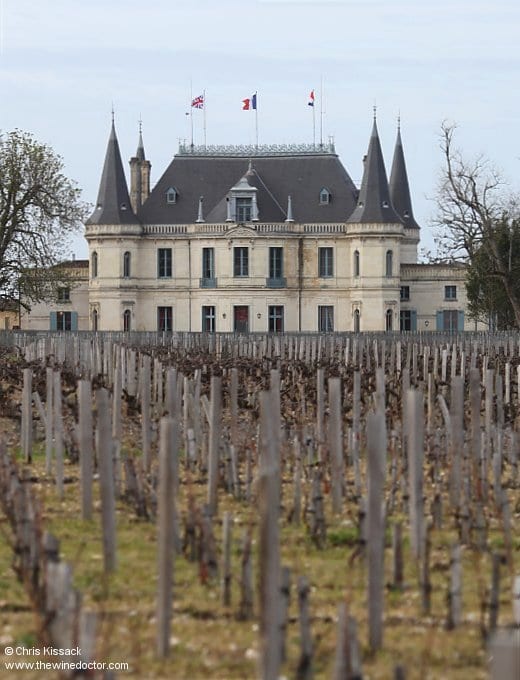
Bordeaux 2009Moving onto Palmer, this château is something of a halfway-house in 2009, and has once again staked a firm position as number two in the appellation in this vintage, a feat it achieved even more dramatically in the 2008 vintage, when second wine Alter Ego was an embarrassment to the efforts of all the lesser growths (and most of the second growths too). Returning to 2009 though, in terms of the vintage style-spectrum it is more towards the rich, turbo-charged end, but it does this whilst managing to maintain an elegantly polished richness around its internal core of ripe and velvety tannin, the first smoothly enveloping the latter. Rich, big but balanced, even silky too, it has the classic iron fist in a velvet glove style (clichéd I know, but sometimes it just seems a very appropriate description), and yet it still seems to sit within the boundaries of what we might expect from Margaux. The team, led by Thomas Duroux (shown above, in passionate full flow), have achieved this despite the blend being 52% Merlot, with 41% Cabernet Sauvignon and 7% Petit Verdot. Clearly the vintage is not just an issue of variety, selection, ripeness and alcohol levels, but also very skilled winemaking.

In third place is Rauzan-Ségla, which tasted at Desmirail alongside a dozen-or-so other wines of the commune showed what its peers - including long-suffering neighbour Rauzan-Gassies - should be achieving. Again although Cabernet Sauvignon dominant (at 68%) this was not to the exclusion of Merlot at all (accounting for the entirety of the remaining 32%), and the style is firmly rich to the point of exoticism, dark and intense, yet balanced with good freshness over the creamy fruit. A delicious wine, one I would not mind owning and drinking, but not likely to please the classicists looking for the perfume of Margaux that they are so familiar with. And this is true of many of the other wines, dark and inky concoctions that they are; sometimes delicious, occasionally sliding into the stupor of extraction and alcohol that is the mark of poorly-made wines in this vintage, wines picked too late, or over-macerated, or fermented too warm in the main. But largely they are good, but atypical. Yields were generally not high, although figures are difficult to interpret in many circumstances anyway; for example, at d'Issan the figure for 2009 was 38 hl/ha down from a more usual 45-48 hl/ha, but this was largely the effect of the early hailstorms which caused significant damage, thus reducing the potential of the vines. Other estates across Bordeaux had even lower figures than this.

The tasting notes presented here are collated from a number of tastings, first up being a visit to Margaux (not a bad opening visit for any programme of primeur tastings) and also to d'Issan, with the majority of the wines tasted at the UGC event hosted by Desmirail. A small number of wines from the Borie-Manoux portfolio were picked up at a side-tasting at Batailley, alongside the other Médoc wines. For the handful of Médoc and Haut-Médoc wines at the bottom on the page, these were tasted at Brown, Sociando-Mallet, Léoville-Las-Cases and Cos d'Estournel. None were tasted blind. As in my other 2009 Bordeaux updates, the reasons for which I have made clear above I hope, I must stress the importance of reading the notes to see the style of the wine rather than checking out only the scores. (13/4/10)

Margaux, Médoc & Haut-Médoc 2009: Tasting Notes

Tasted in Bordeaux in March 2010. Click to locate stockists.

Margaux

Château d'Angludet 2009: Cabernet Sauvignon 50%, Merlot 38%, Petit Verdot 12%. A rather gamey nose here, with damson jam and sweet cassis, with a slightly high-toned edge. A softly styled palate, quite open, with a gentle suppleness of fruit. Then wham! - over the horizon of soft acids and plump fruit comes a wall of tannins which persists right through the finish. This will need two decades to come around. 16-17+/20

Château Brane-Cantenac 2009: The blend here is Cabernet Sauvignon 53%, Merlot 40%, Cabernet Franc 7%. Very attractive, stylish fruit here on the nose, with a dark character, quite lifted, perfumed with violets. The same lifted style on the palate, supple texture, perfumed, with fresh fruit. Ripe and substantial tannic frame, just a touch dry in the finish. A wine of substance here. Well done. 17-18+/20

Château Cantenac-Brown 2009: This is 65% Cabernet Sauvignon and 35% Merlot. A very dense hue, deeply fruited, sweet with the aromas of damson and blackcurrant jam. A very soft start, and then a creamy texture to the midpalate, with supple and rather lush fruit. Well underpinned with structure, although the tannins are rather firm although there is decent acidity. The alcohol here is fairly obvious; this latter aspect dominates the palate. 15-16+/20

Château Dauzac 2009: The blend here is Cabernet Sauvignon 64%, Merlot 36%. Intense and pure fruit on the nose, plum and cherry character, with perfumed floral and dark chocolate nuances. There is a seam of alcohol apparent right at the start, and then a rather soft, fat-fruit profile in the middle, backed up by piles of ripe and slightly chewy tannins. Soft acidity too. That unintegrated alcohol is a note of concern for me, though. 15-16+/20

Château Desmirail 2009: Here we have 70% Cabernet Sauvignon 70% and 30% Merlot, and 13% alcohol. Attractive dark fruit on the nose, with an appealing freshness here. A rather direct cream-fruit quality, but it is very aromatic and harmonious. Good structure, supple firm fruit on the palate, quite fresh with nice acidity and ripe, slightly velvety tannins. Good grip in the finish. It has a hint of Margaux about it. This is nicely done. 17-18+/20

Château Durfort-Vivens 2009: The blend this year is Cabernet Sauvignon 74%, Merlot 21%and Cabernet Franc 5%. There is rather a restrained nose here, with chewy fruit, fairly dark and reticent in character. A fairly bold substance, just a gentle touch of warmth on the palate, but with a chalky edge to the fruit. Plenty of grip, good acid core too, with a firm tannin-infused finish. Good. 16-17+/20

Château Ferrière 2009: Cabernet Sauvignon 58%, Merlot 40%, Cabernet Franc 2%. A dark hue with a crimson rim, and the aromas of sweet damson jam on the nose. Rather a bold substance on the palate, some good appeal here, although with rather juicy fruit. With its moderate acidity it has a good feel overall but it does show some alcohol in the finish. For that reason I have reigned in my score. 15-16+/20

Château Giscours 2009: From this château that seems to have performed well in recent years, in 2009 we have Cabernet Sauvignon 55%, Merlot 40% and Cabernet Franc 5%. A rather glossy wine with a black-crimson hue and the aromas of pencil lead on the nose, with very smart and sweet fruit too. Textured, smoothly polished, creamy with ripe tannin and fresh, direct acidity. A very appealing wine with good back bone and delicious potential. Perhaps not very 'Margaux', but certainly quite 'Giscours'. 17.5-18.5+/20

Château d'Issan 2009: Alcohol 13.9%, unusually high for Issan, and IPT 72 which doesn't seem extreme in the context of the vintage. The assemblage is 60% Cabernet Sauvignon and 40% Merlot, and this is 52% of the harvest. A dark and glossy hue, with a bright cherry-pink rim. The nose has a sweet dustiness to it, the fruit polished and sweet, although with a crunchy-crystalline edge. Gently honed but creamy start on the palate, maintaining this texture through the middle, with a delightful backbone of ripe and slightly spicy tannins here. Smoky fruit, very sweetly textured, there is grip underneath the fruit here. The acidity comes through on the middle although it seems on the low side at first. Very elegant, restrained, despite the fine intensity of flavour. Wonderful impressive density but with a clean, pure frame. Fine balance, long and spicy. Issan used to be a wine you could ignore; not any more. 17.5-18.5+/20

Blason d'Issan 2009: The second wine of Issan, this is 62% Cabernet Sauvignon and 38% Merlot, 48% of the harvest and with alcohol 13.4% and IPT 64. Very bright, glossy but lean, paling rim, pink-blue. Very classically styled nose, attractive and slightly gritty-grainy, oak-tinged but certainly juicy plum-cherry fruit. Elegant style on entry, well polished, quite reserved in character. Quite juicy, but on the stony side of supple in terms of feel in the mouth. Ripe tannins although they provide good backbone, and sit very well with the fruit. Fresh, attractive, fresh but not lean. A very good second wine in the elegant side of the spectrum. 16-17/20

Château Kirwan 2009: The blend here includes 57% Cabernet Sauvignon, 17% Merlot, a remarkable 13% Petit Verdot and 13% Cabernet Franc. A real mix and not the only estate in the commune making good use of Petit Verdot in this vintage. A dark wine, with a crimson rim, with slightly dark and stony fruit on the nose. Good fruit follows on the palate, soft and supple, with good and balanced grip beneath. Overall this wine has a very good sense of harmony with depth and as such is very good indeed. Quite atypical of Margaux, but also very good. 17.5-18.5+/20

Château Labégorce 2009: The blend here is Cabernet Sauvignon 50%, Merlot 35%, Petit Verdot 8%, Cabernet Franc 7%. This wine has some nice open fruit on the nose, with a rather plummy character. Sweet and creamy on the palate, well defined fruit, with a massive wall of tannins. Velvety but running into chewiness, good acidity, but there is a bitter streak to the structure. Good. 15-16+/20

Château Lascombes 2009: This is equal parts Cabernet Sauvignon and Merlot, with 48% of each, with 4% Petit Verdot. A very dense and black-coloured wine with an intense, concentrated, dark and spicy character on the nose. A very polished palate, lots of power here, good fruit too. A creamy substance and texture, an upright although firm tannic core, and there is decent acidity too. Plenty of dry oak here too. A firmer quality to the tannins, but they still hold much promise. Not such a curveball as you might expect in this vintage, although there is still the élevage to come yet of course. 17-18+/20

Château Malescot St-Exupéry 2009: This year this is Cabernet Sauvignon 51%, Merlot 37%, Cabernet Franc 8% and not forgetting the Malbec which weighs in at 4%. A nice nose here, sweet and slightly smoky fruit, very open and attractive aromatics. Sweet and creamy fruit on the palate too, broad, with a forest fruit style together with notes of plum. A good grip here, rather tight but velvety tannins and balanced acidity bringing some life to the blend. Everything here seems very harmonious. Overall a wine with excellent potential. 17.5-18.5+/20

Château Margaux 2009: Cabernet Sauvignon 87%, 9% Merlot, 2% Cabernet Franc, 2% Petit Verdot, this is 36% of the harvest. Alcohol 13.3%, restrained for the vintage. A glossy, darker wine, with a cherry-blue rim. A slightly darker fruit style than Pavillon too, sweet and rounded, less crystalline but more polished. Notes of damson and plum. A remarkable entry, well-defined creaminess, building and building in the midpalate, pouring out fruit elements in a supple and seductive fashion. What makes it so seductive is the tannin profile, ripe and gently honed, sweet and totally in keeping with the rest of the wine. And yet, with all this supple fruit and creamy dark tannin there is acidity too. The finish is poised, fine, and very, very long, with rolling raspberry fruit. What a superb wine, flattering from the nose and right through the midpalate to the finish. Its soft appeal makes this delicious now, never mind in 20 years time - with which it should cope with ease. Certainly one of the greatest and most elegant young wines from Margaux I have tasted. 18.5-19.5+/20

Pavillon Rouge du Château Margaux 2009: The second wine of Margaux, accounting for 41% of the harvest. A glossy hue, not too dark, dark cherry, blue-pink rim. Fine purity of fruit here, crystalline red plum, just a little black cherry coming in, sweet-edged but not extravagantly so. Beautifully clear, fruit essence, compact with a savoury shell. Moderate weight on entry, then starting to broaden out, showing beautifully balanced fruit and texture on the palate. Finely ripened tannins, softly caressing the palate. Fine, crystalline again, fresh. Tannins are very nicely covered by the gentle, supple fruit. Fairly good length too. A stonking Pavillon Rouge. 17-18+/20

Pavillon Blanc du Château Margaux 2009: I know this is Bordeaux Blanc, but as usual I include it here for the sake of completeness. An elegant hue. A beautiful nose, pithy and rich, with great fruit density. The character is very fresh, with passion fruit and the crisp brightness of citrus fruits alongside crunchy yellow plum. Very supple on entry, with good grip around it, lots of substance and body here. It has a powerful grip, richly flavoured with more passion fruit and cream. Good acidity. It has less alcohol than in previous years at just 13.9% (over 15% has not been unknown), principally through work in the vineyard and strict selection (only 32% of the harvest in this wine), yet this is no shrinking violet. Exotic yet restrained, balanced and vigorous. The fine acids and lower alcohol in this vintage no doubt brings the wonderful lift and freshness this wine possesses. Quite long too. Very good indeed. 17.5-18.5+/20

Château Marquis de Terme 2009: Cabernet Sauvignon 60%, Merlot 34%, Petit Verdot 6%. The nose here is intense and quite lovely, full of damson and black cherry fruit, sweet and dark but also with a suggestion of power. Creamy fruit, a solid backbone of firm and grippy tannins providing a rather iron-bound grip. Great structure and substance here, creamy but a touch juicy in terms of fruit structure, with good acidity. This is a really good effort from this estate. The only issue is a touch of heat in the finish. 16-17+/20

Château Monbrison 2009: Cabernet Sauvignon 59%, Merlot 36%, Petit Verdot 5%. Rich and dense fruit on the nose of this wine, supplely styled and rather perfumed on the palate, with notes of violets. A gentle substance, slightly chewy tannins with some good, peppery midpalate acidity. Nicely composed, with good vigour and overall an attractive and harmonious composition. 16.5-17.5+/20

Château Pontac Lynch 2009: A wine from the Borie-Manoux portfolio. A moderately dark hue here, with a rather meaty style of fruit too. A nicely supple character, with a touch of chewiness to the tannins. A firm grip, but direct acidity too. Lots of tannins in the finish. The fruit isn't quite there to match, but there is some very natural appeal to this wine all the same. 15-16+/20

Château Palmer 2009: Cabernet Sauvignon 41%, Merlot 52%, Petit Verdot 7%. A very dark hue, dense crimson-cherry rim. Rich and pure, dark fruit character, dark red cherry, very pure and direct but sweetly defined. Yield 34 hl/ha. Alcohol 13.9%, pH about 3.5, IPT "highest ever". Beautiful palate, very rich, but well defined, quite elegant indeed. Great depth of creamy fruit, sweet and poised, but backed up by a fine but very serious layer of tannin. Very sleek style, with great freshness from the acidity, backed up by all those tannins. A very reserved and understated result here, although one that takes advantage of the ripeness of the vintage. A very classically styled wine, direct and also beautiful. 18-19+/20

Alter Ego de Palmer 2009: The second wine of Palmer. Cabernet Sauvignon 49%, Merlot 51%, 13.7% alcohol and 45% of the harvest. A vibrant but dark hue, a glossy and crimson rim. Lovely nose, dark plums, cleanly presented, a little cream, but overall very attractive. Bright fruit on the start, lots of tannic grip quickly coming in. Ripe but pretty serious tannic backbone here, densely structured. Moderate acidity, there is freshness here, but dominated by that structure. I don't think the weight of the wine quite matches the tannin here. Not on the same level as the 2008 from what I recall. 16-17+/20

Château Prieuré-Lichine 2009: This year the assemblage is Cabernet Sauvignon 65%, Merlot 30% and Petit Verdot 5%. A glossy crimson-black hue, with the aromas of blackberry and cream, A soft creamed-fruit substance on the palate, with lots of ripe, supple, velvety tannins and a good core of acidity. Rich, substantial, with a firm grippy finish. It has a sense of balance and it is also very long. This is really good, surely the best young Prieuré-Lichine I have ever tasted? 17.5-18.5+/20

Château Rauzan-Gassies 2009: Cabernet Sauvignon 75%, Merlot 23%, Petit Verdot 2%. This wine has a black hue and a crimson rim, and a very bright nose of creamy cherry and forest fruits, presented in a very lifted, fresh and open style. The palate has a broad but creamy substance. Well-honed tannins, quite firm but svelte, bright and fresh. An elegant style within the context of the commune, and for Gassies a very good effort - probably the best wine I have tasted from this estate in a number of years. 16.5-17.5+/20

Château Rauzan-Ségla 2009: The blend here is 68% Cabernet Sauvignon and 32% Merlot. This has a great depth of fruit on the nose, dark and intense, with sweetly creamed fruit. On the palate a fine clarity of flavour follows, with a well-polished substance, grippy tannins with a velvety edge and moderate acidity. Intense but well integrated, with a savoury edge, and overall well integrated including that creamy fruit character, this is a wine with great potential. A star of the commune in this vintage and again probably a landmark wine for the estate in modern times. 18-19+/20

Château Siran 2009: The blend here is Cabernet Sauvignon 45%, Merlot 48%, Petit Verdot 7%. Big, sweet fruit on the nose here, all damson jam and alcohol-macerated cherry, perhaps not a surprise when you look at the percentage of Merlot here. The same big creamy character on the palate, firm tannins (and an awful lot of them) and moderate texture. Decent acidity, but overall rather a robust style. 15-16+/20

Château du Tertre 2009: Cabernet Sauvignon 55%, Merlot 22%, Cabernet Franc 15%, Petit Verdot 8%. Restrained use of Merlot and plenty of Petit Verdot here. Bright and vibrant and creamy fruit here, dark but also very pure. There is a lovely flesh to the palate, with creamy and well integrated tannins. The fruit does have a slightly lush character, perfumed with violets, but underneath there is a ripe and firm backbone of tannin combined with good acidity. Really good potential here from the Giscours-du Tertre stable. 17.5-18.5+/20

Médoc

Goulée 2009: Cabernet Sauvignon 80%, Merlot 20%. Good, glossy, purple-red hue. The nose has an earthy-meaty edge to the fruit, showing a substantial rather than bright or lifted style. Lots of obvious cream to the fore, then some elements of zip and tannin coming through, rather well balanced, rich but composed. Nice tingling acidity here, rather stolid fruit and firm shell of texture but it has some suggestion of future approachability. Towards the end though, a pile more tannin. It lacks finesse, and it will need time. 15-16+/20

Château Potensac 2009: Merlot 48%, Cabernet Sauvignon 38%, Cabernet Franc 14%. Brighter fruit here than with Chapelle, tightly defined cherries, and it has some appeal. On the palate lots of soft texture. Underneath this some soft grippy tannin, good vigour too though, and brighter acidity than anticipated. There is a sense of definition here which is better than I expected in view of the Merlot content, although I would not say it is a great Potensac. And there is a seam of overt alcohol on the nose too. 15-16+/20

Chapelle de Potensac 2009: The second wine of Potensac, in 2009 this is 65% Merlot, 19% Cabernet Sauvignon and 15% Cabernet Franc. the nose here is not very expressive. The palate has a very simple composition, with lots of straightforward fruit, surrounded by a wall of ripe tannin. Moderate acidity at best, supple fruit, uncomplicated. Piles more tannin in the finish though. Decent at best. 14-15/20

Château Preuillac 2009: This is equal parts Cabernet Sauvignon and Merlot. The nose starts off with warm, alcohol-macerated cherries on the nose, with the suggestion of meaty richness. Lots of substance on the palate, a firm tannic core, loaded with supple fruit too. A bigger style than usual, certainly robust, but with a nice seam of acidity to help maintain freshness. A good effort from Preuillac. 15.5-16.5+/20

Haut-Médoc, including Moulis & Listrac

Château Haut-Madrac 2009: This wine has a fresh red hue, rather sweet fruit on the nose, with red berries, chalk and violets. A supple style on the palate, quite gentle fruit, firm tannins and rather nice acids. Overall it lacks excitement, nevertheless it certainly has a fresh style. Good. 15-16+/20

Les Hauts de Lynch Moussas 2009: A wine from Lynch Moussas, but predominantly the Haut-Médoc appellation rather than Pauillac. Reserved but what fruit it shows does have that macerated-cherry character. The palate though is fresher than expected, but still quite firm, with lots of slightly chewy tannin. Good substance too. Some attractive points here. 14.5-15.5/20

Château Sociando-Mallet 2009: Another vibrantly coloured wine, dark core, bright purple rim. On the nose, dark but vibrant black fruits, with a well defined crunchy and crystalline character. The palate has a fresh style, with good linear fruit, which covers the structure well. The tannins are well matched, although it is showing quite a bit of raw wood at present. The alcohol has quite an impact on the palate as well. A good wine with good composition although it will need time. The consistently high quality that comes out of this estate is remarkable. 16.5-17.5+/20

Les Demoiselles de Sociando 2009: The second wine of Sociando-Mallet. A vibrant dark core, and a purple rim. Deep and meaty character, crunchy and crystalline fruit too on the nose. Finely composed, the alcohol a little prominent admittedly, the fruit is good though, restrained and well composed. This wine possesses a lot of structure which is to the fore at present. Rather bold in its style but it is a second wine, and taking that into account it is a good effort. 14-15+/20