Home > Producer Profiles > Bordeaux Profiles > Chateau Chasse-Spleen
Chateau Chasse-Spleen
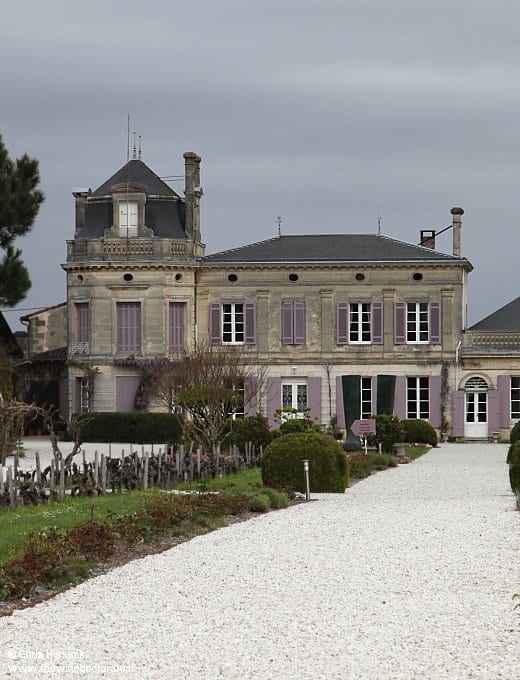
Chateau Chasse-Spleen is the leading estate of Moulis, a small and easily overlooked commune on the left bank of the Gironde, sandwiched in the No Man's Land between St Julien to the north and Margaux to the south. Indeed, it seems the area was overlooked during the development of the 1855 classification, as none of the properties here make any appearance; Chasse-Spleen is the most likely candidate, from just a handful of hopefuls, that might qualify for elevation were the impossible to happen and a new, more relevant revision ever to take place. At the time of the classification, however, Chasse-Spleen did not exist as an independent entity, and so its absence is hardly surprising. As it is, the proprietors of Chasse-Spleen must today live with the title of Cru Bourgeois, having briefly flirted with fame as a Cru Bourgeois Exceptionnel, the top tier in the subsequently annulled 2003 classification of Cru Bourgeois properties. But I do not think it matters much; those that buy Bordeaux know the true worth of any chateau or wine regardless of its classification, and Chasse-Spleen is well regarded, and has been ranked as high as a troisième cru by some critics.
The property's history may be traced back to 1560 when records demonstrate that there were vines planted on the estate, although there may have been inhabitation and perhaps even some viticulture for many centuries prior to that date. As with many estates, the vines grew alongside grazing pasture, beet and other crops at first, this being many years before the concept of vine monoculture became the norm. The landlord was a seigneur by the name of Grenier, which seems over the ensuing years to have evolved into Gressier, and the family remained in control of the estate, known as Grand-Poujeaux, until its division in 1822. France's notoriously difficult inheritance laws were the cause of the dissolution, the property being neatly carved down the middle; half a vineyard, half a garden and half a chateau each. One half continued under the name of Chateau Gressier-Grand-Poujeaux, the name under which the wine is still sold today. The other half passed to the Castaing family, descendents of the Gressiers, and it is this portion that would eventually become what we know today as Chateau Chasse-Spleen. The Castaing family owned a huge estate that took in much of the local land, including the vineyards that today comprise Chateaux Maucaillou and Poujeaux-Theil. This state of affairs existed from the 1830s until the 1860s, when under the direction of Jean-Jacques Castaing Chasse-Spleen emerged as an independent property, sadly too late for it to have any presence in the 1855 classification.
How the estate came to be named is surrounded by an aura of myth and legend, with too popular theories competing. The first suggests that the name originated from a poem, Spleen, by Charles Baudelaire, who visited the estate when visiting his friend Odilon Redon, whose property neighboured Chasse-Spleen. Alternatively, Lord Byron is credited with the comment that his visit there, during a journey from London to Seville, did wonders for his mood, a "remède pour chasser le spleen". Whichever of these fancy tales takes your fancy, by the turn of the century Chasse-Spleen was a well established Bordeaux estate in its own right, still under the ownership of the Castaings, with Jean-Jacques widow in charge. This came to to an end with her death in 1909, when it was sold to the German firm of Seigneitz. It survived World War One, although not without difficulty; those that worked the harvest here were regarded as colluding with the enemy, and in 1914 the cellar was ransacked and all the wine stolen. In 1922 the property was sold at auction to Frank Lahary, who then passed it onto his daughter and her husband. The Lahary family steered the property through difficult times, but in the early 1970s they sold it on, the purchaser this time being Jacques Merlaut.
The
Merlaut family are no stranger to these pages, with current ownership of several
properties including
Gruaud-Larose, Ferrière, La Gurgue,
Citran and
Haut-Bages-Liberal, but
Chasse-Spleen was their first purchase. Jacques Merlaut handed control of
Chasse-Spleen to Bernadette Villars and her husband in 1976, after she had
changed career from teacher to winemaker, having retrained in Bordeaux with
Professor Emile Peynaud. Bernadette Villars earned the respect of many who work
in Bordeaux and the wine trade, and also of those keen tasters who follow the
activities of the personalities that shape this most famous of wine regions.
This was not so much because of the program of improvements she implemented,
although obviously the fact that the wines improved tremendously helped greatly;
rather, it was because she pushed Chasse-Spleen up the quality ladder despite
working in the male environment of chateau ownership and Bordeaux winemaking.
How tragic that both she and her husband should die before their time in a
mountaineering accident in the Pyrénées, leaving behind two daughters, Céline
and Claire. It is Claire that has taken charge of the Villars' winemaking
concerns; there has been no drop off in quality, only continued improvement.
The vineyards of Chasse-Spleen are heavily parcellated, but lie not far from Arcins, to the south of the gravelly hill on which sits the village of Grand Poujeaux. The soils are mostly Garonne gravel, with some chalky clay mixed in, and the 80 hectares of vines, which average 30 years of age, are largely Cabernet Sauvignon (73%), with 20% Merlot and 7% Petit Verdot. The soils between rows are ploughed rather than planted, and harvesting is manual. The fruit is fermented in stainless steel and cement vats with temperature control, and then aged for between 12 and 14 months in oak barrels, of which 40% are new each year. The wine is fined with egg white before bottling. The resulting grand vin is Chateau Chasse-Spleen, about 28000 cases, the two second wines being L'Ermitage de Chasse-Spleen and l'Oratoire de Chasse-Spleen, of which there are about 14000 cases.
So what of the wines today? My experience is limited to very recent vintages, firstly taking in the 2005, which shows all the sweet ripeness that one might expect from such a lauded vintage. This wine does not suggest a 'lowly' Cru Bourgeois status when tasted. Neither does the successful yet more classically styled 2004, tasted twice in recent months, and equally good each time. The 1998 was no less interesting to drink, and was a very good effort from a less well regarded vintage. All traditionally styled wines full of potential for the future. I can only hope that the half case of the 2000 vintage that I have in the cellar is just as good; I suspect it will be. (31/10/06)
Contact details:
Address: Chateau Chasse-Spleen, 33480 Moulis en Médoc
Telephone: +33 (0) 5 56 58 02 37
Fax +33 (0) 5 57 88 84 40
Internet:
www.chasse-spleen.com
Chateau Chasse-Spleen - Tasting Notes
Chateau Chasse-Spleen (Moulis) 2006: This has a rather restrained nose, rather
subdued. It certainly lacks impact on the palate. There is a ripe rounding off
of tannins, nicely presented, but little in the way of texture or flesh. A
rather bare, exposed wine which perhaps shows the difficulties of the vintage.
Not a success for Chasse-Spleen it seems. From my
2006 Bordeaux assessment.
13-14/20 (April 2007)
![]()
Chateau Chasse-Spleen (Moulis) 2005: A moderate depth of colour. Sweet
and creamy, very primary fruit on entry, rich and expressive, with a seam of
buttery crumble for good measure. Nevertheless a rather simple and
straightforward palate, although it presents an appealing texture, nice extract
and a ripe, charcoal-edged structure. All the necessary components are here,
nicely balanced. Good potential. From my 2005 Bordeaux en
primeur
tasting. 16-17/20 (April 2006)
![]()
Chateau Chasse-Spleen (Moulis) 2004:
Really seductive fruit and some oak on the nose here. Ripe and svelte style
of tannins on the palate, quite a firm structure, but with lots of fruit,
flavour and character too. Good, fresh acidity. This is a delight. Another
success for Claire Villars. From my 2004 Bordeaux
assessment. 16.5+/20 (October 2006)
![]()
Chateau Chasse-Spleen (Moulis) 2004: A lovely colour here, quite
vibrant and bright. Rather muted on the nose at first, but when worked hard in
the glass it certainly opens out, revealing some dark, peppery black fruits with
buttery overtones. Classic, restrained style on the palate, a middleweight
texture, with a fine seam of tannin. Good acid structure. Ripe and nicely
styled. This needs time, perhaps 4-8 years at least. 16.5+/20 (April 2006)
![]()
Chateau Chasse-Spleen (Moulis) 1998: A good appearance in the glass,
showing a little maturity. Quite an appealing style on the nose, showing a
rather meaty character. Full texture on entry, nicely rounded, restrained, not
overblown. Still showing a considerable presence of tannin making for a quite
backward impression on the palate, and the acidity is similarly present. Clean,
correct finish. Needs years yet for my palate, but should be very good
indeed.16+/20 (April 2006)
![]()
Chateau Chasse-Spleen (Moulis) 1989: An unsurprising maturing hue, but it is still in possession
of a good depth of red pigment. On the nose there is plenty of interest, as it
shows aromas of rusty iron filings and violets. This is an attractive, mature
perfume. The pleasure rolls on on the palate, which has a lovely style, gently
tannic, and well integrated on the whole, with notes of dry, cedary wooden cabinets, but still
with a little flourish of berry fruit which rounds out the nose as well. It has a slightly bitter
presence, but is structured and clean. It is a wonderful food wine, showing a lean substance and a mildly
complex flavour, with notes of violets, pepper and more. And it has a lovely, reserved textural quality. It finishes with a tannic, savoury flourish. The second
bottle showed a little more substance, more flesh and weight, and also a more
convincing tannic grip that suggests that this wine will continue to do well in
the cellar for a few years yet. Overall, both bottles were very approachable and
gave much pleasure, but they have a little more in the bank yet, with a persistence of tannins on the finish,
especially when considering the second bottle. Overall, very good
indeed. For label images and more see my
Wine of the Week write-up. 17/20
(April 2008)
![]()
Home - Site index - Site updated May 15, 2008 - © The Winedoctor 2000 - 2008 - Wine Scores - RSS